National Post UK
Trump’s Trilateral Diplomacy: Navigating a New Tri-Polar Order

In a series of high-stakes summits, the US President has concluded direct negotiations with his Chinese and Russian coun

The National Post

HomeWorld
World

Trump’s Trilateral Diplomacy: Navigating a New Tri-Polar Order

In a series of high-stakes summits, the US President has concluded direct negotiations with his Chinese and Russian counterparts. As the dust settles on these historic talks, the global community is left to decipher a profound shift in the geopolitical landscape.

SL

Sophie Laurent

Foreign Correspondent

Published 21 November 2026·about 15 hours ago 3 min read
Text
Share

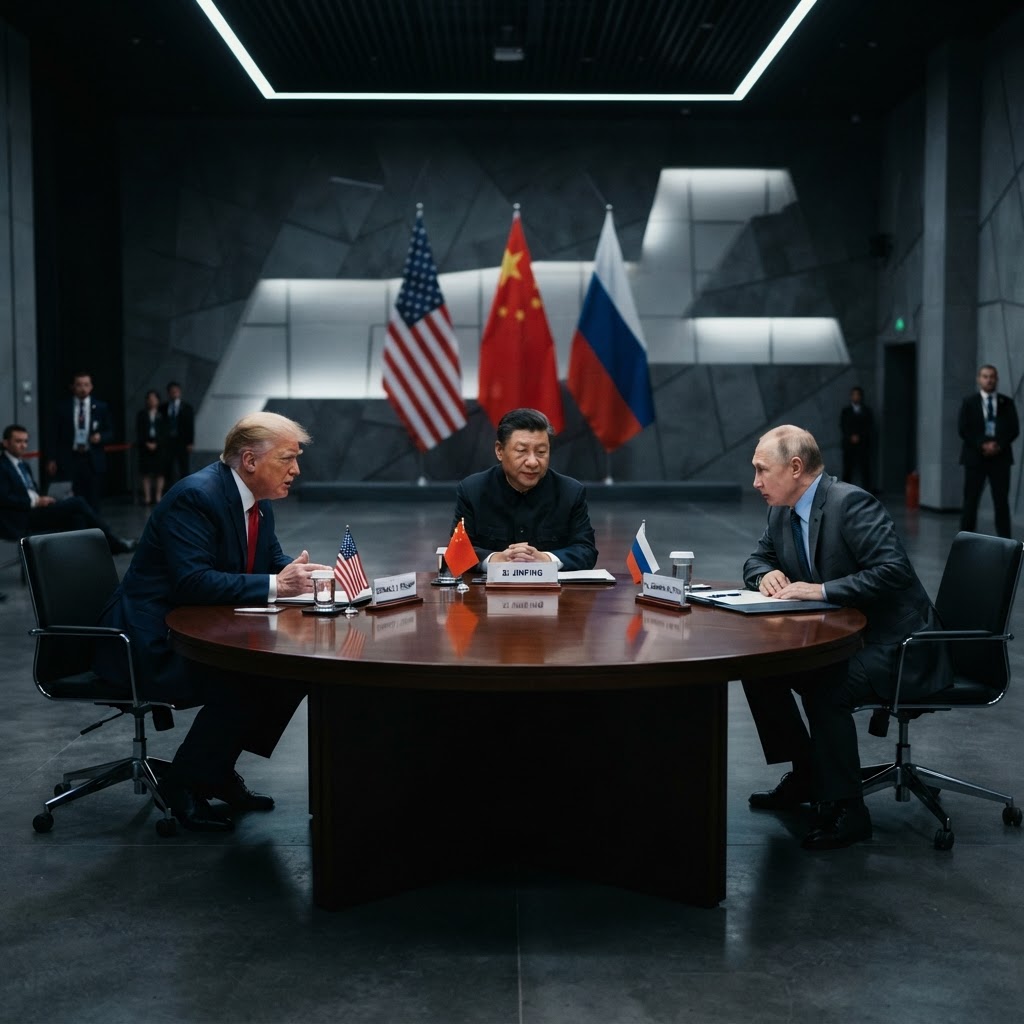
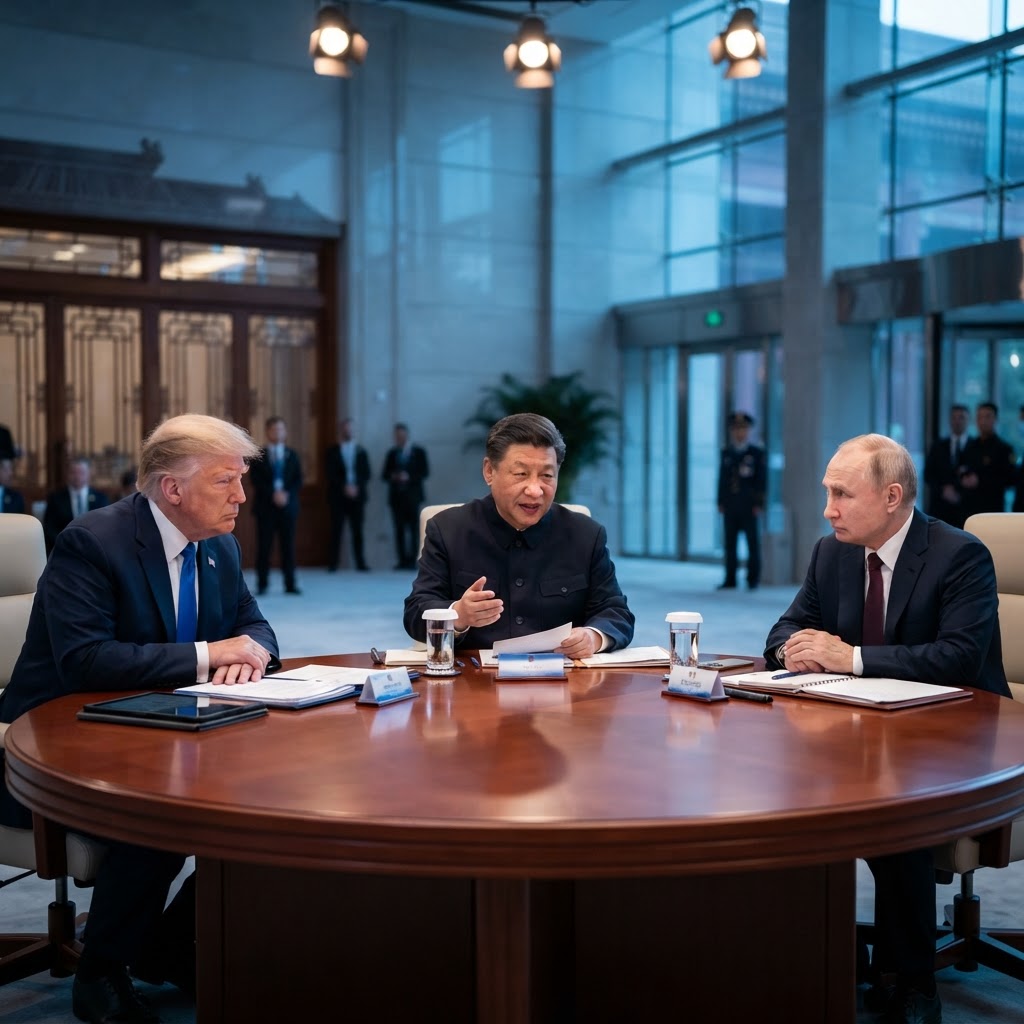
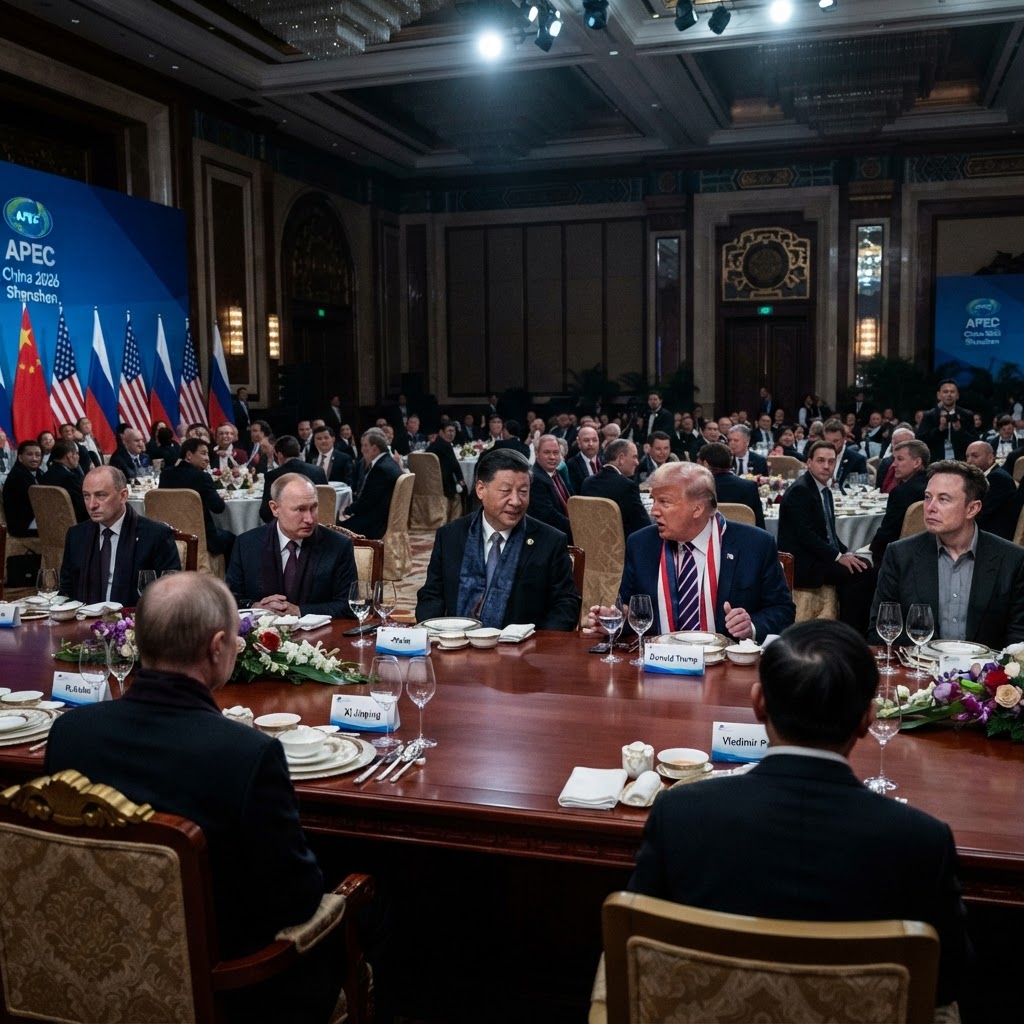
The Architect of New Alliances The global geopolitical order experienced a singular, seismic shift on 20 November 2026, as President Trump emerged from a whirlwind of bilateral diplomacy involving the leaders of the world's primary powers. The press conference, held under the stark, focused lights of a neutral venue, served as the formal curtain-call for a series of meetings with China's President Xi Jinping and Russia's President Vladimir Putin. For the corridors of Whitehall and the chancelleries of Europe, the implications are as immediate as they are inscrutable.

A Balancing Act in Beijing and Moscow The strategy deployed by the White House over the past forty-eight hours marks a departure from conventional post-war diplomacy. By engaging both Mr Xi and Mr Putin in rapid succession, the administration has signalled an attempt to recalibrate the triangular relationship that has defined the early 21st century. In London, senior analysts at the Royal United Services Institute suggest that this 'triangulation' is an audacious, if risky, bid to prevent a permanent alignment between Moscow and Beijing that would have effectively isolated the West. The President's rhetoric during the press conference, while characteristically guarded on the minutiae of the memoranda signed behind closed doors, emphasised a pragmatic 'transactional realism' that seeks to prioritise US interests while managing, rather than defeating, rival powers.

The European Perspective From the perspective of the British government, these developments pose a complex challenge to traditional transatlantic ties. The Foreign Office is currently working to discern the extent to which these negotiations might impinge upon the security architecture of the NATO alliance. While the administration maintains that these talks are intended to de-escalate regional tensions—specifically concerning the ongoing challenges in the South China Sea and the European frontier—there is a palpable sense of trepidation among European allies that their own voices may be muffled in a world where the 'Great Three' dictate terms. The necessity of maintaining a unified front has arguably never been more critical, yet the President’s focus on bilateralism suggests a potential weakening of the multilateral mechanisms that have historically served as the bedrock of stability.

The Long Game Economically, the stakes could not be higher. Trade representatives are closely monitoring whether the discussions in the wake of the meetings will lead to a reversal of recent protectionist trends or, conversely, a more rigid bifurcation of global supply chains. President Trump’s assertion that the meetings resulted in 'constructive pathways' towards mutual economic stability remains, for now, a statement of intent rather than a confirmed framework. As the global markets digest the news, the consensus among observers is that we are witnessing the solidification of a multipolar world, one where the rules of engagement are being rewritten in real-time. Whether this new diplomatic architecture will foster long-term peace or simply defer inevitable conflicts remains the central question of the decade.

TopicsGeopoliticsForeign PolicyDonald TrumpInternational RelationsGlobal Security
Share

About the Author

SL

Sophie Laurent

Foreign Correspondent

Sophie Laurent reports for National Post UK with a focus on rigorous analysis and authoritative journalism — a trusted voice across British public life.

Reader Discussion · 5

Subscribers can join the conversation.

SUBSCRIBE TO COMMENT →
M
Michael Harrison21 Nov

The world is clearly moving toward a tri-polar reality, and it was only a matter of time before someone formalised that shift. Whether Trump is the right person to lead this transition remains the defining question of our era.

E
Eleanor Rigby21 Nov

My brother lives in Washington and says the atmosphere there is one of cautious optimism, even among those who didn't vote for him. If this leads to more stability in global trade, it has to be considered a net positive.

D
David Thorne21 Nov

I fail to see how excluding the rest of the G7 in these specific negotiations benefits the UK long-term. We are being sidelined while the big three carve up the geopolitical map to their own advantage.

S
Sarah Jenkins21 Nov

Whatever one thinks of his style, it is refreshing to see a leader actually pushing for direct dialogue rather than letting tensions simmer for years. This could be the breakthrough we have needed for some time.

A
Arthur Penhaligon21 Nov

It is a bold strategy, but one wonders if this trilateral arrangement will hold up under the scrutiny of actual policy implementation. Historically, these sorts of agreements often unravel once the initial fanfare dies down.
More from World

Most Read in World

Morning Briefing

The day's top stories, before 7am

Join 40,000 readers who start their morning with National Post UK.