National Post UK
Maritime Chokepoint in Peril: Washington Bolsters Presence as Tehran Tensions Reach Boiling Point

The deployment of a third United States carrier strike group to the Middle East signals a dramatic escalation in regiona

The National Post

HomeWorld
World

Maritime Chokepoint in Peril: Washington Bolsters Presence as Tehran Tensions Reach Boiling Point

The deployment of a third United States carrier strike group to the Middle East signals a dramatic escalation in regional volatility. As Tehran hints at retaliatory measures, global markets remain braced for disruption to the world's most critical energy artery.

SL

Sophie Laurent

Foreign Correspondent

Published 18 November 2026·about 14 hours ago 3 min read
Text
Share

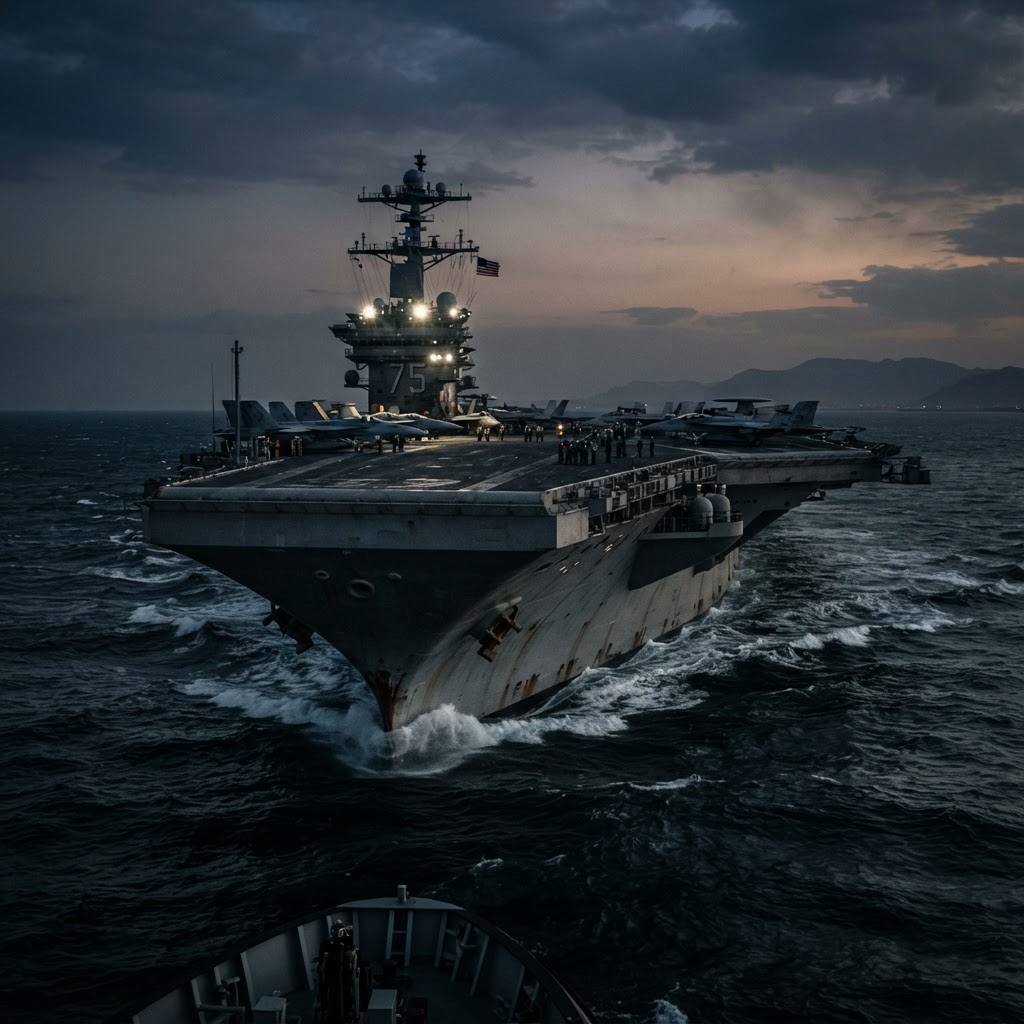
A Strategic Pivot in the Gulf As of November 17, 2026, the geopolitical landscape in the Middle East has undergone a profound transformation. The arrival of a third United States aircraft carrier strike group into the operational theatre marks the most significant concentration of naval power in the region for over a decade. This move, orchestrated by the Pentagon, comes amid mounting evidence that the fragile stalemate between Washington and Tehran is unravelling at an alarming pace.

The Vital Artery of Global Energy At the heart of the crisis lies the Strait of Hormuz. Through this narrow maritime chokepoint, which separates the Persian Gulf from the Gulf of Oman, passes approximately one-fifth of the world's total oil consumption. For the United Kingdom and its European partners, the economic stakes could not be higher. Any sustained disruption to this passage would trigger an immediate and punishing surge in energy prices, threatening to derail the fragile post-inflation recovery across Western markets.

Expert Analysis of Iranian Intentions Regional analysts suggest that Tehran’s increasingly bellicose rhetoric is not merely performative. Intelligence assessments indicate that the Islamic Revolutionary Guard Corps Navy has been conducting a series of heightened maritime exercises, focusing on swarm tactics and mine-laying capabilities. Dr. Alistair Finch, a senior fellow at the Royal United Services Institute in London, suggests that Iran views the Strait as its primary leverage in any direct confrontation. 'The Iranian leadership operates under the assumption that if they cannot profit from the global energy trade, they will ensure that no one else can either,' Dr. Finch noted. 'The deployment of additional American carriers is a clear signal that the West is no longer prepared to rely on diplomacy alone to safeguard the freedom of navigation.'

A Transatlantic Dilemma The situation presents a precarious challenge for Whitehall. While the United Kingdom remains a staunch ally of the United States, the potential for a full-scale kinetic conflict creates a significant diplomatic headache for ministers in London. British naval assets, currently operating as part of an international maritime security construct in the region, are now finding themselves in closer proximity to Iranian units than at any point since the height of the tanker wars. The risk of miscalculation—a single stray shot or an accidental collision—remains the greatest fear for military planners.

The Path Ahead While the White House maintains that the carrier deployment is purely a deterrent measure, the optics of such a force projection are rarely lost on the architects of Iranian policy. Tehran has already decried the arrival of the task force as a provocation, promising 'decisive consequences' should their maritime sovereignty be challenged. As the world watches the Strait of Hormuz with increasing trepidation, the coming weeks will test the limits of modern containment strategy. With energy markets already responding to the uncertainty, the international community finds itself once again at the mercy of a region where the margin for error has effectively evaporated.

TopicsStrait of HormuzIranUnited StatesOil PricesMaritime SecurityMiddle East
Share

About the Author

SL

Sophie Laurent

Foreign Correspondent

Sophie Laurent reports for National Post UK with a focus on rigorous analysis and authoritative journalism — a trusted voice across British public life.

Reader Discussion · 4

Subscribers can join the conversation.

SUBSCRIBE TO COMMENT →
E
Elaine Foster18 Nov

While I appreciate the need to keep trade flowing, I find it difficult to believe that further militarisation will actually lead to stability. History suggests that bringing in more carriers just results in a dangerous game of brinkmanship that could easily spiral out of control.

M
Marcus Thorne18 Nov

Having spent years working in Gulf logistics, I can tell you that the sheer volume of trade passing through that strait is mind-boggling. Any disruption here is not just a regional issue, it is a direct threat to the global economy that the West cannot afford to ignore.

S
Sarah Jenkins18 Nov

I cannot help but worry that this constant escalation is exactly what the region does not need right now. A massive naval buildup feels more like a powder keg waiting for a spark rather than a genuine attempt at diplomatic resolution.

A
Arthur Penhaligon18 Nov

It is about time the Americans put their foot down in the region. If those shipping lanes are blocked, we will all be feeling the pinch at the petrol pumps and in our shops by Christmas.
More from World

Most Read in World

Morning Briefing

The day's top stories, before 7am

Join 40,000 readers who start their morning with National Post UK.