National Post UK
Beijing Summit: The New Axis of Power Redefines Global Order

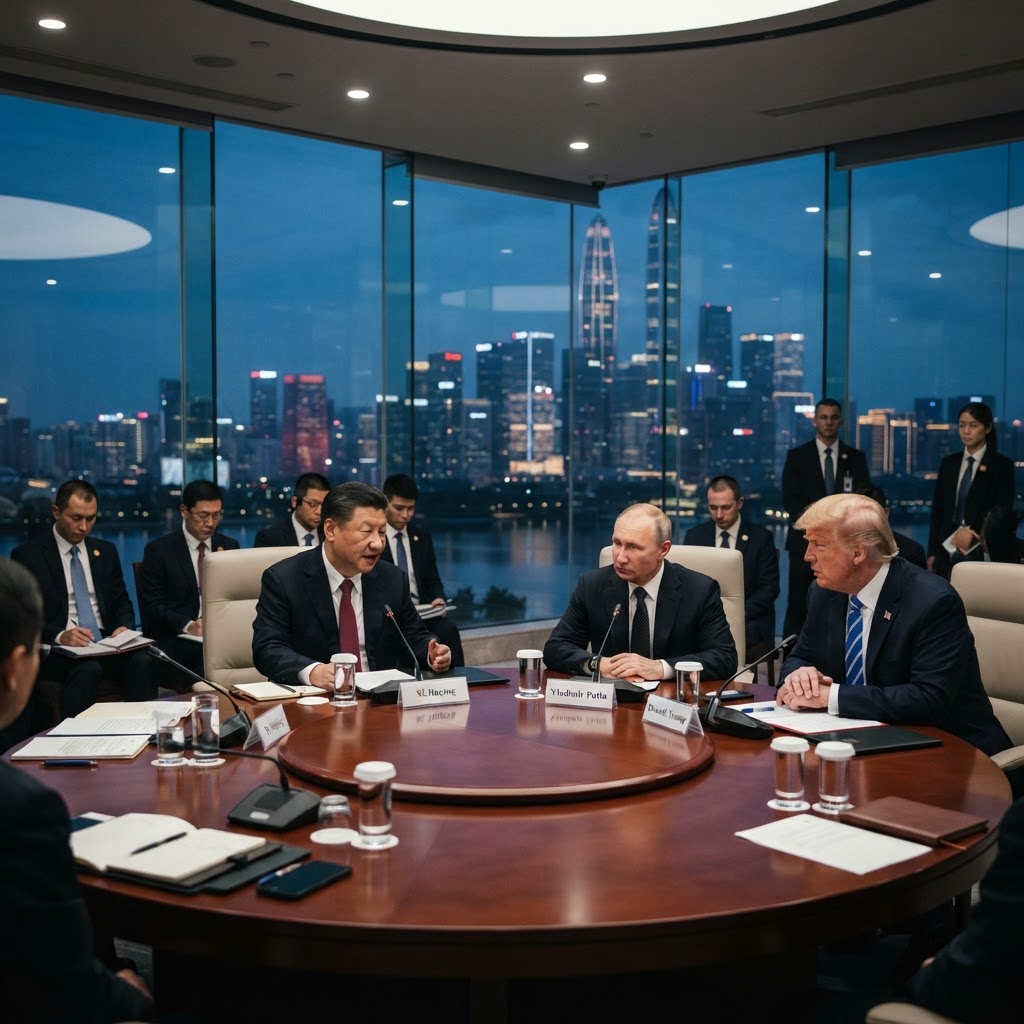
In an unprecedented diplomatic manoeuvre, Donald Trump, Xi Jinping, and Vladimir Putin have convened in China to address

The National Post

HomeWorld
World

Beijing Summit: The New Axis of Power Redefines Global Order

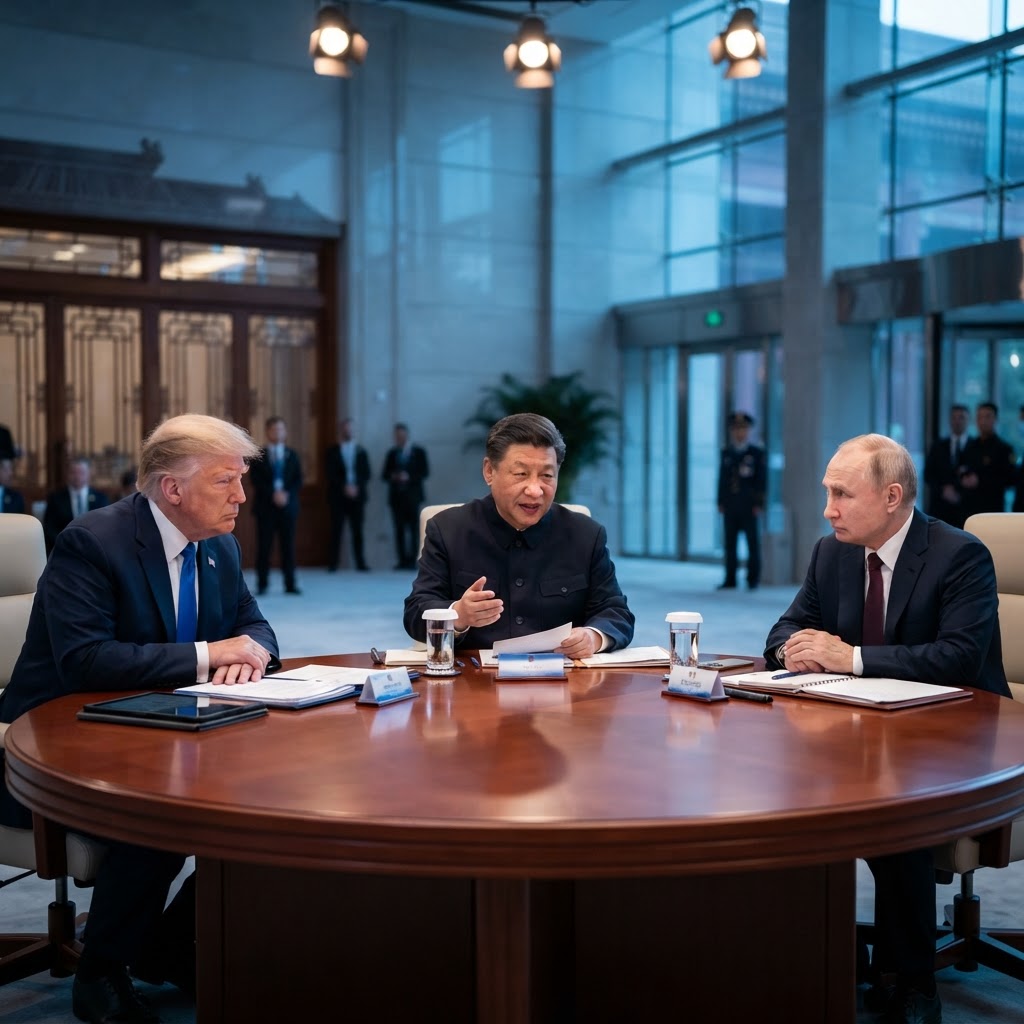
In an unprecedented diplomatic manoeuvre, Donald Trump, Xi Jinping, and Vladimir Putin have convened in China to address the precipice of global conflict. As the war in Ukraine enters a critical juncture, the summit signals a fundamental shift in the architecture of international security.

SL

Sophie Laurent

Foreign Correspondent

Published 20 November 2026·about 1 hour ago 3 min read
Text
Share

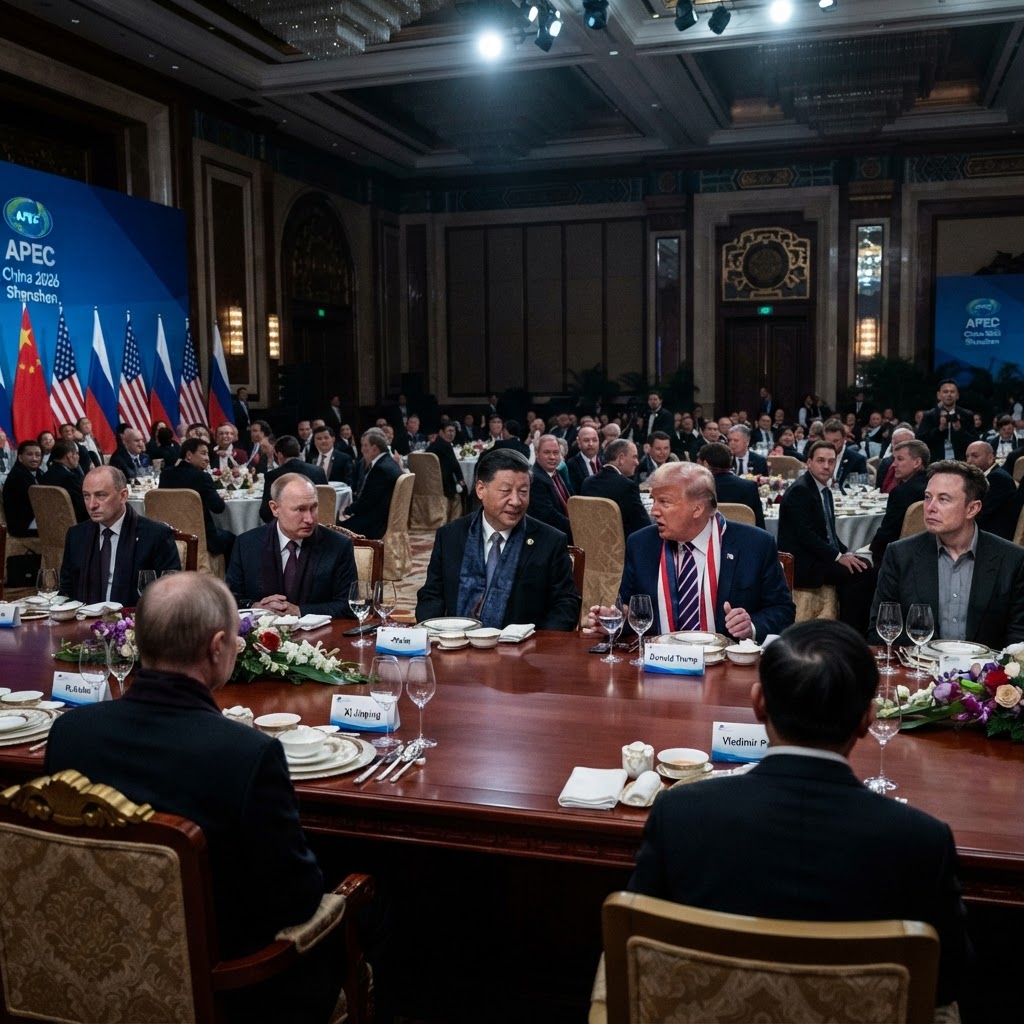
The Architecture of a New Diplomacy The velvet curtains of Beijing’s Great Hall of the People have today provided the backdrop for a diplomatic gathering that, until very recently, seemed relegated to the realm of geopolitical impossibility. US President Donald Trump, having concluded a pivotal three-day tour through Manila, arrived in the Chinese capital to sit across the table from President Xi Jinping and President Vladimir Putin. This trilateral summit represents a departure from the traditional alliances of the post-Cold War era, signalling a move towards a hard-headed pragmatism that prioritises direct engagement between the world’s most potent, yet diametrically opposed, leaders.

The Shadow of Ukraine At the heart of the agenda lies the protracted conflict in Ukraine. While the Kremlin continues to frame its objectives through the lens of strategic security, the mounting pressure from the international community remains palpable. Sources close to the negotiation suggest that the discussion has moved beyond mere rhetoric, delving into the potential for a cessation of hostilities. However, the presence of the American president alongside his Russian counterpart suggests a desire to find a formula that secures stability without alienating the broader strategic interests of either Washington or Beijing. For Whitehall, the development is being watched with a mixture of hope and profound caution. Prime ministerial aides have indicated that Downing Street remains in constant communication with counterparts in Berlin and Paris, where a desperate scramble is underway to forge a unified European position. The consensus among continental leaders is clear: Europe must not be sidelined in negotiations that will inevitably redraw the security map of the continent.

The Technological Frontier Beyond the immediate territorial disputes, the summit is grappling with the meteoric rise of artificial intelligence. Both the United States and China are currently locked in a race for technological supremacy, yet there is a growing acknowledgement that the unregulated proliferation of advanced AI could fundamentally destabilise global nuclear command structures. The presence of President Putin at this technical colloquium highlights a shared anxiety among the powers; they are the primary architects of a new digital arms race, and they now seek to establish the rules of engagement before the tools they have created surpass their capacity for control. Analysts in London note that this aspect of the talks may prove more enduring than the territorial debates, as it marks the first time these three nations have acknowledged a mutual interest in preventing a technological catastrophe.

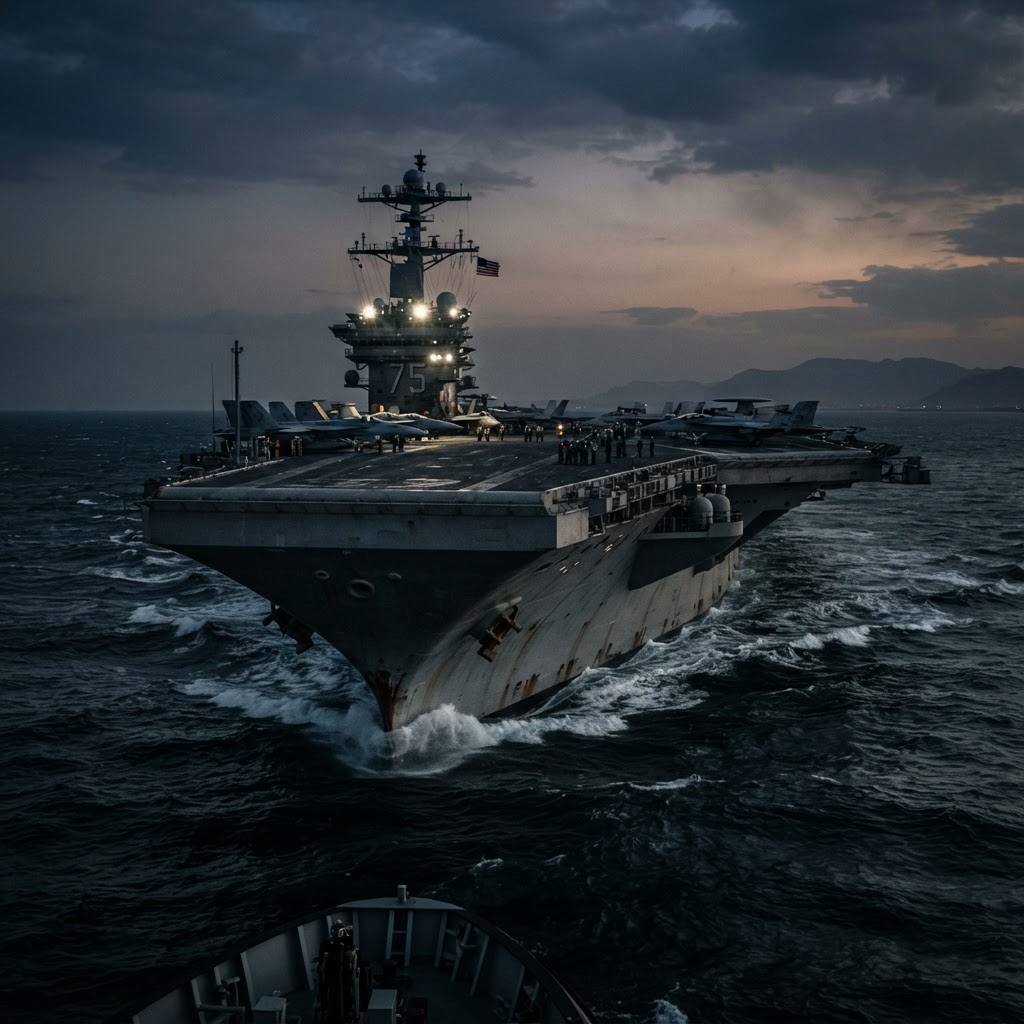
A Shifting Paradigm The geopolitical ramifications of this meeting are immediate. For the global south, the message is one of centralisation: power remains concentrated in the hands of a few, and the old multilateral frameworks—the United Nations and the G20—are increasingly seen as secondary to these direct, trilateral interactions. Yet, the road ahead is fraught with complexity. Domestically, President Trump faces an electorate weary of foreign entanglements, while President Xi is balancing the imperatives of Chinese economic growth against an increasingly assertive military posture in the South China Sea. As the summit continues behind closed doors, the world waits to see if this unprecedented alignment can translate into a lasting peace, or if it is merely a transient staging post in an era of deepening fragmentation.

TopicsGeopoliticsChinaUSARussiaUkraineDiplomacyArtificial Intelligence
Share

About the Author

SL

Sophie Laurent

Foreign Correspondent

Sophie Laurent reports for National Post UK with a focus on rigorous analysis and authoritative journalism — a trusted voice across British public life.

Reader Discussion · 6

Subscribers can join the conversation.

SUBSCRIBE TO COMMENT →
F
Fiona Campbell20 Nov

Perhaps it is time we stop focusing on the personalities involved and look at the economic reality. If the US and China find common ground, the global markets might finally see the recovery we have been waiting for.

D
David P. Roberts20 Nov

The sheer arrogance of assuming these two powers can redefine the global order without input from the rest of the international community is staggering. Britain and the EU cannot afford to be sidelined here.

S
Sarah Jenkins20 Nov

I am cautiously optimistic about this. If it leads to greater economic stability and fewer military posturings, then it has to be considered a step in the right direction for the average person.

M
Marcus Thorne20 Nov

I spent a decade working in Shanghai and I can assure you that Beijing never makes a move without a long-term strategic advantage in mind. We should be very wary of what is being conceded behind those closed doors.

E
Eleanor Higgins20 Nov

Whatever one thinks of the players involved, the shift in global power dynamics is undeniable. We are watching the end of the post-Cold War era in real time.

A
Arthur Sterling20 Nov

It is a fascinating development, but one has to wonder if this is merely a temporary ceasefire in an escalating trade war. History suggests these diplomatic handshakes often mask deeper underlying tensions.
More from World

Most Read in World

Morning Briefing

The day's top stories, before 7am

Join 40,000 readers who start their morning with National Post UK.