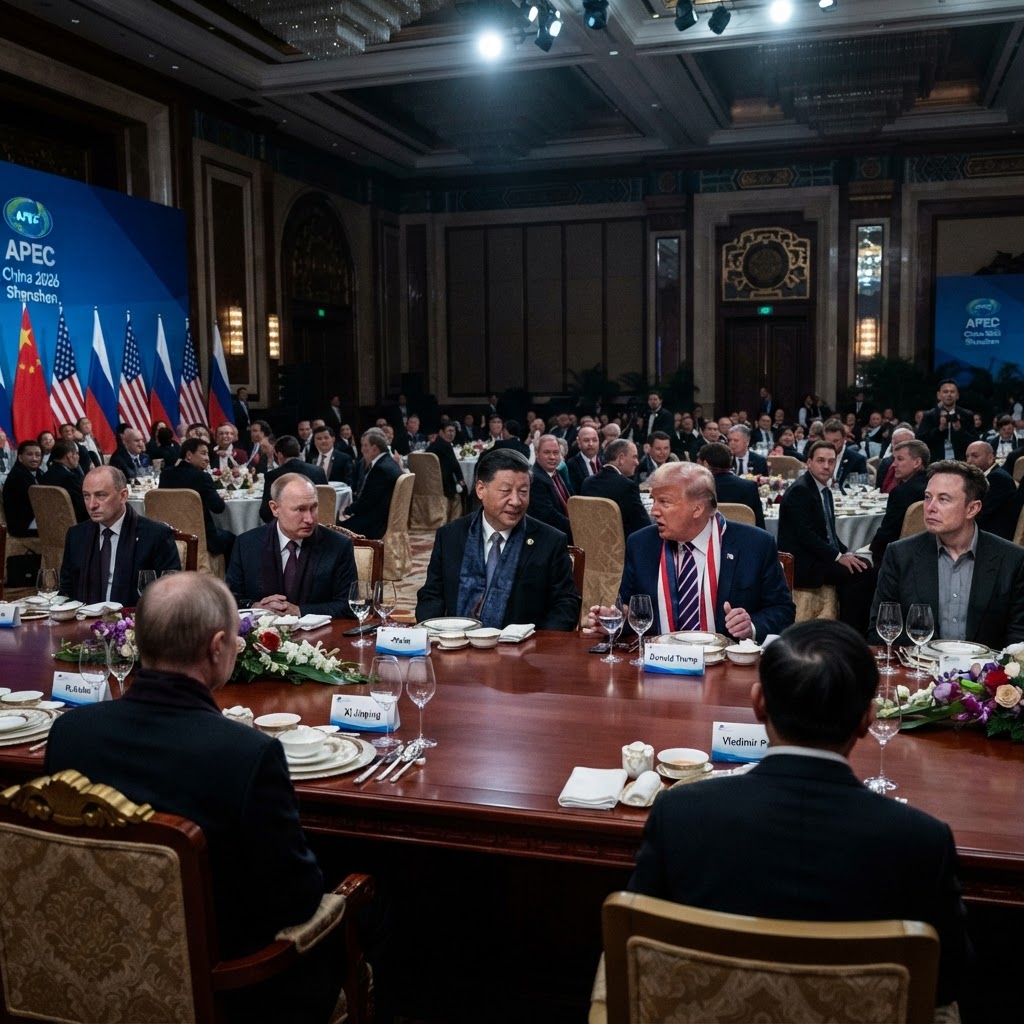
The View from the Pearl River Delta In the sleek, towering metropolis of Shenzhen, the 33rd APEC Economic Leaders' Meeting has begun under a shroud of intense diplomatic choreography. For the host, President Xi Jinping, the choice of venue serves as a deliberate demonstration of China’s technological and economic ascendancy. Yet, the substance of the summit has been eclipsed by the symbolism of the opening evening, where the seating arrangements at the state banquet offered a masterclass in modern power politics.
President Xi, flanked by First Lady Peng Liyuan, occupied the centre of the head table. To his immediate left sat President Donald Trump, and to his right, President Vladimir Putin. For those reading the tea leaves of international relations, the visual message was unequivocal: China intends to position itself as the fulcrum of a new, multipolar world order, forcing the leaders of the United States and Russia into a shared proximity that few in Whitehall or Brussels would have predicted twelve months ago.
The presence of Elon Musk within the American delegation has added a further layer of unpredictability to the proceedings. His integration into the formal state apparatus signals a radical shift in how Washington intends to approach trade and digital infrastructure, potentially signalling a pivot toward a more transactional, industry-led diplomacy. British observers, ever mindful of the implications for the transatlantic relationship, note that Musk’s inclusion suggests an American strategy that prioritises technological dominance over traditional bureaucratic engagement.
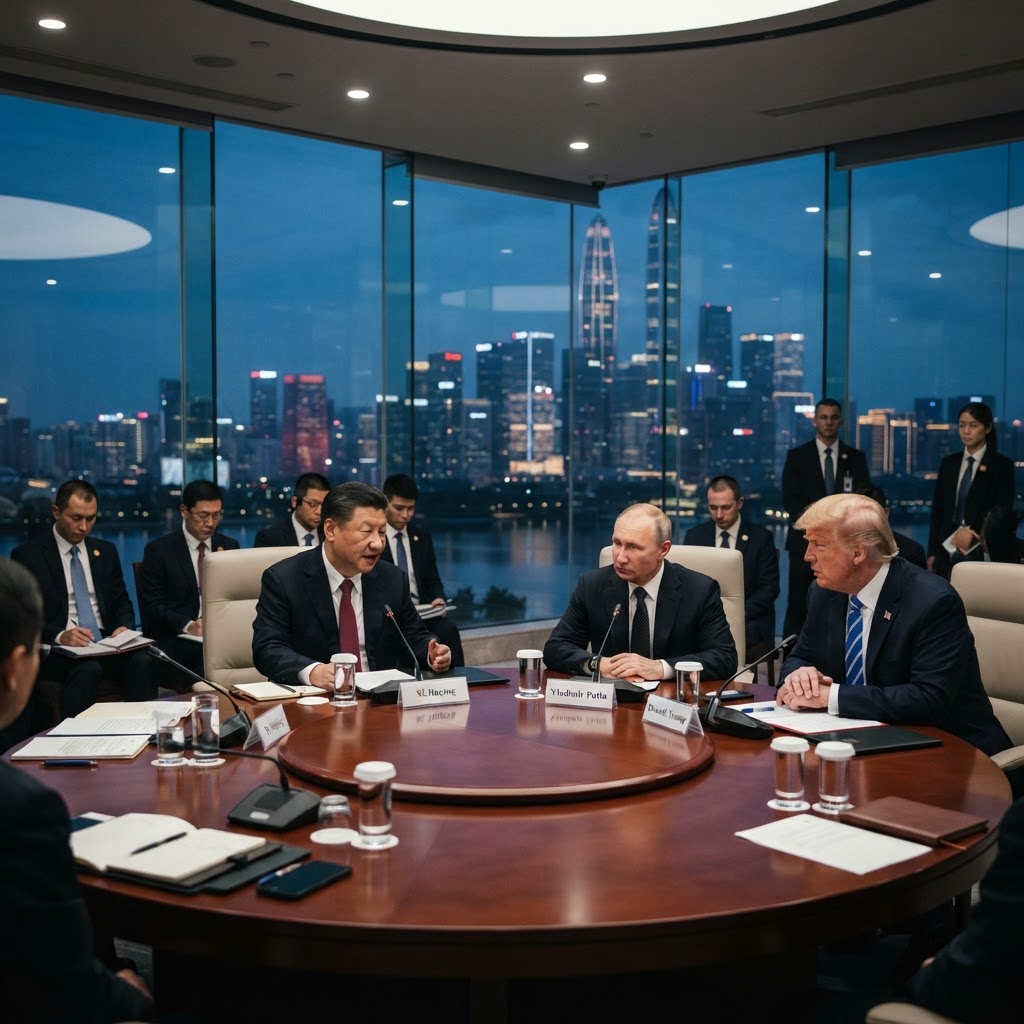
Stalled Bilateral Aspirations Despite the intimate seating chart at the banquet, official channels remain tightly controlled. The Kremlin has been swift to dampen speculation regarding a rapprochement, confirming that no full-scale bilateral talks between President Putin and President Trump are on the agenda. This restraint reflects the volatile nature of the current global climate, where domestic political pressures in both Moscow and Washington necessitate caution. For British ministers watching from London, this lack of substantive bilateral engagement is a relief, suggesting that the established Western consensus on security architecture remains, for the moment, largely intact.
However, the summit has not been without its diplomatic friction. Japanese Prime Minister Sanae Takaichi’s arrival was marked by a notably lower-level reception compared to her counterparts. Whilst the Chinese Foreign Ministry has described this as a matter of protocol, analysts suggest it represents a targeted rebuff of Tokyo’s recent security overtures. This cooling of relations reflects the broader tensions in the Indo-Pacific, where the race for semiconductor supremacy and maritime sovereignty continues to test the resolve of traditional alliances.
“The visual message was unequivocal: China intends to position itself as the fulcrum of a new, multipolar world order, forcing the leaders of the United States and Russia into a shared proximity.”
The Stakes for the Global Economy As the APEC summit turns its focus to economic recovery and the green transition, the underlying friction between the great powers remains palpable. For the United Kingdom, which maintains a keen interest in maintaining open trade corridors, the Shenzhen meeting serves as a reminder of the fragility of the current order. The challenge for delegates will be to move beyond the theatre of the banquet hall and address the substantive issues of supply chain security, artificial intelligence regulation, and the looming spectre of protectionism.
The integration of figures like Mr Musk into formal delegations further highlights a blurring of the lines between private corporate interests and statecraft. As the summit progresses, the international community will be watching to see if this unconventional approach to diplomacy yields concrete policy outcomes or merely adds to the burgeoning list of geopolitical uncertainties. For now, the Shenzhen skyline provides a shimmering backdrop to a gathering that may well define the trajectory of international affairs for the remainder of the decade.