
National Post UK
GP Practices Face Potential Sanctions as Urgent Care Performance Falters

NHS England has served notice that failures to meet the 90 per cent same-day appointment threshold will invite formal sc

The National Post

HomeHealth & Wellbeing
Health & Wellbeing

GP Practices Face Potential Sanctions as Urgent Care Performance Falters

NHS England has served notice that failures to meet the 90 per cent same-day appointment threshold will invite formal scrutiny. As data reveals a significant gap in service delivery, the tension between government mandates and workforce capacity reaches a new inflection point.

DH

Dr. Helen Moore

Health Correspondent

Published 3 October 2026·about 10 hours ago 3 min read
Text
Share

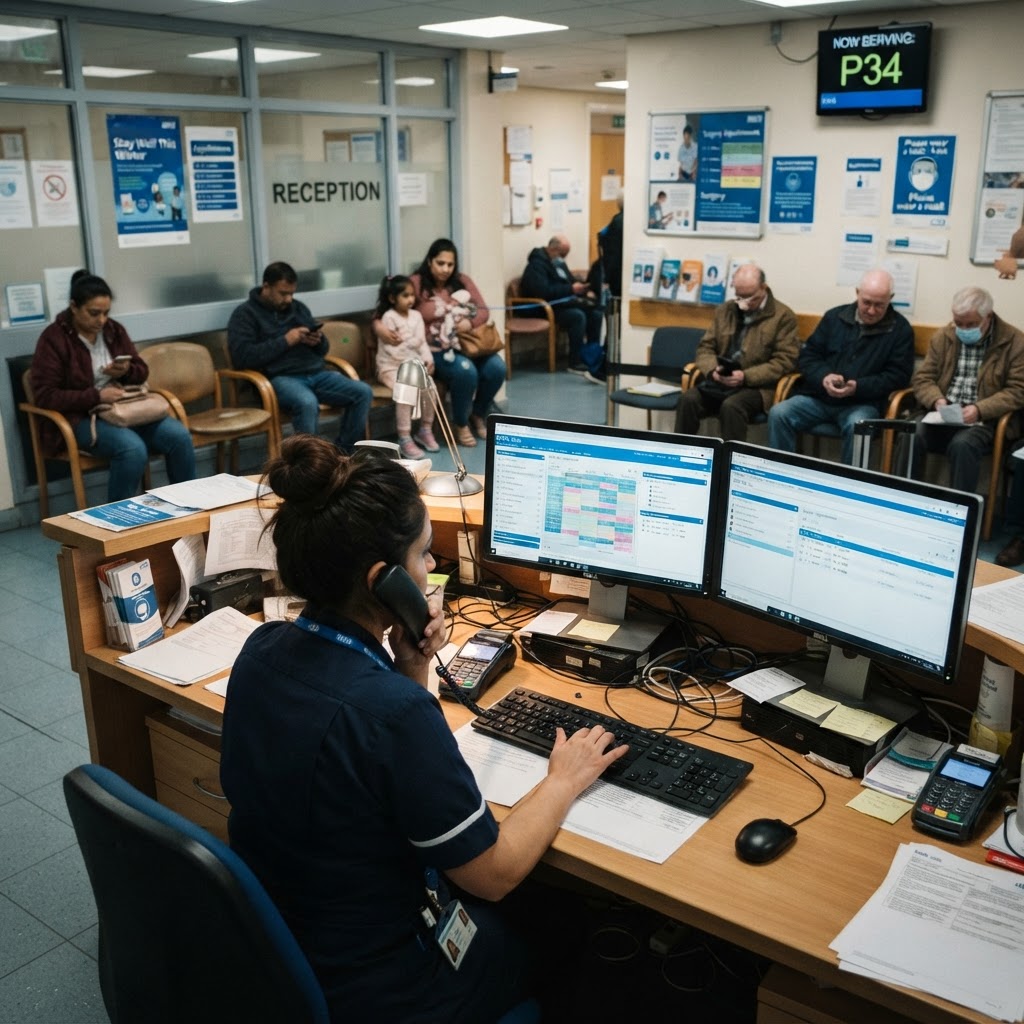
The Challenge of Primary Care Delivery The delicate equilibrium of the National Health Service has faced renewed scrutiny this week following the release of sobering performance data. NHS England, in a move that signals a hardening of its regulatory stance, has indicated that general practices failing to provide same-day urgent care for at least 90 per cent of patients may soon face contractual intervention. The warning follows figures from July which demonstrate that only 77 per cent of clinically urgent GP consultations were completed on the day of initial contact, falling well short of the established mandate.

The Weight of Increasing Demand For those at the front line of primary care, the statistics serve as a reflection of an unsustainable workload rather than a lack of administrative intent. While the health service acknowledges that there has been positive movement in supporting indicators—most notably the integration of digital triage systems and the widespread adoption of online consultation platforms—the sheer volume of patient need continues to outstrip capacity. In the halls of Westminster and among the ranks of the British Medical Association, the debate regarding GP workload remains as contentious as it is urgent. Critics of the government approach argue that punitive measures against struggling surgeries will do little to address the root cause of the crisis, which is the persistent shortage of personnel relative to a population with increasingly complex, multi-morbid health requirements.

A Regulatory Shift NHS England has suggested that it will initiate a process of engagement, beginning with the issuance of targeted correspondence to those practices that consistently underperform. These 'tailored letters' are intended to serve as a formal warning, underscoring the reality that the primary care contract is not merely a statement of intent but a binding commitment to public access. The specter of contractual action creates a difficult dynamic for partners who are already balancing the demands of CQC inspections against the logistical reality of staffing constraints. Some health policy analysts suggest that such a move may exacerbate the attrition of experienced practitioners, who are choosing early retirement over the pressure of meeting increasingly rigid performance indicators.

Looking Ahead As the winter months approach, the focus on patient access will only intensify. The government, caught between the need to show results and the need to support a demoralised workforce, must navigate these negotiations with precision. Without a comprehensive strategy to bolster the workforce—a challenge that has eluded successive administrations—the gap between the mandated 90 per cent target and the current reality of 77 per cent is unlikely to close. The challenge for the Secretary of State will be to incentivise performance without further alienating the very professionals upon whom the entire stability of the NHS rests.

TopicsNHSGP ServicesPrimary CareHealth PolicyHealthcare ReformUK News
Share

About the Author

DH

Dr. Helen Moore

Health Correspondent

Dr. Helen Moore reports for National Post UK with a focus on rigorous analysis and authoritative journalism — a trusted voice across British public life.

Reader Discussion · 4

Subscribers can join the conversation.

SUBSCRIBE TO COMMENT →
J
James O'Connell3 Oct

Accountability is necessary in any public service, especially one as vital as the NHS. If performance standards are consistently missed, there must be a mechanism to review practice management to ensure patient safety remains the top priority.

M
Margaret Hughes3 Oct

Performance data often fails to capture the complexity of the cases being seen. My GP spends more time on administrative box-ticking than actually seeing patients, which is clearly where the real problem lies.

D
David Thorne3 Oct

I have noticed a significant decline in appointment availability over the last two years. While I sympathise with the staff, something needs to change regarding the delivery of care because the current system is simply not working for working people.

S
Sarah Jenkins3 Oct

It is all well and good threatening sanctions, but my local surgery is already operating on a shoestring budget with a massive patient list. Punishing them further will only drive more GPs into early retirement and make the situation worse for us patients.

More from Health & Wellbeing

Most Read in Health & Wellbeing

Morning Briefing

The day's top stories, before 7am

Join 40,000 readers who start their morning with National Post UK.