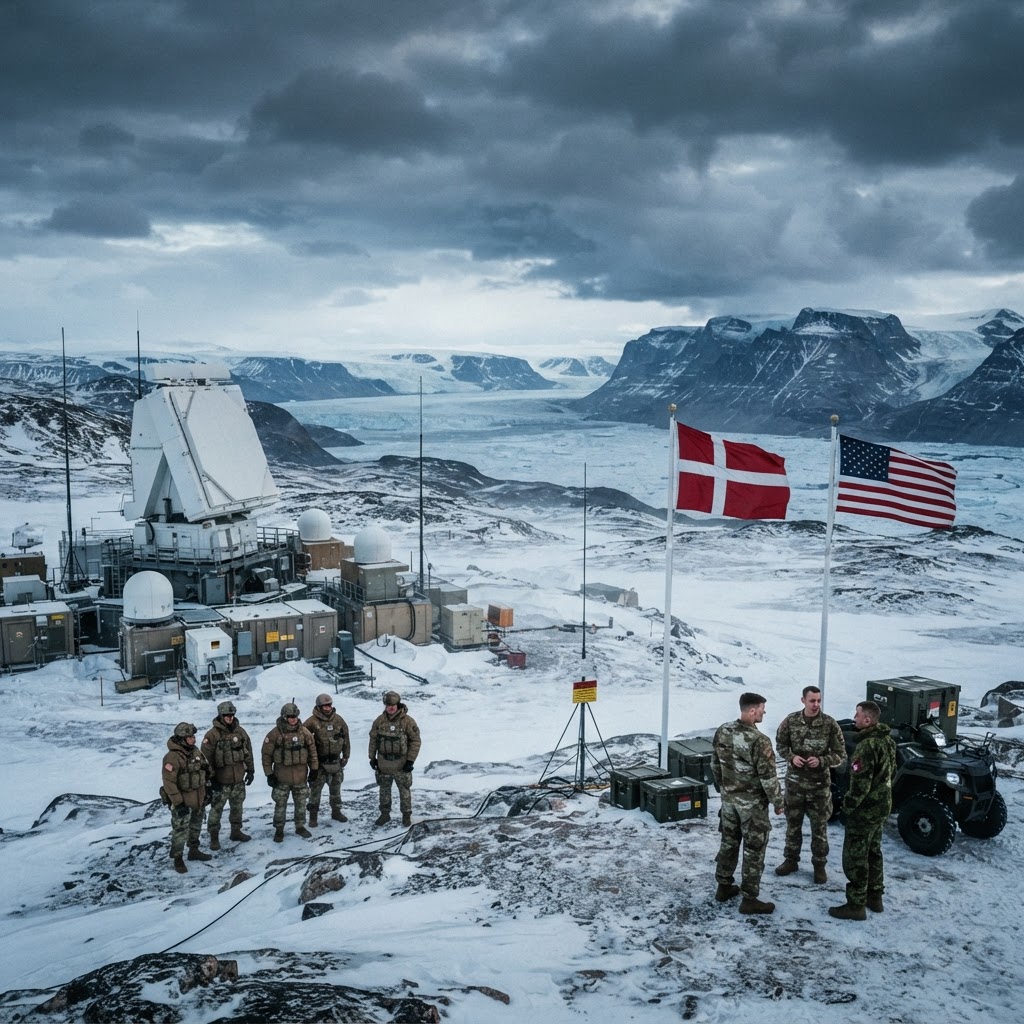
A New Era for the High North The geopolitical architecture of the Arctic underwent a structural transformation on 19 September 2026, as the United States and Denmark finalised a comprehensive security agreement concerning the territory of Greenland. This long-anticipated arrangement represents more than a mere update to existing military protocols; it is a calculated effort by Washington to solidify a robust, permanent presence in the High North at a time when the melting ice caps are opening new, contested trade routes and resource prospects.
Strategic Depth in a Changing Climate For decades, Thule Air Base has functioned as the cornerstone of American interests in the region. However, this new pact signals an evolution toward a more integrated security posture. By formalising enhanced operational access, the United States has successfully navigated the delicate sensitivities of Greenlandic autonomy while securing the support of Copenhagen. Defence analysts in London have noted that the timing of this announcement is far from coincidental. As Russia continues to bolster its own Arctic installations, the Western alliance has felt a growing urgency to assert its capabilities in a theatre once considered geographically isolated.
Dr Elara Vance, a senior fellow at the Royal United Services Institute, suggests the agreement serves as a necessary deterrent. The Arctic is no longer a peripheral concern, but a central stage for global power competition, she observed. The logistical challenges of operating in such a hostile environment are significant, yet the strategic utility of monitoring the GIUK gap—the maritime choke point between Greenland, Iceland, and the United Kingdom—cannot be overstated.
The Diplomatic Balancing Act The negotiation process was underscored by the complex interplay between Copenhagen’s sovereignty and Nuuk’s desire for greater self-determination. The Danish government has consistently maintained that any strengthening of military infrastructure must respect the interests of the Greenlandic people. This agreement incorporates clauses that appear to address these concerns, offering economic investment and infrastructure development alongside the expansion of defence assets. For the United Kingdom, which maintains a keen interest in the stability of the North Atlantic Treaty Organisation’s northern flank, the news is a welcome development. Whitehall has frequently expressed apprehension regarding the security vacuum that might otherwise be exploited by opportunistic external actors.
Future Implications for Global Stability As the international community digests the specifics of this arrangement, questions remain regarding the potential for renewed friction with Moscow and Beijing. Both nations have previously expressed dissatisfaction with what they term the militarisation of the Arctic. Nevertheless, the United States remains steadfast in its position that the pact is purely defensive in nature. Moving forward, the focus will shift toward the deployment of radar technology and maritime reconnaissance units, tasks that will likely require coordinated support from NATO allies, including the Royal Navy.
This is not merely a regional matter; it is the solidification of a strategic corridor that connects the North Atlantic to the wider Pacific, ensuring that the Western alliance remains the dominant arbiter of security in the region for the coming decades.