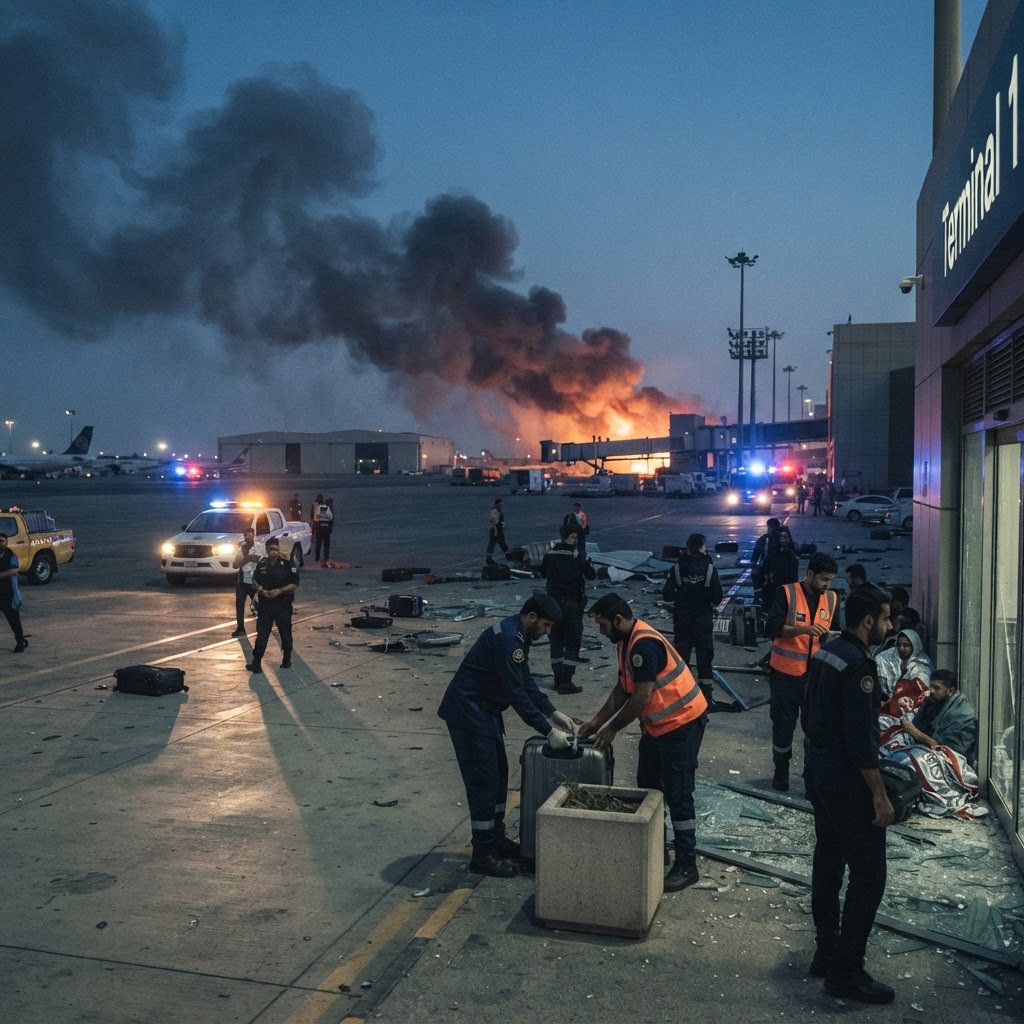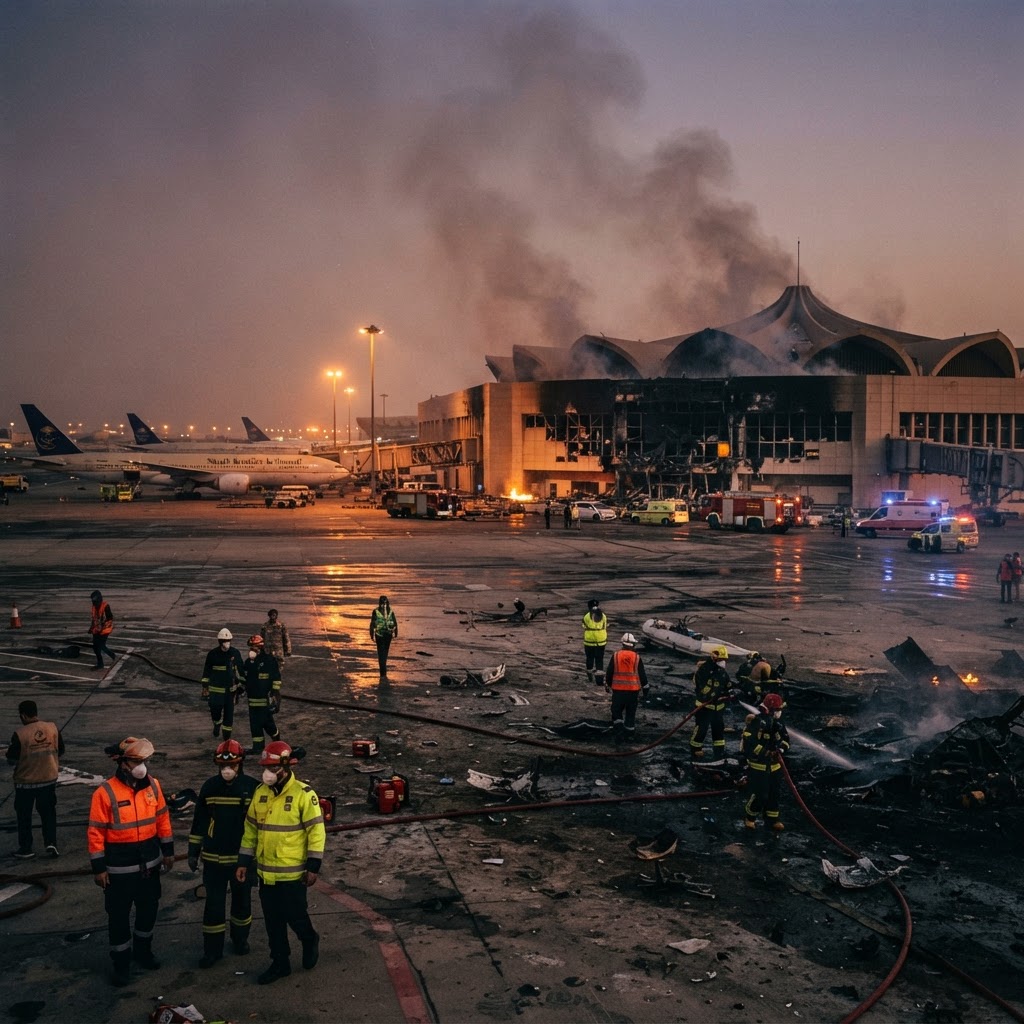
A New Threshold of Violence The fragile security architecture of the Middle East was shattered on the morning of October 11, 2026, as a sophisticated aerial strike targeted the heart of Saudi Arabia’s capital. King Khalid International Airport, a vital hub for regional travel and commerce, became the site of a massacre when a swarm of unmanned aerial vehicles breached perimeter defences. Official reports confirm the death of at least 12 individuals, with a further 309 sustainining injuries ranging from critical to minor, marking the most significant escalation in Houthi aggression seen this decade.
Washington Weighs Intervention In Washington, the atmosphere is one of grave deliberation. The White House has confirmed that military options are currently being appraised to address what is being termed an unacceptable breach of international stability. While the United States has historically maintained a cautious posture to avoid wider regional contagion, the scale of this loss of life at a civilian target has drastically reduced the diplomatic space for restraint. Senior defence analysts suggest that a retaliatory strike targeting Houthi logistics and command hubs in Yemen is now a probability rather than a possibility.
The Iranian Shadow For observers in London and Whitehall, the attack is viewed not as an isolated incident but as a chilling symptom of a deepening proxy war. Intelligence reports consistently point to the proliferation of advanced, long-range drone technology originating from Iranian manufacturing, provided to Houthi forces with the intent of destabilising the Arabian Peninsula. This latest strike fits a pattern of calculated provocation that tests the limits of Saudi resolve and Western deterrence. The Ministry of Defence in London has issued a formal statement urging all parties to exercise restraint, yet the rhetoric suggests a hardening of positions among coalition allies.
A Regional Conflagration The geopolitical ramifications are stark. By targeting Riyadh’s premier international gateway, the Houthis have signalled a departure from localised skirmishes, moving toward a theatre-wide campaign designed to impose a heavy cost on the kingdom’s economy and security. As casualty numbers were updated throughout the day, the humanitarian toll has become a central focus for international relief agencies. Medical facilities in Riyadh have been pushed to the brink, with emergency calls for blood donations and specialist trauma surgeons being broadcast across the city.
Expert Perspectives Dr. Eleanor Sterling, a Senior Fellow at the Royal United Services Institute, noted that this event represents a failure of current containment strategies. The assumption that regional actors would self-regulate in the face of international pressure has proven fundamentally flawed. The strike demonstrates that Houthi technical capabilities have surged, allowing for saturation attacks that overwhelm traditional interceptor batteries. Unless a robust new security framework is established, the risk of a regional conflagration—one that drags in global powers—will only continue to rise.
As the sun sets over Riyadh, the site remains cordoned off, a grim testament to the volatility that continues to plague the region. The silence over the runway today stands in contrast to the chaos of the morning, yet the political tremors are only beginning to be felt.