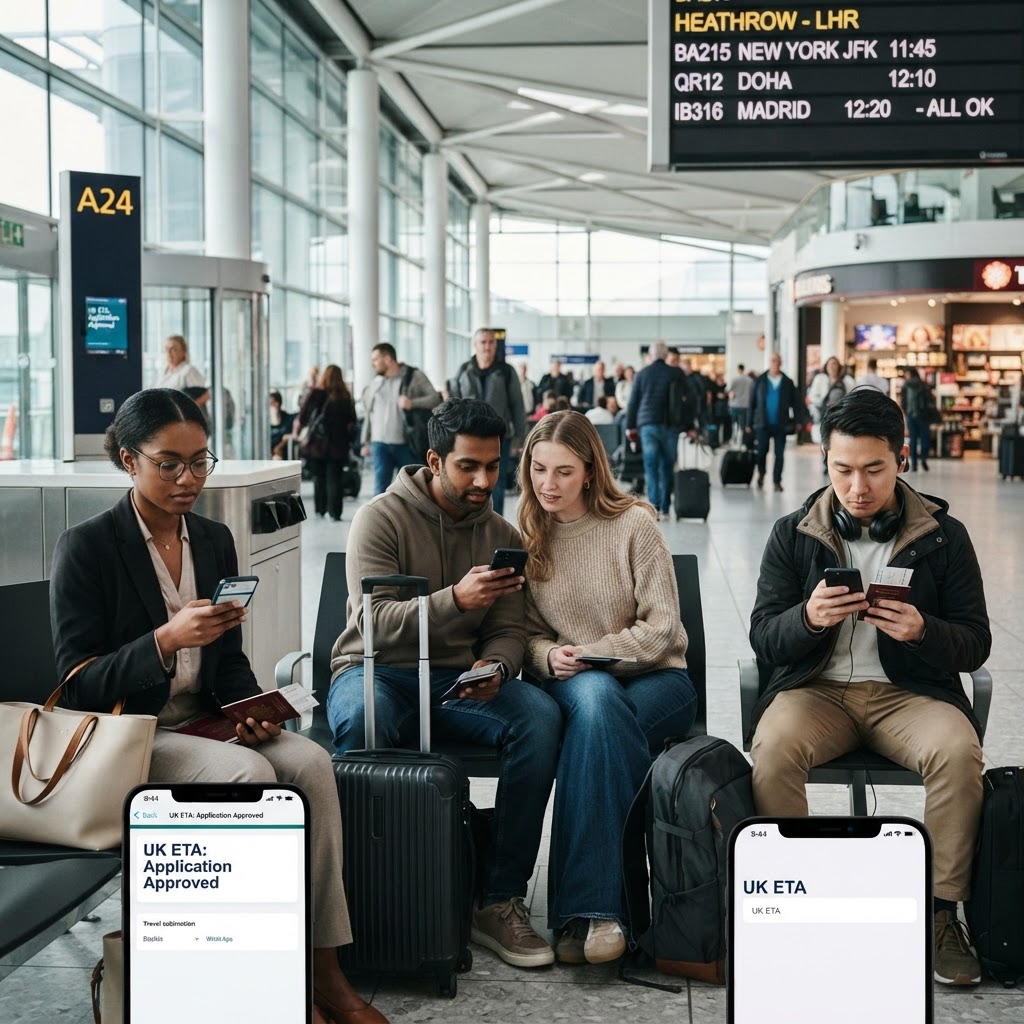
As the UK formalises its Electronic Travel Authorisation scheme, millions of visitors face a fundamental shift in entry requirements. The move marks the end of a long-standing tradition of paperless arrival for many international travellers.
A New Era of Border Management
As of 25 February, the United Kingdom has entered a new chapter in its border management strategy, officially enforcing the mandatory Electronic Travel Authorisation (ETA) scheme for all non-visa nationals. This digital mandate, which impacts visitors from 85 countries including the United States, Canada, and nations across the European Union, represents a significant departure from the traditional ease of entry that once defined travel to Britain. The Home Office has positioned the policy as a cornerstone of its wider digitisation programme, intended to phase out physical documentation and replace it with a comprehensive digital oversight system.
The Practicalities of the Digital Shift
For the prospective traveller, the process is streamlined to operate via the dedicated UK ETA application. The requirement, costing £16, grants permission for multiple journeys over a two-year period, or until the traveller’s passport reaches its expiration date. Home Office officials have stated that the majority of applications are processed automatically, with decisions returned in a matter of minutes. However, for those whose applications trigger additional security scrutiny, the process may involve a longer waiting period, introducing a degree of uncertainty that frequent travellers will need to integrate into their planning.
Strict Enforcement at the Gate
Perhaps the most stringent aspect of the new regime is the legal obligation placed upon commercial carriers. Airlines, maritime operators, and international rail services have been strictly instructed to verify the possession of an ETA or valid visa before allowing passengers to board. Those arriving at airports, ports, or the Channel Tunnel terminals without the requisite digital permission will be denied boarding. This effectively transfers the burden of enforcement from the border force officer at the UK port of entry to the check-in desk, marking a departure from previous practices where documentation checks were often secondary to basic identity verification.
Exceptions and Strategic Context
Despite the wide-reaching nature of the mandate, the Home Office has clarified that British and Irish citizens remain entirely exempt, preserving the unique travel arrangements that have existed under the Common Travel Area. For the wider international community, however, the landscape has undeniably tightened. Security analysts suggest that this shift is part of a global trend towards preemptive border screening, allowing the UK to conduct risk assessments long before a traveller touches down on British soil. The government’s broader strategy aims to achieve a fully digitised, biometric-linked border by the end of the decade, a feat they claim will improve both security and operational efficiency.
A Challenging Transition
Industry bodies have expressed cautious optimism regarding the system's efficiency, though many warn that the communication of these new rules remains a critical hurdle. With millions of visitors historically accustomed to entering the UK without prior authorisation, the potential for mass confusion at check-in counters during the initial months of enforcement is a legitimate concern. The government maintains that the system is robust, but the burden remains on the traveller to ensure their digital status is in order well before they head to the airport. As global travel patterns continue to evolve, the ETA represents not just a logistical hurdle, but a permanent recalibration of how Britain interacts with the international community.