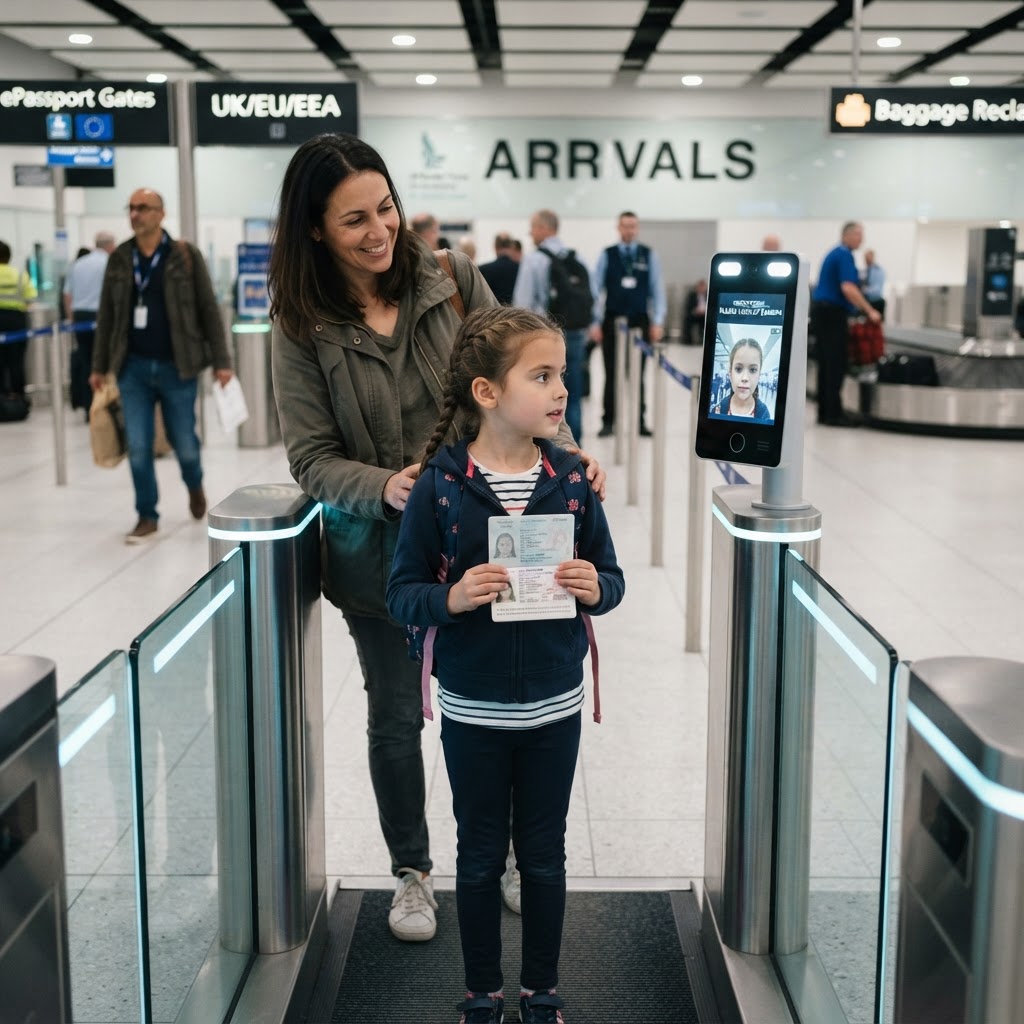
A Modernised Approach to Border Control For parents who have spent hours navigating the labyrinthine arrival halls of British airports, the news is a welcome reprieve. As of 8 July 2026, the Home Office has officially lowered the age threshold for eGate access, allowing children as young as eight to process their own entry alongside their guardians. The initiative, which has been quietly piloted over the summer months, represents the most significant update to UK border management since the initial rollout of facial recognition technology in 2019.
Previously, children under the age of 10 were required to join manual queues for inspection by Border Force officers. While this served a clear security function, the operational inefficiency became increasingly pronounced as passenger volumes returned to, and subsequently surpassed, pre-pandemic levels. By lowering the age bracket, the government estimates that thousands of family units will be diverted from manual desks each day, significantly alleviating the bottlenecks that have become synonymous with the modern travel experience at hubs like Heathrow, Gatwick, and Manchester.
Technology as a Tool for Efficiency The operational logic behind the change is straightforward. Modern eGates leverage sophisticated biometric verification, matching the digital image stored on a child's electronic passport against a live scan. As travel industry analysts have pointed out, the delay is rarely the technology itself but the throughput capacity of the manual desk queue. The Home Office asserts that the system remains entirely secure, with the existing stringent risk-assessment protocols still applied to every passenger attempting to gain entry to the country.
A spokesperson for the Home Office noted that the decision followed an extensive period of consultation with security agencies and aviation stakeholders. The focus remains on maintaining the integrity of the border while ensuring that the UK remains an accessible destination for global travellers. For the aviation sector, this is a victory for operational fluidity, as airports across the 13 designated locations have struggled to balance border security requirements with the demand for faster transit times for families.
The Impact on the Family Travel Market The impact on the passenger experience cannot be overstated. For parents traveling with young children, the 'last mile' of an international journey—the trek through border control—is often the most stressful. The requirement to wait for an officer’s approval frequently meant that families were forced to navigate a separate, often slower, route than solo travellers. This shift effectively harmonises the arrival process, allowing families to move through the automated gates as a single unit.
Market research from the aviation sector suggests that this move could contribute to a tangible reduction in dwell times at arrival halls. However, aviation experts caution that passengers must ensure their travel documentation is compliant before attempting to use the gates. While the technology is robust, a damaged passport chip or an issue with the facial scan will still necessitate a fallback to the manual queues, meaning that the human oversight remains an essential, if less frequent, component of the arrival process.
“This shift effectively harmonises the arrival process, allowing families to move through the automated gates as a single unit.”