National Post UK
Aviation Infrastructure Under Scrutiny Following Repeat NATS Systems Failure

Transport Minister Heidi Alexander has ordered an urgent independent inquiry after a technical collapse crippled the UK'

The National Post

HomeTravel
Travel

Aviation Infrastructure Under Scrutiny Following Repeat NATS Systems Failure

Transport Minister Heidi Alexander has ordered an urgent independent inquiry after a technical collapse crippled the UK's skies. With 2,000 flights grounded, questions are mounting regarding the fragility of national airspace management.

NF

Natalie Forsythe

Travel Editor

Published 9 November 2026·about 10 hours ago 3 min read
Text
Share

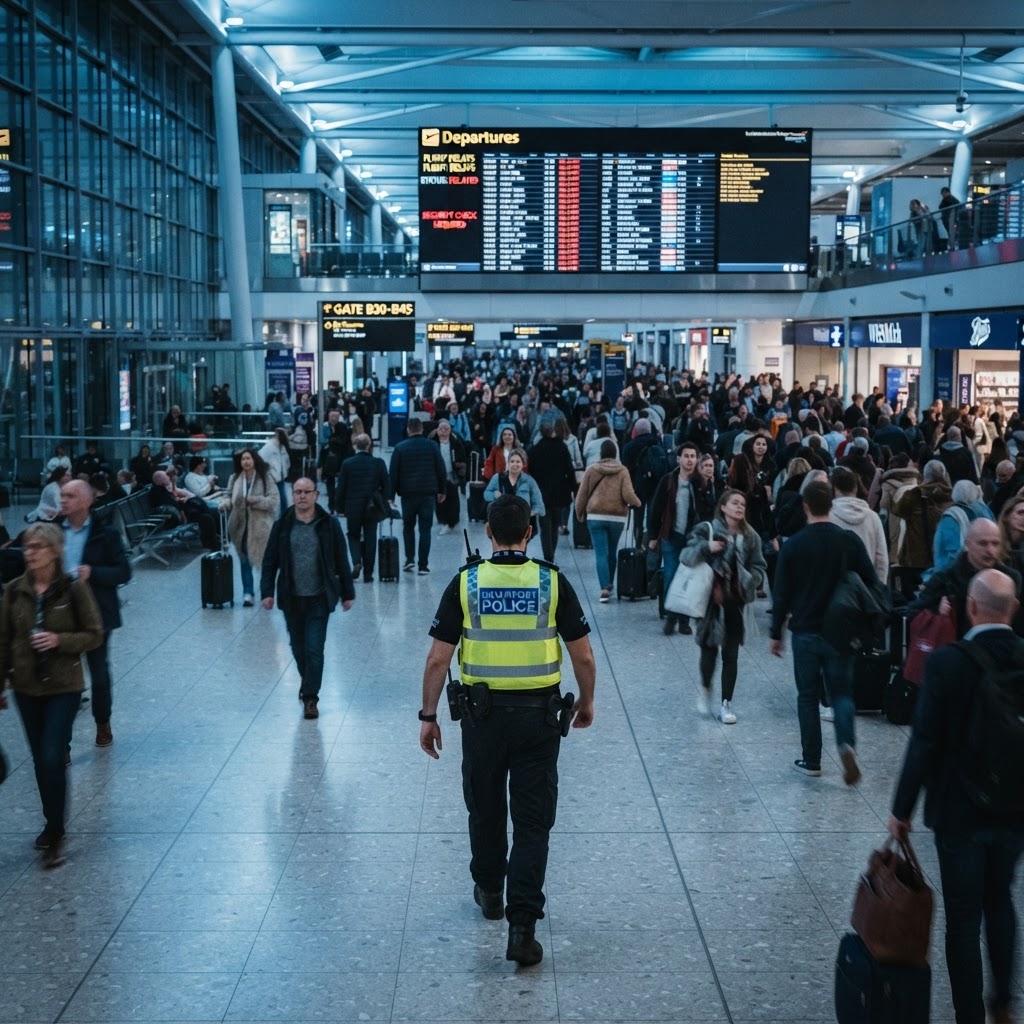
The Anatomy of a Technical Collapse The resilience of Britain’s aviation infrastructure is under intense scrutiny this week after a critical failure within the National Air Traffic Services (NATS) systems triggered a cascade of cancellations across the country’s busiest hubs. The technical outage, which surfaced during one of the most demanding operational windows of the year, brought movement at Heathrow, Gatwick, Manchester, and Stansted to a near-standstill. For many, the sight of abandoned terminal floors and static departure boards has become a dispiritingly familiar tableau, serving as a stark reminder of the fragile digitised systems that underpin modern travel.

Government Intervention and Ministerial Demand Transport Minister Heidi Alexander has wasted little time in seeking accountability, formally requesting an independent review conducted by the Civil Aviation Authority (CAA). The ministerial directive comes amid growing public anger and pressure from airline operators who have incurred millions of pounds in losses due to the operational paralysis. During a briefing, Alexander confirmed that she had summoned NATS chief executive Martin Rolfe to explain the systemic vulnerabilities that allowed a secondary failure to occur, particularly following the high-profile disruption witnessed in August 2023. This latest incident marks the second time in three years that the national provider has suffered a major failure, raising profound concerns among aviation analysts about the long-term viability of current hardware and software maintenance protocols.

Passengers Left Without Recourse As the initial logistical turmoil begins to subside, a secondary conflict is emerging concerning the rights of the passengers left stranded. The Civil Aviation Authority has offered preliminary guidance indicating that the scale of the failure may be classified as 'extraordinary circumstances,' a legal designation that typically absolves airlines of the obligation to provide cash compensation beyond the standard duty of care. Consumer advocates have already voiced strong opposition to this interpretation, arguing that if the failure originated within the national infrastructure itself, it constitutes a systemic operational failure rather than an unavoidable act of nature. This legal tug-of-war is expected to occupy the courts for months, leaving thousands of travellers with little more than limited reimbursements for meals and hotel accommodation.

The Broader Infrastructure Debate Aviation industry experts suggest that the recurrence of these outages points to a deeper malaise within the UK’s aging air traffic infrastructure. While NATS has consistently maintained that their systems are subject to rigorous testing and phased upgrades, the reality of the past thirty-six months tells a more precarious story. The reliance on legacy codebases integrated with modern cloud-based solutions has created a complex web of potential failure points that are increasingly difficult to audit. For an island nation that views its aviation connectivity as a vital component of its international standing, the current situation is untenable. As the CAA prepares its report, the consensus among observers is that mere incremental improvements will not suffice; a fundamental audit of the entire national airspace management strategy is likely required to restore public and commercial confidence in the UK's ability to maintain a functional, reliable, and safe transit network.

TopicsAviationNATSUK TransportInfrastructureHeathrowCAATravel Disruption
Share

About the Author

NF

Natalie Forsythe

Travel Editor

Natalie Forsythe reports for National Post UK with a focus on rigorous analysis and authoritative journalism — a trusted voice across British public life.

Reader Discussion · 6

Subscribers can join the conversation.

SUBSCRIBE TO COMMENT →
J
Janet Fielding9 Nov

I have travelled through British airports for thirty years and I have never seen such a dip in service quality. It feels like the entire aviation sector is just barely holding it together these days.

M
Marcus Sterling9 Nov

The problem is likely a lack of investment in legacy software systems. We keep patching up decades-old technology instead of performing a full-scale digital transformation.

E
Eleanor Rigby9 Nov

My flight to Malaga was cancelled entirely and I am still waiting to hear back about a refund. These private companies seem happy to take our money but fail to invest in the basic systems that keep planes in the air.

D
David Thorne9 Nov

While I appreciate the frustration, people need to remember that safety is paramount. I would rather a delay than a catastrophe caused by faulty data input.

S
Sarah Jenkins9 Nov

I was stuck at Heathrow for ten hours on Monday and the communication was absolutely appalling. NATS really need to explain how they plan to prevent this from happening again before the summer rush.

A
Arthur Penhaligon9 Nov

It is honestly embarrassing that our national infrastructure is this fragile in 2024. How a single technical glitch can ground the entire country is beyond me.


More from Travel

Most Read in Travel

Morning Briefing

The day's top stories, before 7am

Join 40,000 readers who start their morning with National Post UK.