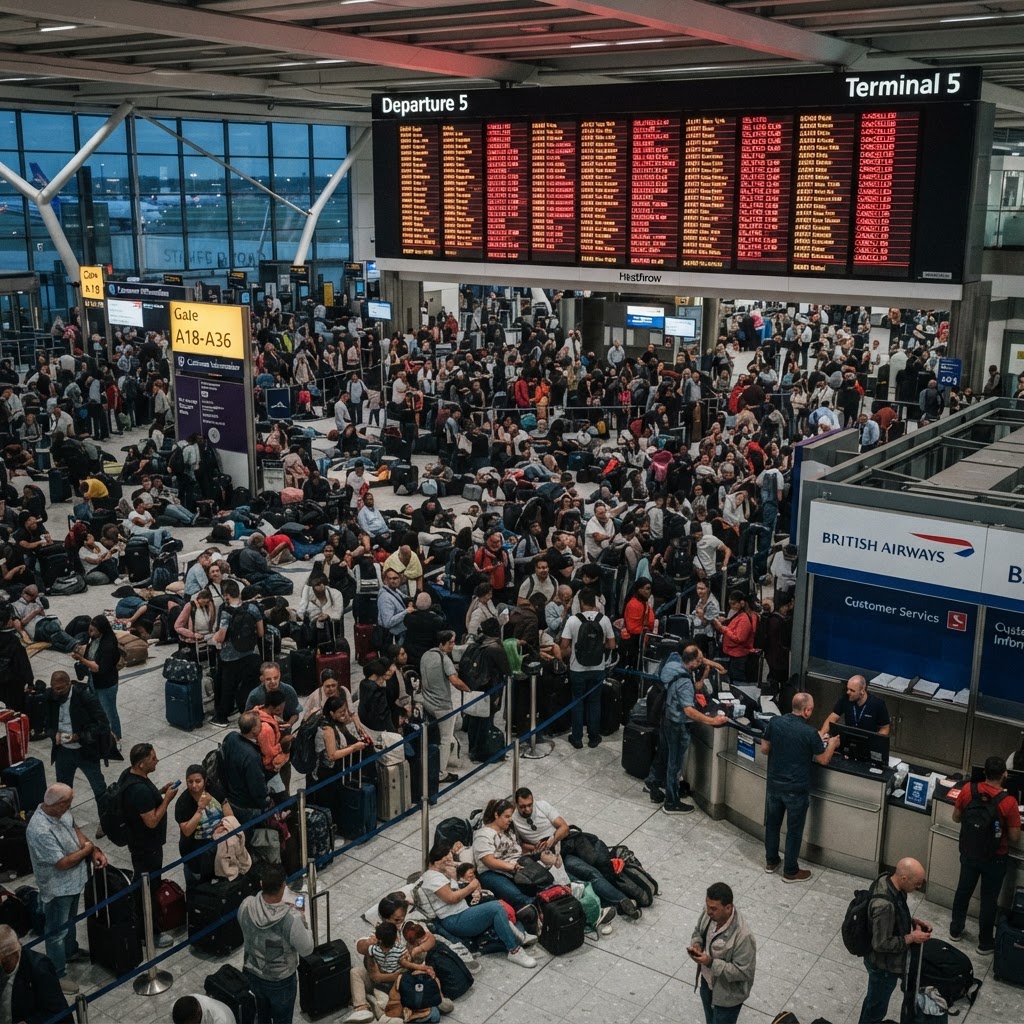
Virgin Atlantic and Delta Air Lines have launched a formal challenge against the airport’s directive to split their collaborative operations. The carriers contend the move threatens the integrity of their transatlantic hub model and undermines healthy market competition.
The Strategic Rift
In a significant escalation of tensions at London Heathrow, Virgin Atlantic and Delta Air Lines have served notice that they intend to contest the airport authority’s recent directive to bifurcate their joint operational footprint. Announced on 6 November 2026, the move to redistribute the carriers into separate terminal facilities has been met with immediate hostility from the airlines, who argue that the decision risks dismantling the operational synergy that has defined their transatlantic partnership for over a decade.
The Connectivity Crisis
The core of the dispute rests upon the logistical complexities inherent in Heathrow’s constrained layout. For passengers, the terminal pairing of Virgin and Delta has long served as a gold standard for seamless connectivity between the UK and North America. By physically separating the two entities, the airlines claim that minimum connection times will balloon, passenger frustration will mount, and the overall efficiency of the world’s most significant aviation corridor will be permanently compromised. Industry analysts suggest that the loss of 'co-location' represents more than a mere inconvenience; it threatens to degrade the product offering that keeps these carriers competitive against the combined might of the International Airlines Group (IAG).
Market Competition Concerns
Beyond the passenger experience, the airlines are framing the terminal shuffle as a structural threat to market equilibrium. Virgin Atlantic, the challenger brand that has historically pushed against the dominance of British Airways at Heathrow, views the move as an unintended (or perhaps intentional) weakening of its ability to contest market share. If Delta passengers are isolated from Virgin’s wider network, the attractiveness of the joint venture is diminished. This, the airlines argue, serves only to stifle competition, effectively creating a barrier to entry that benefits incumbent giants while penalising those who rely on high-frequency, integrated transit.
The Regulatory Standoff
Heathrow Airport, currently managing its post-expansion regulatory pressures and capacity constraints, maintains that operational rebalancing is a necessity for the long-term health of the airport’s infrastructure. However, the legal challenge is expected to hinge on whether the airport’s decision-making process took sufficient account of the competitive harm caused by such a split. Aviation lawyers note that the Civil Aviation Authority (CAA) will be closely watching the proceedings, as the outcome could set a precedent for how the UK’s primary hub manages the operational demands of complex airline alliances in a post-Brexit landscape.
Looking Ahead
As both sides prepare for what promises to be a protracted legal and regulatory confrontation, the broader travel industry remains on high alert. Should the airlines succeed in blocking the move, Heathrow may be forced to revisit its long-term terminal strategy, potentially delaying other vital infrastructure projects. Conversely, a defeat for the carriers would signal a shift in the balance of power, with the airport authority asserting greater control over airline placement regardless of the commercial implications for the carriers themselves.