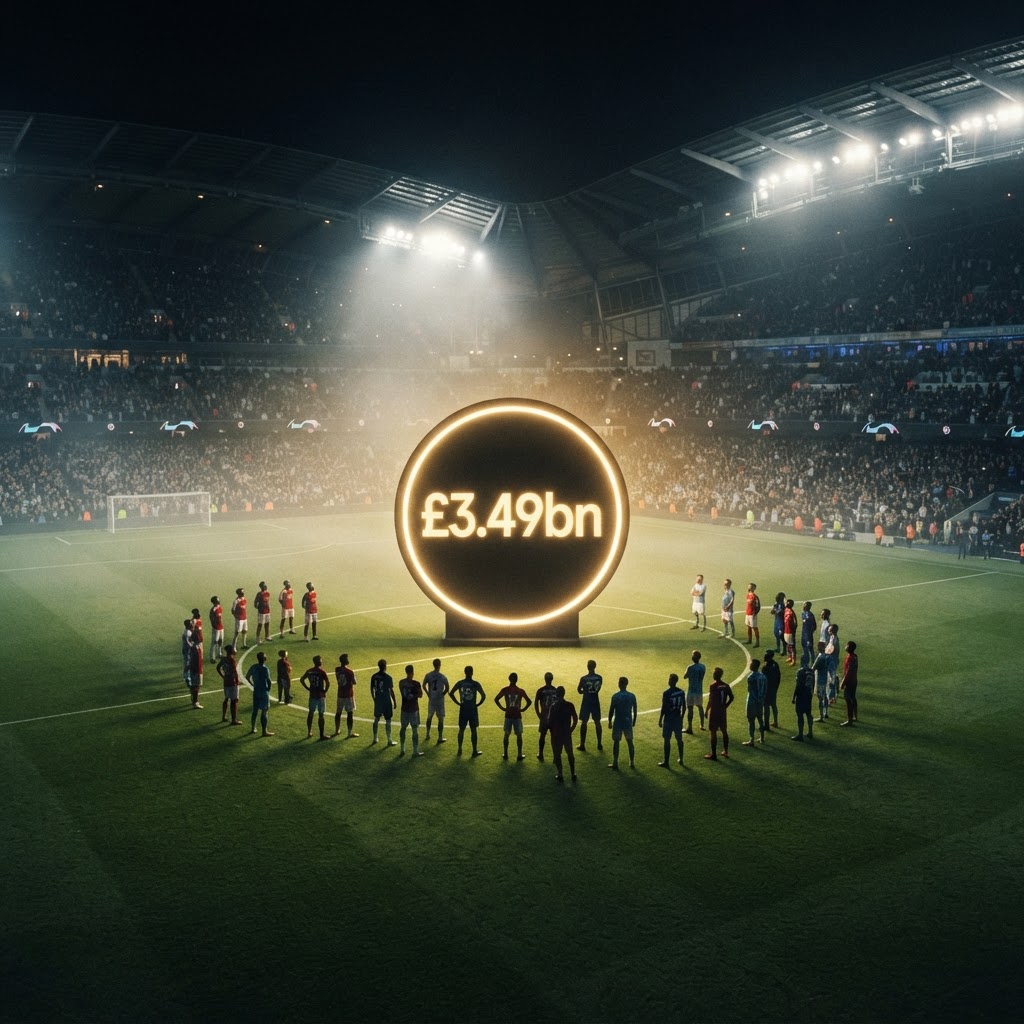
The arithmetic of professional football has long been a pursuit of excess, yet even by the inflated standards of the modern era, the summer transfer window of 2026 stands as a watershed moment in economic history. With total spending reaching an astonishing £3.49bn, the Premier League has not merely outpaced its rivals; it has effectively transitioned into a financial ecosystem that operates by an entirely different set of rules.
The Great Capital Flight: Premier League Financial Hegemony Reaches Unprecedented Zenith
English top-flight clubs have dismantled all previous transfer records with an eye-watering £3.49bn summer expenditure. As the dust settles on a frantic window, the disparity between the Premier League and its continental peers continues to widen.
TB
Tom Bradley
Sports Correspondent
Published 19 September 2026·28 days ago 3 min read
Text
TopicsPremier LeagueFootball FinanceTransfer MarketSports BusinessEnglish Football
About the Author
TB
Tom Bradley
Sports Correspondent
Tom Bradley reports for National Post UK with a focus on rigorous analysis and authoritative journalism — a trusted voice across British public life.
Reader Discussion · 4
Subscribers can join the conversation.
SUBSCRIBE TO COMMENT →J
James O'Malley19 Sept
I have been a season ticket holder for thirty years, and the disconnect between the fans in the stadium and these astronomical transfer fees is getting wider by the day. It is becoming harder to justify the ticket prices when players are moving for hundreds of millions.
D
David Thorne19 Sept
It is worth remembering that a huge portion of this money circulates back into the grassroots game and lower divisions. While the top end is excessive, the trickle-down effect is often ignored in these discussions.
S
Sarah Jenkins19 Sept
People have been predicting the collapse of the Premier League for years, yet here we are with the highest quality of football on the planet. If the money is there, clubs should be allowed to spend it.
A
Arthur Penhaligon19 Sept
It is absolutely unsustainable at this rate. We are witnessing the death of competitive balance, and I fear for the smaller clubs who simply cannot keep up with this financial doping.