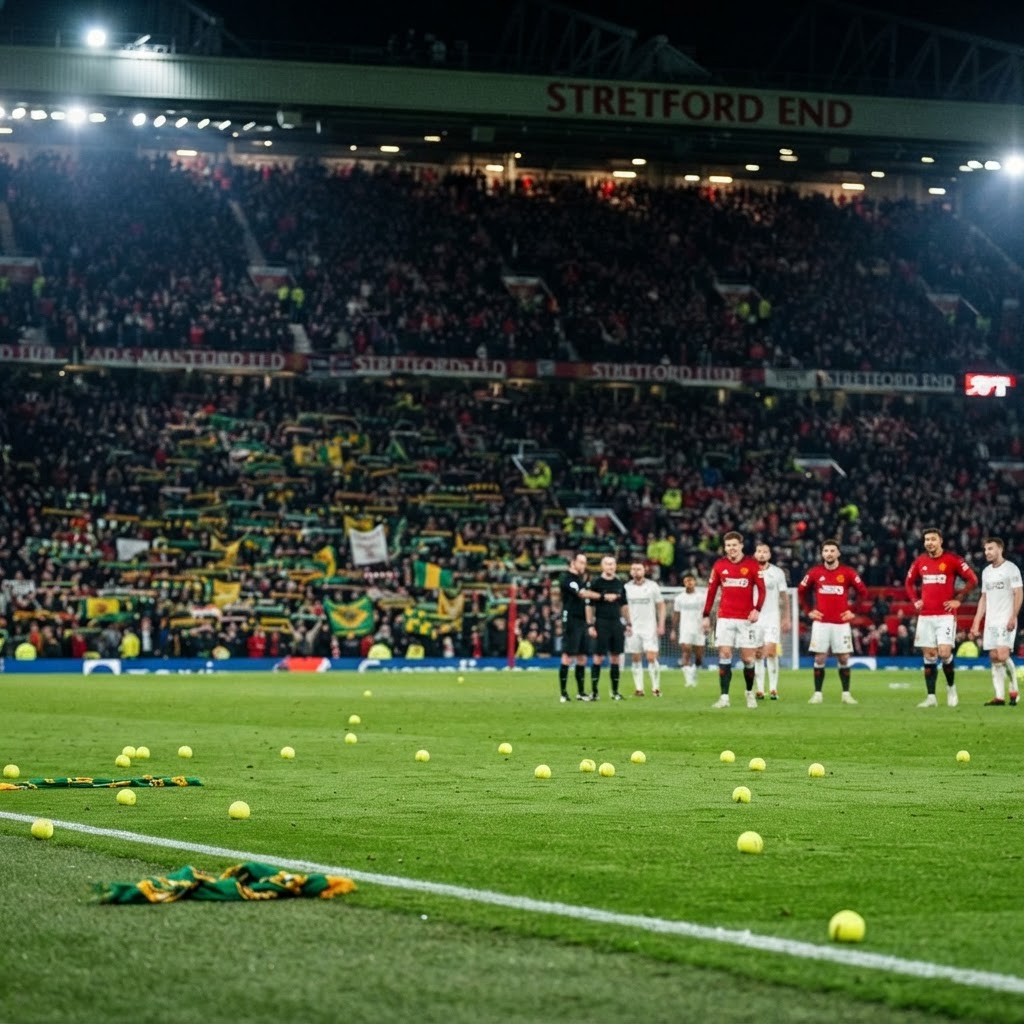
A fractured atmosphere The sanctuary of Old Trafford was punctured by an unusual sight this week, as the club confirmed it had issued indefinite stadium bans to four individuals following a targeted demonstration during the recent Champions League fixture against Roma. The supporters in question gained access to the pitch-side vicinity to launch a cascade of tennis balls onto the hallowed turf, forcing a temporary cessation of play and drawing the ire of both the officiating crew and the club hierarchy. The protest, which occurred midway through the first half of the November 2026 clash, was explicitly aimed at the long-standing grievances held by the match-going public regarding the club's ownership structure.
While civil protest has long been a fixture of the footballing landscape, the threshold for acceptable conduct in the eyes of club authorities appears to be shifting. A spokesperson for Manchester United stated that the decision was based on a fundamental breach of ground regulations, which prohibit the throwing of objects onto the field of play. The club maintains that such actions constitute a significant safety risk, regardless of the political sentiment motivating the participants. The bans, which extend to all domestic and European competitions, serve as a stern warning to those who might consider future escalations of their dissatisfaction.
The thin line of protest The wider context of this unrest is rooted in years of structural disillusionment. The current ownership group has frequently found itself at odds with a significant portion of the support base, leading to sporadic and creative forms of protest. However, the move from banner-waving and chanting to direct interference with the match day proceedings represents a marked departure in tactical approach. Football law experts suggest that the club is under immense pressure from governing bodies to ensure that the Champions League stage remains orderly, particularly as high-profile fixtures attract global scrutiny from sponsors and broadcasting partners alike.
Former players and commentators have weighed in on the delicate balance of influence between the stands and the boardroom. While the right to dissent is considered a cornerstone of British football culture, there is a growing consensus that the pitch itself should remain a protected space. For many, the sight of a halted European tie is indicative of a deeper malaise, where the traditional relationship between club and community has become increasingly adversarial.
Reflections on a sport at a crossroads As the winter season progresses, the administrative fallout from the Roma fixture remains the primary concern for the supporter groups involved. Legal representation for the banned individuals has suggested that they may challenge the severity of the sanction, arguing that the tennis ball protest was a non-violent expression of political opinion. Yet, the club stands resolute. The incident has sparked a broader conversation regarding the commercialisation of the sport and the alienation of the grassroots fan, whose voices feel increasingly marginalised in the pursuit of sustainable revenue growth.
As Manchester United prepares for the next series of fixtures, the atmosphere at Old Trafford will be monitored with heightened intensity. Security protocols are expected to be bolstered, and the stewards will be briefed to identify potential flashpoints before they manifest on the pitch. Whether this crackdown will dampen the fires of discontent or merely serve to solidify the resolve of the protest groups remains an open question. One thing is certain: the tension between the modern footballing institution and its historic lifeblood shows no sign of abating before the year is out.
“The move from banner-waving to direct interference with the match day proceedings represents a marked departure in the tactical approach of the dissenters.”