National Post UK
Royal Patronage in the Borders: The Princess of Wales Champions Regional Craftsmanship

During a significant visit to the Scottish Borders, the Princess of Wales underscored the critical role of grassroots cu

The National Post

HomeCulture
Culture

Royal Patronage in the Borders: The Princess of Wales Champions Regional Craftsmanship

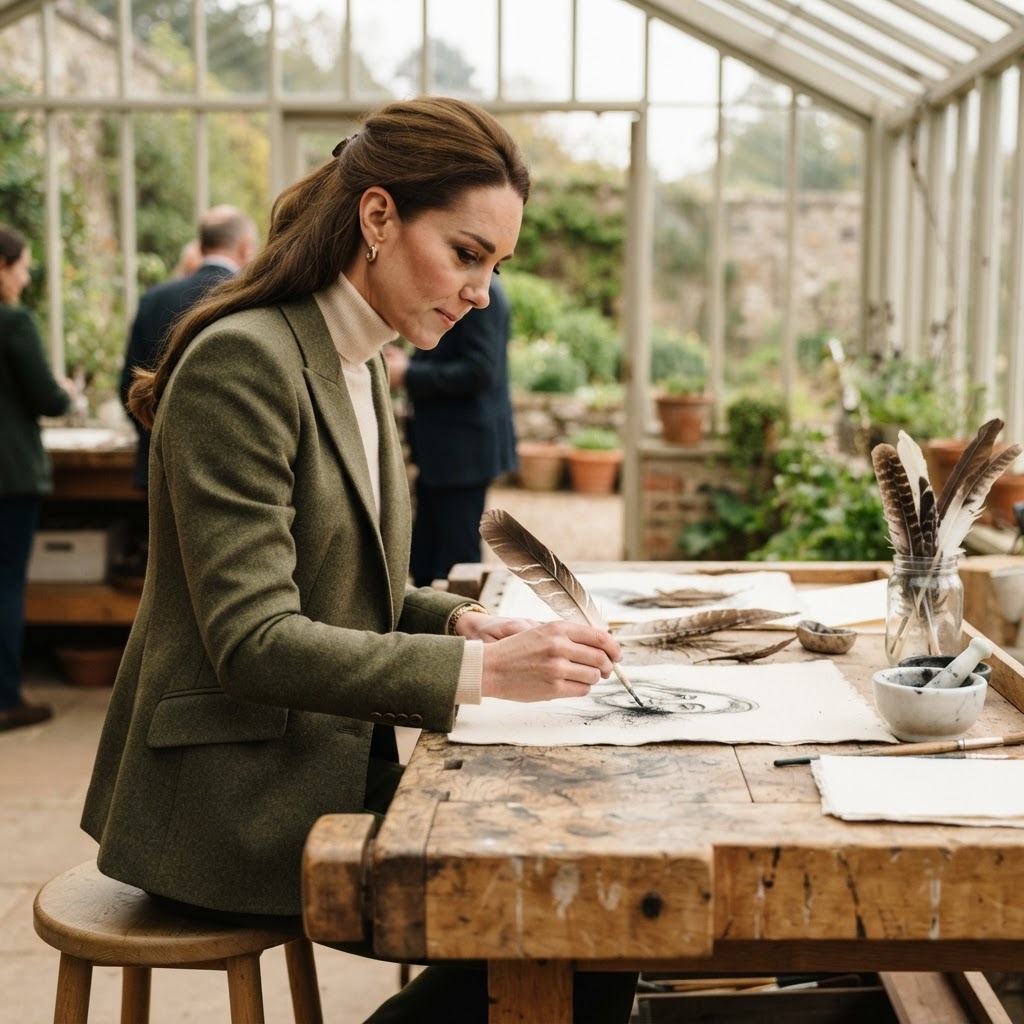
During a significant visit to the Scottish Borders, the Princess of Wales underscored the critical role of grassroots cultural investment. Her engagement highlights the transformative impact of the Hugo Burge Foundation on local creative industries.

VC

Victoria Cross

Culture Editor

Published 28 November 2026·about 2 hours ago 3 min read
Text
Share

A New Chapter for Borderland Creativity The Scottish Borders, a region long defined by its rugged landscapes and rich textile history, played host to a significant royal engagement yesterday. The Princess of Wales visited a pioneering arts project, signalling a renewed focus on the vitality of rural creative sectors. Her presence at the site was not merely ceremonial; it served as a pointed endorsement of the sustainable models of patronage that underpin contemporary British craft.

The Hugo Burge Foundation’s Legacy At the heart of the day’s discourse was the Hugo Burge Foundation, an organisation that has become synonymous with the revitalisation of Scottish artistry. Established to preserve and promote the legacy of craftsmanship, the foundation has consistently provided the financial scaffolding necessary for artisans to thrive in an increasingly digitised economy. By awarding hundreds of thousands of pounds in grants, the foundation ensures that traditional skills—from weaving to bespoke furniture making—do not succumb to the pressures of mass production. For many local practitioners, this support represents more than capital; it is a validation of the intrinsic value of the handmade object.

The Economic and Social Imperative Experts argue that the intervention of such philanthropic bodies is vital for the socio-economic health of the Borders. Dr Alistair Macleod, an economist specialising in regional development, notes that cultural initiatives act as a catalyst for wider regeneration. The Princess’s visit underscores the reality that heritage arts are not museum pieces, but rather the foundation of a modern, export-orientated regional economy. The engagement highlights the government’s ongoing challenge to bridge the gap between metropolitan creative hubs and the isolated but immensely talented pockets of industry in the north.

Preserving the Local Fabric The site of the visit, which has recently benefited from foundation-backed infrastructure improvements, serves as a testament to what can be achieved through targeted local investment. The Princess, known for her interest in the arts, spent considerable time interacting with the craftspeople whose work relies on the foundation’s backing. It is a relationship of mutual necessity: the foundation provides the resources, and the artists provide the cultural identity that defines the region’s public image. As the creative industries face shifting funding landscapes, the role of private foundations has become increasingly prominent in British public life.

A Commitment to the Future The visit comes at a time when the debate over arts funding in the UK remains fraught. While national institutions often dominate headlines, the quiet, consistent work of regional foundations suggests a different path forward—one driven by local empowerment rather than top-down policy. The Princess of Wales, by bringing the weight of her office to a project in the Scottish Borders, has brought national attention to the importance of nurturing talent outside the traditional centres of gravity. This is an approach that values the continuity of craft as a pillar of national identity, ensuring that the skills honed over generations continue to find relevance in the twenty-first century. As the sun set over the hills of the Borders, the message left by the day’s proceedings was clear: the future of British art lies in its ability to remain rooted in the very communities that have shaped it for centuries.

TopicsRoyal FamilyScottish BordersHugo Burge FoundationArts and CultureBritish CraftsmanshipRegional Development
Share

About the Author

VC

Victoria Cross

Culture Editor

Victoria Cross reports for National Post UK with a focus on rigorous analysis and authoritative journalism — a trusted voice across British public life.

Reader Discussion · 5

Subscribers can join the conversation.

SUBSCRIBE TO COMMENT →
S
Susan P. Henderson28 Nov

I am not sure why we are still fixated on royal patronage in this day and age. Should we not be focusing on commercial viability and modernising these industries rather than relying on aristocratic approval?

J
James F. MacLeod28 Nov

I have always felt the Scottish Borders are overlooked by the central government. Perhaps a royal visit will finally bring some much-needed tourism and attention to the independent makers in our towns.

E
Eleanor Rigby28 Nov

My grandmother worked in the mills in Hawick her entire life, so it is heartening to see our local heritage being celebrated again. These skills are a dying art and need to be preserved for the next generation.

D
David Stirling28 Nov

While I appreciate the sentiment, I do wonder how much tangible support these small businesses will actually receive. A photo opportunity is nice, but these craftspeople need serious investment and better infrastructure to survive.

M
Margaret Thompson28 Nov

It is wonderful to see the Princess highlighting the incredible textile work coming out of the Borders. Our regional artisans deserve this kind of recognition on the national stage.

More from Culture

Most Read in Culture

Morning Briefing

The day's top stories, before 7am

Join 40,000 readers who start their morning with National Post UK.