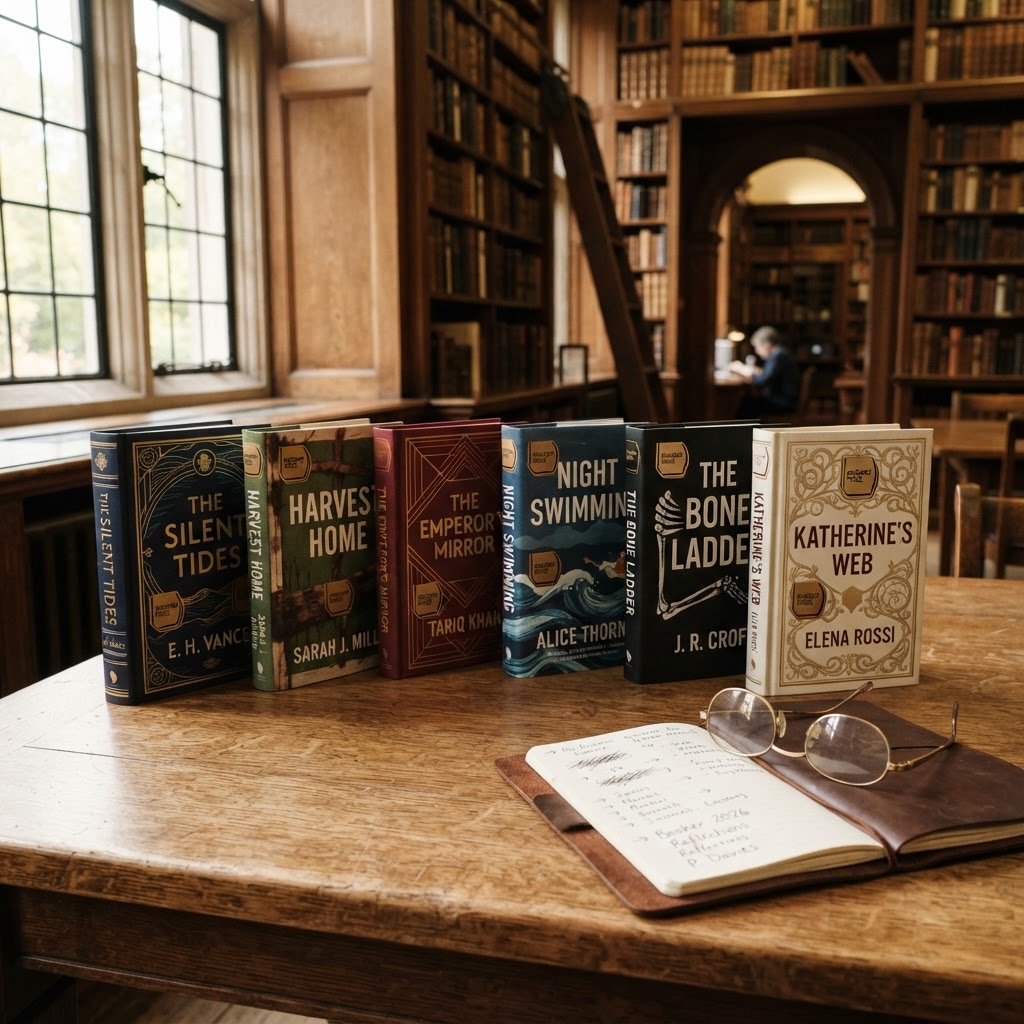
A Battle for the Canon In the quiet, wood-panelled confines of the Booker Prize judging room, the silence was, by all accounts, heavy. Following what officials have described as an exceptionally gruelling selection period, the panel has finally emerged to present the 2026 shortlist. The decision, confirmed by the BBC on 22 September, marks the culmination of an arduous process that saw judges grapple with a record-breaking longlist of remarkable depth and narrative complexity.
The Booker Prize, long considered the barometer of prestige in the English-speaking literary world, requires its judges not merely to select the most readable books, but to identify works that push the boundaries of form and style. This year, the stakes felt particularly elevated. With an influx of experimental submissions from across the Commonwealth, the panel faced a series of dilemmas that turned the selection process into a veritable intellectual tussle, reflecting a global zeitgeist characterised by uncertainty and seismic social shifts.
The Weight of Selection The 2026 shortlist is marked by a palpable tension between the established heavyweights of the literary scene and the audacious newcomers who have chosen to disregard convention. Critics have noted that this year’s selection feels less like a contest and more like a survey of the current state of the human condition. The books selected do not shy away from the darker contours of history, yet they remain tethered to an essential optimism about the capacity for language to reveal truth.
Dr Alistair Thorne, a fellow at the Royal Society of Literature, suggests that the list represents a definitive move toward a more fragmented, yet deeply honest, method of storytelling. 'We are seeing a departure from the traditional linear narrative that has dominated the prize for decades,' Thorne remarked. 'The judges have opted for works that challenge the reader, requiring a level of engagement that is rarely demanded by contemporary fiction. It is a bold, albeit risky, set of choices.'
Navigating the Deliberation The panel, chaired by a panel of distinguished authors and critics, spent the preceding months in deep, often fractious, debate. The consensus required to narrow the field from the longlist to the final six was reportedly difficult to reach, with several 'favourite' novels falling at the final hurdle. This friction, however, is a hallmark of the Booker’s integrity. The organisers maintain that the rigour of the selection is what separates the Booker from other, more commercial awards. The selection serves as a map for the year's reading, guiding the public toward works that are destined for longevity.
The cultural impact of such a list cannot be overstated. For independent booksellers, the announcement is the starting pistol for the busiest months of the autumn trade. In a climate where the physical book faces competition from a myriad of digital distractions, the Booker Prize remains a potent force in securing the health of the publishing industry and ensuring that serious literary fiction continues to hold a place of prominence in the public conversation.
“The judges have opted for works that challenge the reader, requiring a level of engagement that is rarely demanded by contemporary fiction.”