A New Chapter for Regional Ambition For decades, the UK City of Culture programme has been the primary vehicle for urban transformation, turning the spotlight on centres like Hull, Coventry, and Bradford. However, yesterday’s announcement has shifted that focus firmly towards the nation’s smaller urban spaces. Pontypridd, Birkenhead, and the Isle of Bute have been revealed as the final three contenders for the inaugural UK Town of Culture title, a competition specifically engineered to address the cultural deficit often felt in towns bypassed by the grandeur of the city-wide awards.
This initiative represents a strategic pivot in cultural policy. By targeting smaller populations, the organisers hope to provide a platform for communities to articulate their unique heritage, often overshadowed by larger metropolitan neighbours. The competition seeks to leverage arts funding not merely as a decorative exercise, but as a genuine catalyst for long-term economic regeneration and a boost to local tourism sectors.
The Contenders: A Diverse Cultural Mosaic The shortlist presents a fascinating cross-section of the British experience. In Wales, Pontypridd has long been regarded as a crucible of industrial history and musical talent. The town’s proposal hinges on its ability to weave its proud mining legacy into a modern cultural tapestry, positioning itself as a hub for artistic innovation in the Valleys. The local council has emphasised that this is a bid to prove that small towns can serve as the heartbeat of national identity.
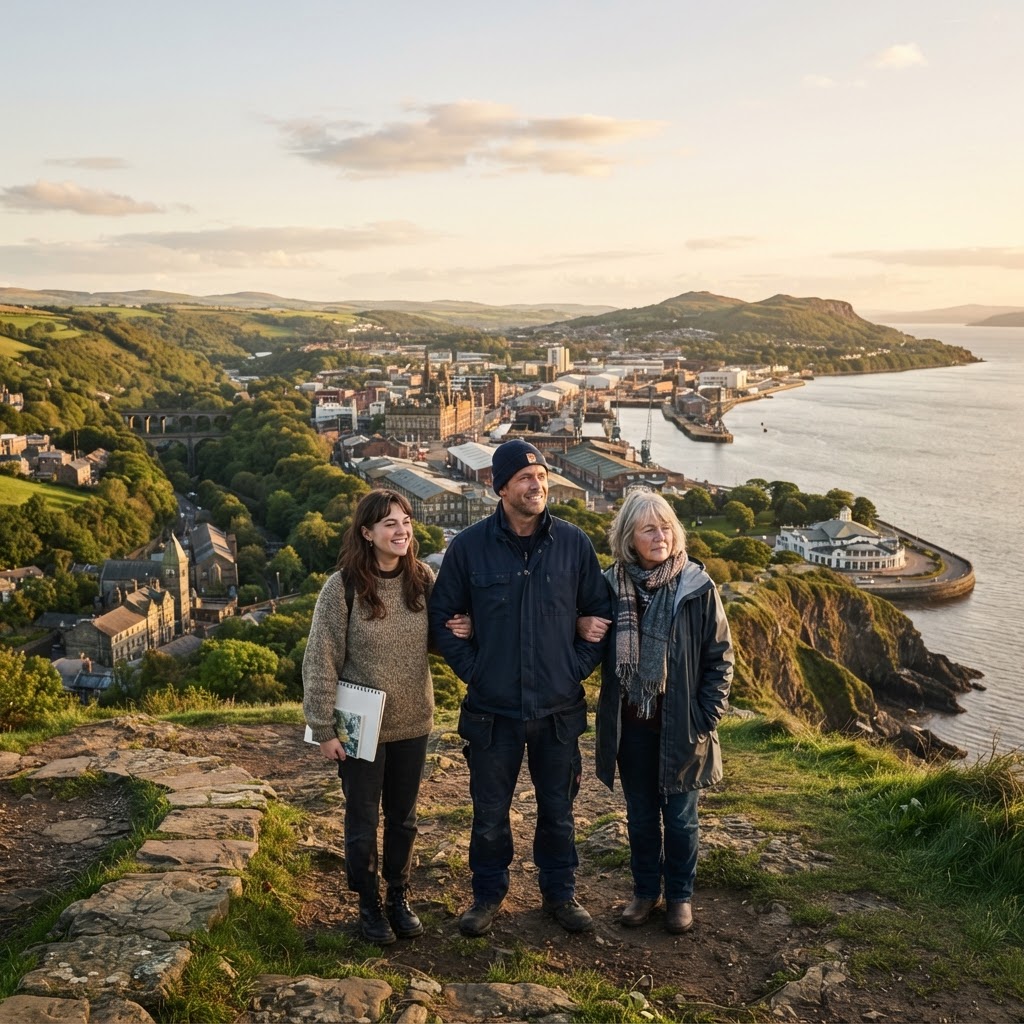
Across the border in Merseyside, Birkenhead offers a different narrative. Long considered the shadow of Liverpool, Birkenhead is currently in the midst of an extensive physical and social redevelopment. The town’s bid leans heavily into its maritime heritage and its burgeoning creative quarters. There is a palpable sense in Wirral that the town is ready to step into the light, moving away from its historical industrial identity towards a future defined by design, craft, and social enterprise.
Perhaps the most unconventional entry is the Isle of Bute in Scotland. Offering a distinct island perspective, Bute’s candidacy is rooted in the intersection of Victorian architecture and remote, landscape-led creativity. Its bid highlights the challenges and rewards of cultural programming in a geographically isolated setting, promising an immersive, year-long programme that challenges the notion that major cultural events must take place in high-density urban areas.
“The true success of the UK Town of Culture will be measured by whether the winner can use the influx of attention to build infrastructure that endures beyond the final closing ceremony.”
The Economic and Social Imperative Experts suggest that the success of the initiative will depend on more than just the quality of the winning bid. The challenge lies in ensuring that the funding filters down to those who need it most. Dr Alistair Vance, a senior lecturer in regional development, notes that the impact of such titles is often measured in legacy. 'The danger with these competitions is that they become flash-in-the-pan events,' he suggests. 'The true success of the UK Town of Culture will be measured by whether the winner can use the influx of attention to build infrastructure that endures beyond the final closing ceremony.'
The winning location will be tasked with orchestrating a twelve-month programme of exhibitions, festivals, and educational outreach. This is designed to serve as a magnet for tourists while simultaneously engaging the local community in a way that fosters civic pride. As the government continues to discuss the levelling-up agenda, this competition provides a concrete example of how cultural investment can serve as the bedrock of wider social renewal.