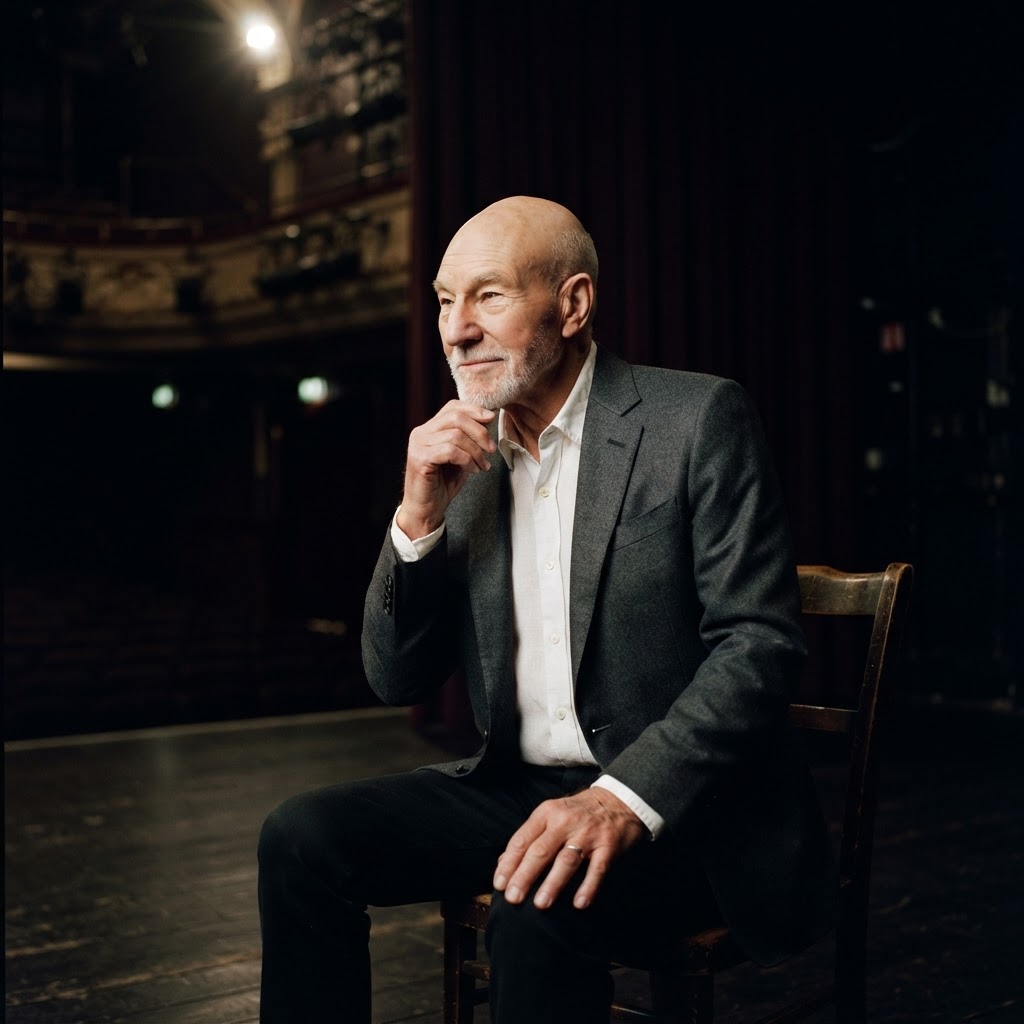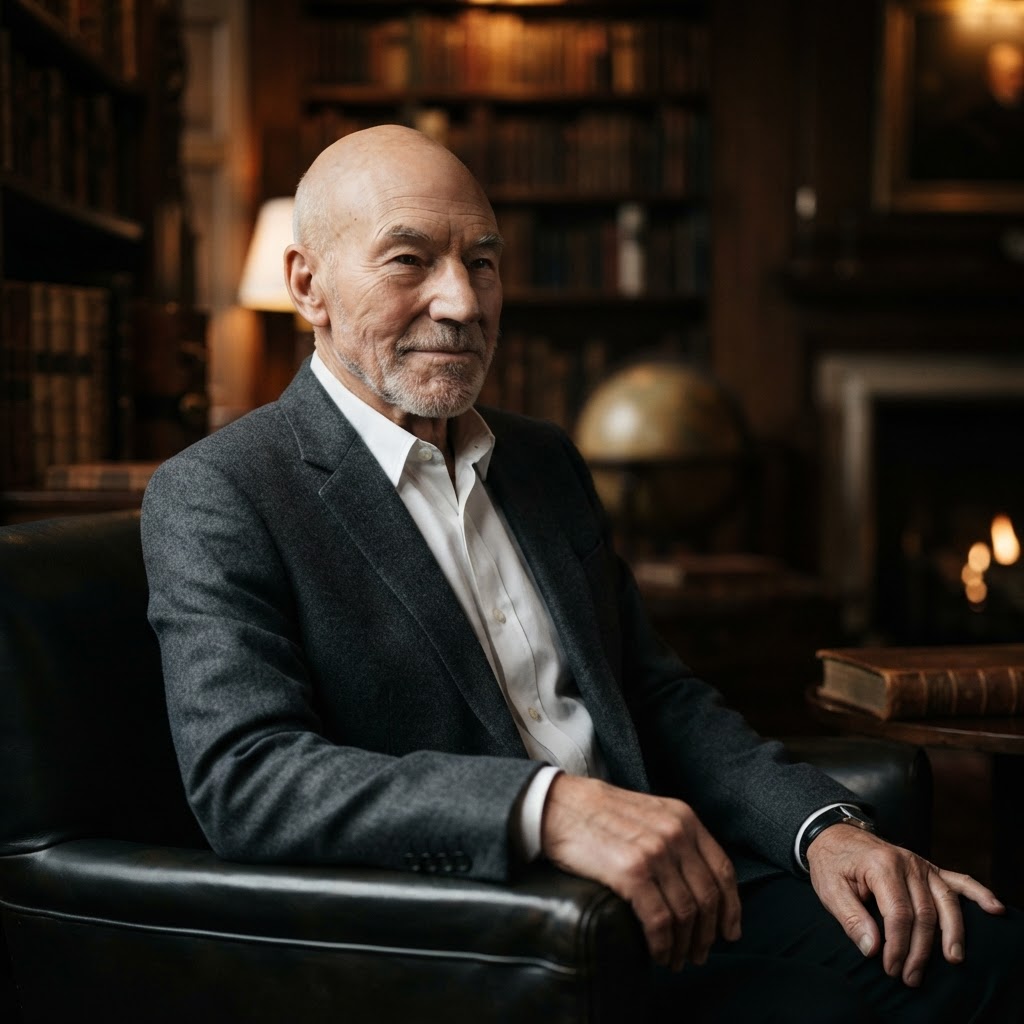
A Life Defined by Versatility The British acting fraternity is in mourning this week following the announcement that Sir Patrick Stewart, one of the most formidable and respected figures in the history of stage and television, has died at the age of 86. The news, confirmed in reports on 30 October 2026, marks the end of an era for both the classical theatre tradition and the international cultural landscape.
Born in Mirfield, West Yorkshire, in 1940, Stewart’s path to stardom was not linear. He spent his early years navigating the harsh realities of a post-war childhood before finding his calling within the walls of the Bristol Old Vic Theatre School. It was here that he cultivated the unmistakable, resonant baritone that would later become synonymous with both the works of William Shakespeare and the commanding presence of Captain Jean-Luc Picard.
From Stratford to the Stars For decades, Stewart was a pillar of the Royal Shakespeare Company. His interpretations of Macbeth, King Lear, and Prospero were lauded for their intellectual rigour and emotional transparency. Even as his profile grew in the United States, he never truly abandoned his theatrical roots, often citing the stage as his spiritual home. His ability to move seamlessly between the intense, claustrophobic atmosphere of an intimate play and the expansive, technically demanding world of big-budget science fiction became his defining professional characteristic.
It was in 1987 that Stewart achieved global household status, cast as Jean-Luc Picard in 'Star Trek: The Next Generation'. While many stage actors viewed the jump to television science fiction with trepidation, Stewart brought an unexpected gravity to the role. He played the starship captain not merely as an action hero, but as a philosopher-diplomat, a portrayal that fundamentally altered the perception of the genre.
A Peerless Legacy Tributes have begun to pour in from across the globe, though none carry the weight of those from his long-time contemporary and friend, Sir Ian McKellen. Describing Stewart as the most respected and beloved actor of his generation, McKellen spoke of a professional relationship that was as much a personal kinship as it was an artistic partnership. Their chemistry, which defined the later years of their respective careers, reflected a shared commitment to the craft of acting that spanned over half a century.
Beyond the accolades, Stewart was a man deeply engaged with the social and political fabric of his country. He was an outspoken advocate for the arts and an ardent supporter of social justice, never afraid to leverage his platform for causes he believed were critical to a functional democracy. His commitment to the British arts sector remained unwavering, as he frequently participated in charity initiatives and theatre development programmes.
“He was not merely an actor of great technical skill, but a man who approached his craft with a level of moral gravity that elevated everything he touched.”
As the curtain falls on a career of unparalleled breadth, the industry is left to reflect on a legacy that is as profound as it is enduring. Sir Patrick Stewart did not merely inhabit roles; he interrogated them, providing audiences with an uncompromising vision of humanity, whether that humanity was found in the halls of Elsinore or on the far reaches of the galaxy.