A Meeting of Minds: Paul McCartney Reflects on the Enduring Genius of David Hockney
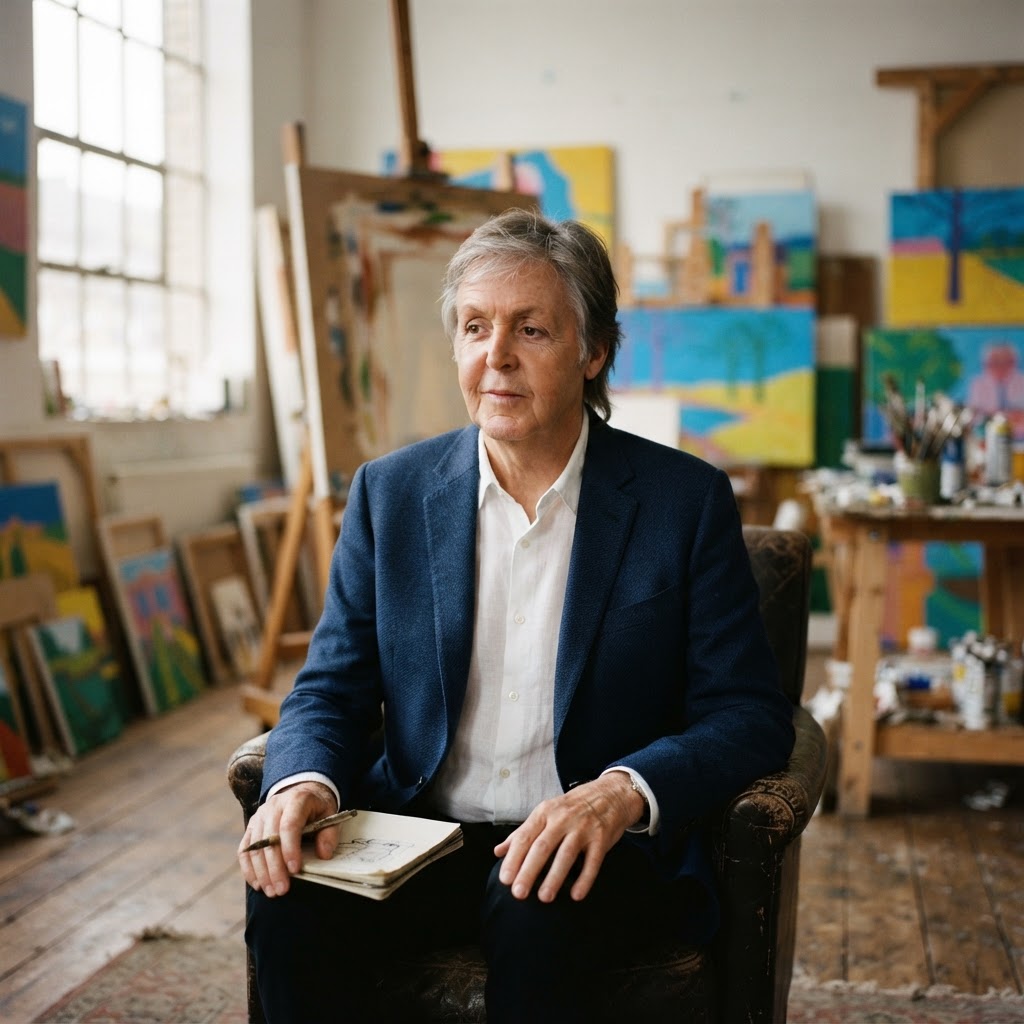
As one of Britain’s most iconic musicians pays tribute to the legendary painter, we examine the profound creative kinship that links two of the nation’s most celebrated cultural figures. Sir Paul McCartney has hailed the artist as a singular force of intellect and humour.
VC
Victoria Cross
Culture Editor
Published 16 September 2026·29 days ago 3 min read
Text
TopicsPaul McCartneyDavid HockneyBritish ArtMusicCultureFine Arts
About the Author
VC
Victoria Cross
Culture Editor
Victoria Cross reports for National Post UK with a focus on rigorous analysis and authoritative journalism — a trusted voice across British public life.
Reader Discussion · 5
Subscribers can join the conversation.
SUBSCRIBE TO COMMENT →G
Gareth Evans16 Sept
I struggle to see what a musician and a painter would truly have in common beyond the mutual admiration of their own success. I would have liked to see them challenge each other more on the state of arts funding today.
L
Linda Whitby16 Sept
It is lovely to see two men from that generation still so active and inquisitive. We really do not appreciate how lucky we are to have such creative forces still among us.
D
David Thorne16 Sept
Having followed Hockney since his early days at the Royal College of Art, I find his insights on colour are often overlooked compared to his fame. It is great to see McCartney engaging with him on that technical level.
S
Sarah Jenkins16 Sept
I often wonder if these retrospective chats are more for the benefit of the press than the artists themselves. Both are legends, but perhaps they have already said everything there is to say.
A
Arthur Penhaligon16 Sept
Two absolute titans of British culture. It is refreshing to see a genuine dialogue between artists who have both done so much to shape our national identity over the decades.