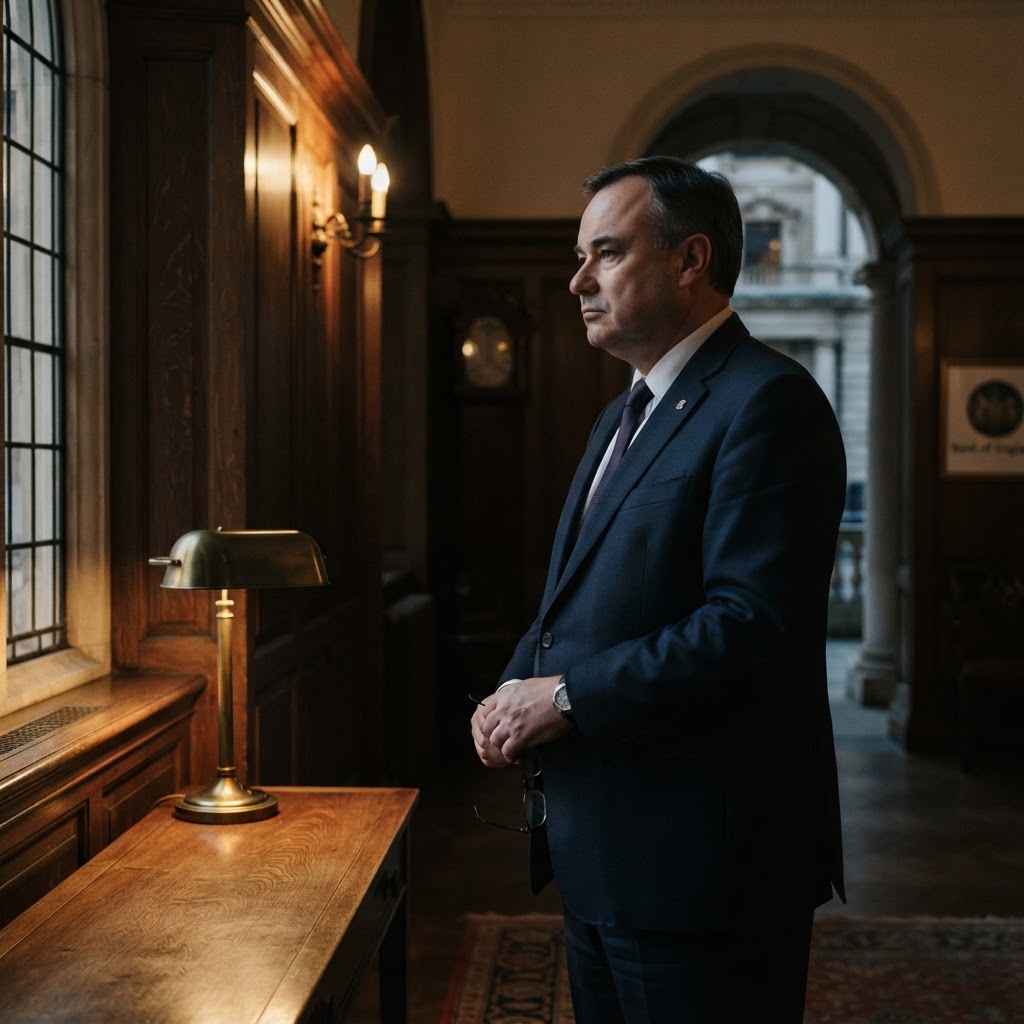
In a pivotal move for the UK economy, the Bank of England's Monetary Policy Committee (MPC) has voted to reduce the base interest rate from 5.25% to 5.00%. This decision, made on 15 June 2026, marks the first reduction since the central bank embarked on a tightening cycle aimed at controlling inflation, and it is expected to provide much-needed respite for both mortgage holders and businesses.
The MPC, which voted 6-3 in favour of the cut, deliberated on the current economic landscape, which sees UK Consumer Price Index (CPI) inflation at 2.4%, a slight increase above the target of 2.0% but trending downwards. Governor Andrew Bailey, in a statement following the announcement, noted that "the restrictive stance has done its job" and implied it is now crucial to support a nascent recovery in economic growth.
Reactions in the Financial Sector
The immediate fallout from the announcement saw the British Pound fall by 0.6% against the US Dollar, reflecting market apprehension regarding the implications of the rate cut. Analysts believe the depreciation of the currency could reignite inflationary pressures, though some see the move as a calculated risk to spur investment and consumer spending.
“"While the rate cut may alleviate some immediate pressures, it could set a precarious precedent if inflation does not continue to decline as anticipated."”
Major UK lenders, including Lloyds and Barclays, are already expected to announce reductions to their Standard Variable Rates within the next 24 hours. This could lower monthly repayments for millions of borrowers, providing a timely boost to households grappling with rising living costs.
A Balancing Act
The decision to cut rates is seen by many economists as a response to growing concerns about the sustainability of economic growth in the UK. The tightening measures previously implemented were designed to reign in inflation but have also contributed to a slowdown in consumer confidence and spending. The last increase in rates occurred in early 2024, when the MPC aimed to temper spending and curb rising prices amid a recovering post-pandemic economy.
Many experts, however, are questioning whether this latest rate cut is too soon, particularly given the current inflation rate's proximity to the target. James Marley, Chief Economist at a leading financial consultancy, commented, "While the rate cut may alleviate some immediate pressures, it could set a precarious precedent if inflation does not continue to decline as anticipated. The Bank may need to tread carefully here."
Long-Term Implications
With the global economic climate remaining uncertain, the Bank’s decision also prompts discussions about its long-term strategy. In particular, with the upcoming fiscal year expected to hold challenges such as potential increases in energy prices and supply chain disruptions, the MPC's chosen path may need continuous reassessment.
Governor Bailey's assertion that the restrictive measures had fulfilled their purpose gives insight into the MPC's thinking; it indicates confidence in inflation’s ability to fall as anticipated due to tightening measures that have already been in place. Nonetheless, some members of the Committee voted against the cut, expressing concerns that the imbalance in monetary policy could resurface if inflation were to rise unexpectedly again.
Public Sentiment and Economic Outlook
The public response to the cut has been mixed. Many mortgage holders, who have experienced the brunt of higher interest rates, are relieved, hoping that this change will provide immediate financial relief. However, there is a lingering apprehension about the implications for savings rates, which could see further deterioration as banks adjust their offerings.
The real estate market, which has been cooling in recent months, could also react positively as potential buyers are encouraged to re-enter the market. But estate agents remain cautious, stating that long-term price growth hinges on sustained economic recovery and job security.
Looking Ahead
As the Bank of England embarks on this new chapter of monetary policy, its decisions will undoubtedly be scrutinised closely. With expectations that inflation will stabilise, market participants and consumers alike are eager to understand how the MPC plans to navigate the complex interplay of growth and inflation in the months ahead.
In the coming weeks, we can expect detailed discussions surrounding the Bank’s next meeting and updates on macroeconomic indicators that could influence further rate decisions. Ultimately, today's rate cut not only aims to invigorate the economy but also serves as a reminder of the delicate balancing act that monetary policymakers must perform in uncertain times.
As Andrew Bailey aptly remarked, "We are moving to a position where supporting growth must now be a priority while we remain vigilant to the evolving inflation landscape." This sentiment encapsulates the broader challenges and considerations that lie ahead for the Bank of England and the UK economy as a whole.