National Post UK
NHS Pioneers Global AI Breast Screening Programme in Bid to Transform Oncology Diagnostics

A landmark £10 million initiative has commenced, leveraging advanced algorithms to bolster detection rates for 700,000 w

The National Post

HomeHealth & Wellbeing
Health & Wellbeing

NHS Pioneers Global AI Breast Screening Programme in Bid to Transform Oncology Diagnostics

A landmark £10 million initiative has commenced, leveraging advanced algorithms to bolster detection rates for 700,000 women. The move marks a strategic shift towards technological augmentation in the fight against cancer.

SC

Samantha Cole

Health Correspondent

Published 24 November 2026·about 4 hours ago 3 min read
Text
Share

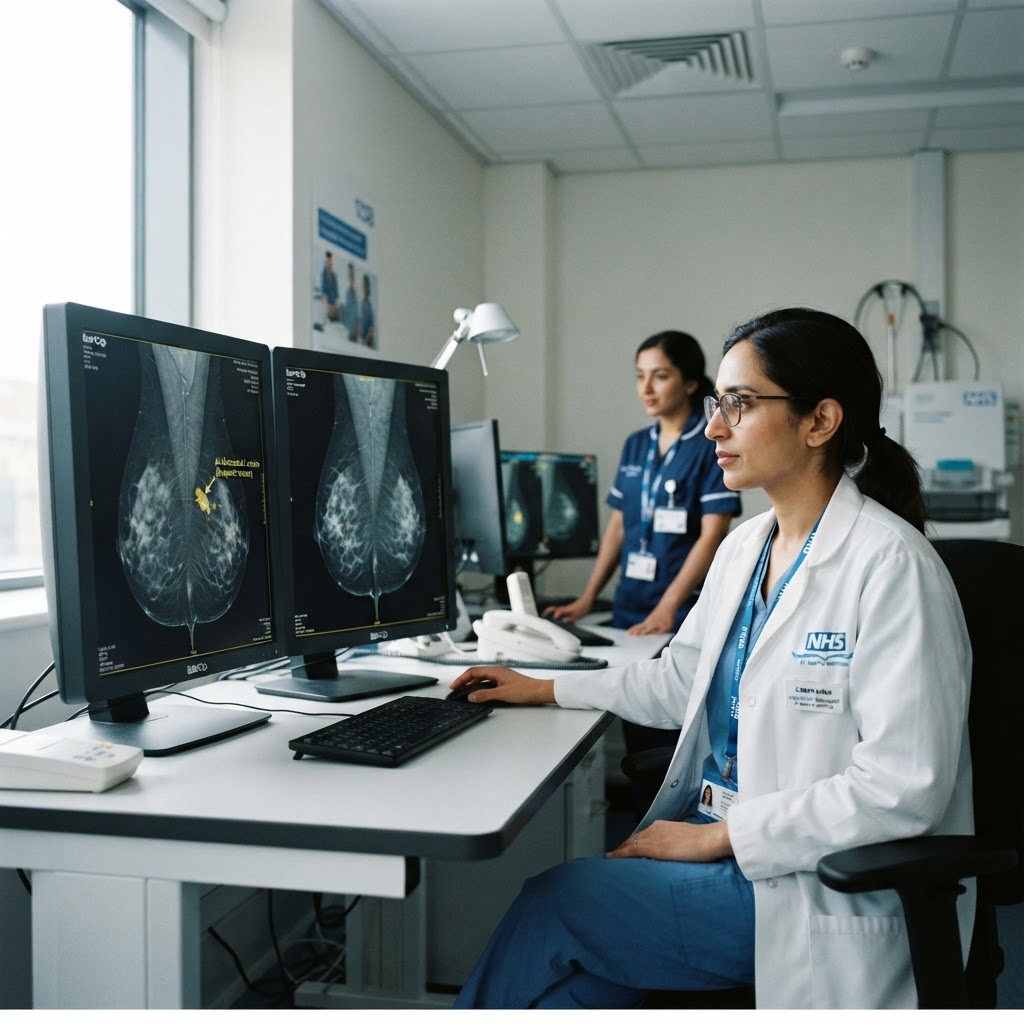
A New Frontier in Diagnostic Imaging The National Health Service officially entered a new era of diagnostic medicine on 23 November 2026, as it began inviting the first cohorts of women to participate in the world’s largest artificial intelligence-assisted breast screening trial. This ambitious three-year project, supported by a £10 million injection of funding, aims to redefine the standard of care for millions of patients by integrating machine learning into the routine screening process. The trial seeks to prove that AI can serve as a robust second pair of eyes, ensuring that suspicious anomalies are flagged with unprecedented speed and accuracy.

Reducing the Burden on the Workforce For decades, the standard protocol for breast screening has relied upon the painstaking manual review of mammograms by specialist radiologists. However, the system has faced significant pressure, with a chronic shortage of clinicians often leading to delays in reporting. By deploying AI to assist in the initial triage of scans, the NHS intends to liberate specialist staff from high-volume, repetitive tasks, allowing them to dedicate their time to more complex diagnostic cases and direct patient engagement. This redistribution of labour is viewed as a vital step in maintaining the long-term sustainability of the breast screening programme.

The Methodology of the Study The scale of the trial is unprecedented, encompassing approximately 700,000 participants across diverse clinical sites throughout the United Kingdom. Women invited to the study will have their mammograms processed through a validated AI system alongside standard clinical oversight. Researchers will closely monitor whether the integration of these algorithms leads to a measurable increase in the early detection of cancers—a factor that remains the primary determinant of successful patient outcomes. Experts anticipate that by identifying smaller, early-stage tumours that might otherwise evade human detection until a later stage, the programme will substantially improve survival rates.

Balancing Innovation and Clinical Oversight While the prospect of automated diagnostics is promising, the NHS remains committed to a 'human-in-the-loop' approach. The role of the consultant radiologist remains central to the final diagnosis; the AI is designed as an augmentation tool rather than a replacement for clinical judgement. This conservative implementation is intended to build public trust in digital health infrastructure. Health policy analysts argue that if this trial demonstrates success, it could provide a blueprint for the adoption of artificial intelligence across other facets of oncology, such as lung and prostate cancer screening, fundamentally altering how the health service manages non-communicable diseases in the coming decade.

Future Outlook The funding allocated to this study reflects a broader governmental ambition to cement the United Kingdom as a global leader in health technology. As the data begins to coalesce over the next thirty-six months, the NHS will face the complex task of evaluating cost-effectiveness against clinical outcomes. For now, the focus remains on the thousands of women who stand to benefit from a faster, more precise screening experience. If the integration of algorithms proves as successful as initial pilot studies suggest, the era of AI-enhanced diagnostics may soon be viewed not as a radical departure from tradition, but as the inevitable evolution of modern medicine.

TopicsNHSBreast CancerArtificial IntelligenceMedical ResearchHealth PolicyOncologyDiagnostic Technology
Share

About the Author

SC

Samantha Cole

Health Correspondent

Samantha Cole reports for National Post UK with a focus on rigorous analysis and authoritative journalism — a trusted voice across British public life.

Reader Discussion · 10

Subscribers can join the conversation.

SUBSCRIBE TO COMMENT →
R
Robert Miller24 Nov

Technology like this might help reduce the number of false positives, which would be a huge relief for patients waiting in limbo. It is a promising development for the future of oncology.

E
Eleanor Brooks24 Nov

My main concern is data privacy and how long our personal health information is stored within these AI systems. I would like to see more transparency regarding the security of these patient records.

J
James P. Sterling24 Nov

Interesting to see how this trial performs in practice. AI is excellent at pattern recognition, but I wonder how it will handle the nuances in scans that experienced human doctors pick up intuitively.

M
Margaret Higgins24 Nov

This is exactly the sort of innovation the NHS needs to reduce the massive backlog we are seeing in diagnostic waiting times. It is about time we embraced technology to support our hardworking staff.

D
David Thorne24 Nov

I am a bit sceptical about relying on algorithms for something as sensitive as a cancer diagnosis. Machines can learn, but I still want a consultant radiologist to have the final say on my results.

D
David Miller24 Nov

It is about time we embraced digital innovation to clear these waiting lists. Radiology has been screaming out for this kind of support for years, and anything that takes the pressure off our consultants is welcome.

E
Eleanor Rigby24 Nov

This sounds promising, but the real test will be how the NHS manages the follow-up care for those identified as high-risk. Technology is only as effective as the system that processes the results afterwards.

A
Arthur P. Thompson24 Nov

I am a bit wary about replacing human expertise with algorithms. Diagnostics require a nuanced eye, and I would hate to see us sacrifice that level of care just to save on administrative costs.

S
Sarah Jenkins24 Nov

As someone who has been through the screening process, anything that speeds up results or catches abnormalities earlier is a massive step forward. I hope this programme is rolled out across all regions quickly.

S
Sarah Jenkins24 Nov

As someone who has been through breast cancer treatment, I truly hope this technology helps catch things earlier. If AI can reduce the backlog and speed up diagnosis, it has to be a step in the right direction for the NHS.

More from Health & Wellbeing

Most Read in Health & Wellbeing

Morning Briefing

The day's top stories, before 7am

Join 40,000 readers who start their morning with National Post UK.