Border Failures and the £25 Billion Misstep: How Policy Inertia Defined Britain’s Pandemic Start
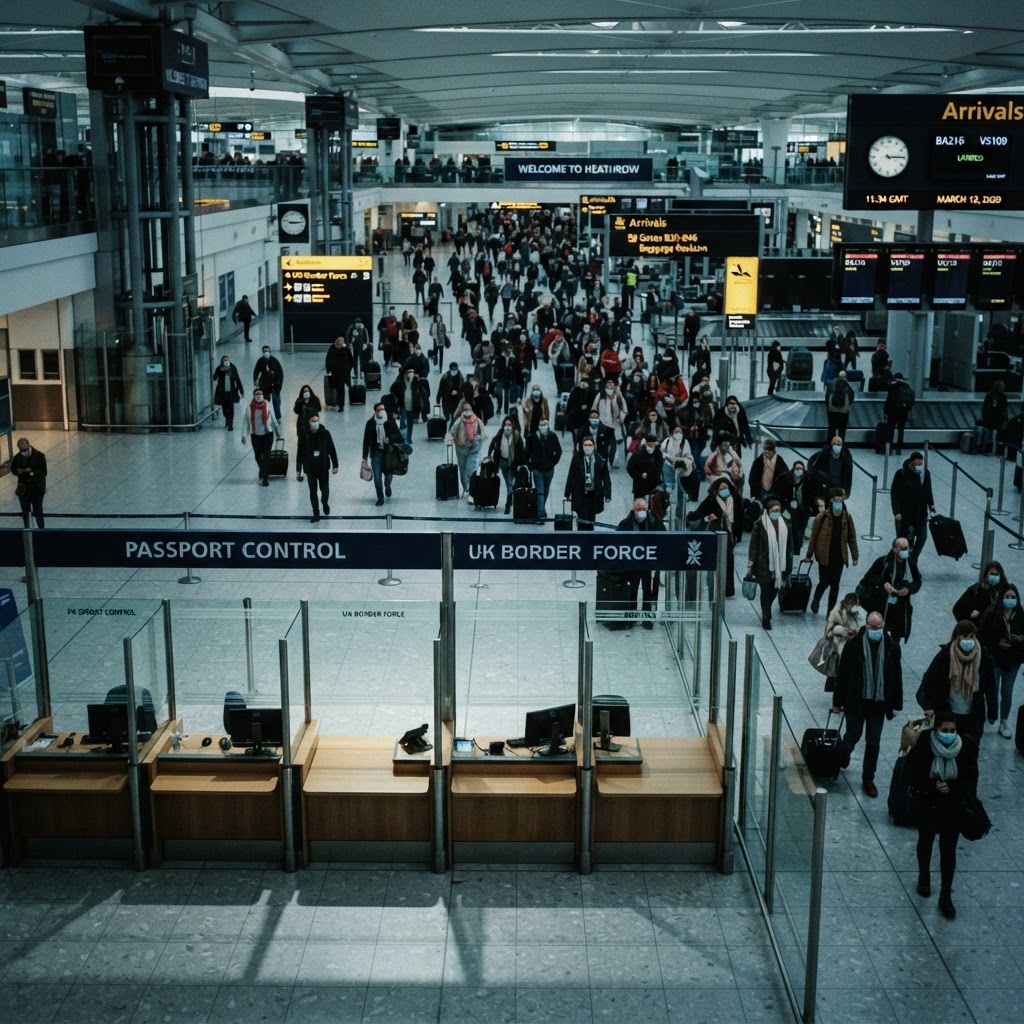
The seventh module of the UK Covid-19 Inquiry has laid bare the catastrophic consequences of indecision during the early days of 2020. With border controls left porous and the flagship test-and-trace system arriving months too late, the nation was placed in an untenable position.
DH
Dr. Helen Moore
Health Correspondent
Published 22 November 2026·about 15 hours ago 3 min read
Text
TopicsUK Covid-19 InquiryBaroness HallettNHSPublic PolicyPandemic Response
About the Author
DH
Dr. Helen Moore
Health Correspondent
Dr. Helen Moore reports for National Post UK with a focus on rigorous analysis and authoritative journalism — a trusted voice across British public life.
Reader Discussion · 12
Subscribers can join the conversation.
SUBSCRIBE TO COMMENT →E
Eleanor Rigby22 Nov
The article hits the nail on the head regarding the border issues. We wasted precious weeks pretending we could manage the virus without stringent controls, and we paid a heavy price for that arrogance.
M
Mark Stevens22 Nov
These reports are all well and good, but do we actually learn anything? I fear we will see the exact same institutional failures the next time a major national emergency arises.
F
Fiona Campbell22 Nov
Twenty-five billion pounds spent, and yet we were still caught completely flat-footed. This is a damning indictment of the bureaucratic inertia that seems to have gripped the civil service for years.
D
David Thorne22 Nov
While I agree mistakes were made, it is important to remember the sheer scale of the crisis and how little information was available in those early days. Hindsight is a wonderful thing, but it is often unfair to those who had to make impossible decisions under immense pressure.
S
Sarah Jenkins22 Nov
I lost my father during that first wave, and reading these findings just confirms what I suspected all along. We were let down by a complete lack of leadership and clear guidance.
A
Arthur Penhaligon22 Nov
It is about time we had an honest reckoning with how those initial weeks were handled. The lack of preparation was obvious to anyone paying attention at the time, yet the government remained in total denial.
E
Elaine Hughes22 Nov
We should focus on learning these lessons rather than just looking for someone to blame. If we do not overhaul the procurement system now, we will be in the exact same position whenever the next major crisis hits.
M
Marcus Sterling22 Nov
I find it hard to believe that this is solely a case of policy inertia. There needs to be proper accountability for the individuals who signed off on these disastrous decisions, rather than just vague talk of systemic collapse.
F
Fiona Campbell22 Nov
My husband worked in a care home during those early months, and the guidance we received changed daily. This report feels like a long-overdue acknowledgement of the confusion that we lived through on the ground.
D
David Thorne22 Nov
The real tragedy is that this £25 billion could have bolstered the NHS resilience for years. Instead, it seems to have vanished into a bottomless pit of bureaucracy and failed procurement contracts.
S
Sarah Jenkins22 Nov
While I agree that the border response was chaotic, we must remember the sheer scale of the unknown challenge we were facing in early 2020. It is easy to criticise with the benefit of hindsight when the ministers were dealing with unprecedented pressure.
A
Arthur Penhaligon22 Nov
It is absolutely disgraceful that such astronomical sums were squandered while our frontline staff were left without proper PPE. This report only confirms what we suspected all along about the lack of preparation at the very top.