A New Era in Diagnostic Precision In a development described as a watershed moment for the National Health Service, the UK has launched the world’s largest clinical trial of artificial intelligence (AI) within breast cancer screening. The initiative, which officially entered its operational phase on 22 November 2026, seeks to address the persistent challenge of early detection, where time remains the most critical factor in improving patient survival rates. By integrating deep-learning algorithms into the routine screening process, the NHS is positioning itself at the vanguard of a technological transformation that promises to reshape oncology.
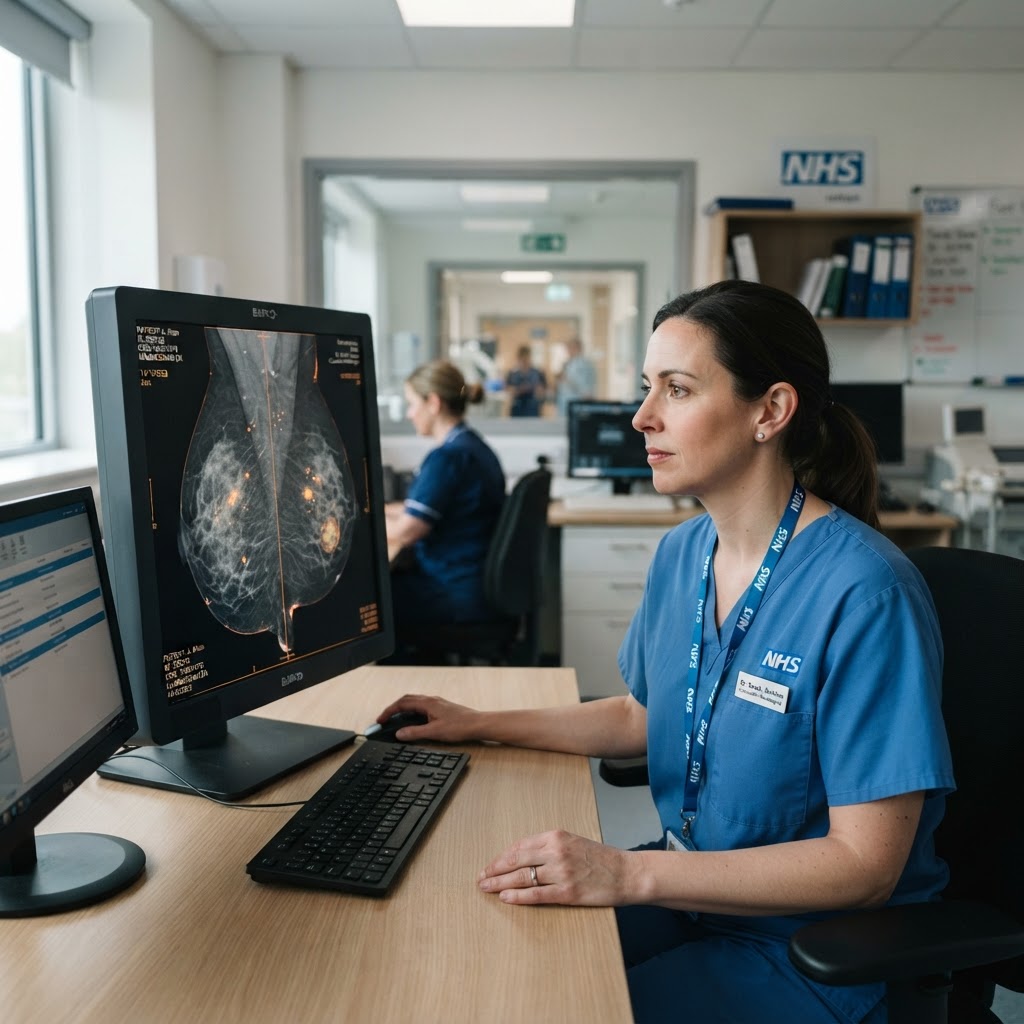
The Mechanics of Machine Intelligence The trial revolves around a sophisticated AI software designed to scrutinise digital mammography images with a level of precision that complements, rather than replaces, the existing radiological workforce. Traditionally, breast screening relies on human radiologists who examine thousands of images annually, a process that is both labour-intensive and inherently susceptible to the nuances of fatigue. The AI under assessment acts as a high-speed digital filter, flagging anomalies that might be invisible to the human eye or confirming clear scans with a speed that could significantly reduce diagnostic backlogs.
Health Secretary officials have emphasised that this is not an attempt to remove the human element from clinical decision-making. Instead, the focus is on augmenting the radiologist's capability. By automating the identification of clear scans, clinicians can redirect their expertise toward the more complex, high-risk cases that require nuanced human judgement. This shift is intended to streamline the entire pathway from initial scan to potential biopsy, theoretically accelerating the start of life-saving treatment.
Expert Perspective and Clinical Rigour Leading oncology experts have received the news with cautious optimism, noting that while the potential for AI is immense, the necessity for clinical validation remains absolute. Dr. Elena Vance, a senior consultant in diagnostic radiology, remarked that the integration of such technology necessitates a robust framework for data privacy and algorithmic transparency. She noted that the NHS is well-positioned to lead this trial due to the vast, historical data repositories available within the national health database, which provide a unique environment for rigorous testing.
The study aims to measure not only the sensitivity and specificity of the AI compared to current standards but also the impact on patient anxiety and clinic efficiency. With waiting times for diagnostic results often serving as a source of significant distress for patients, proponents of the trial believe that the speed of AI analysis could offer a tangible clinical benefit beyond the detection rates alone.
The UK Context This trial occurs against a backdrop of a system under pressure, with the NHS facing chronic workforce shortages within diagnostic specialities. The adoption of AI is widely viewed by policymakers as an essential lever to sustain the current level of service provision as demand increases. However, the rollout is not without its critics, who warn that technical reliance must not lead to a degradation of the personal, patient-centred care that characterises the British health model. Maintaining the public trust, they argue, will require transparency regarding how these algorithms are trained and audited.
As the trial gains momentum over the coming months, the results will be closely monitored by international health organisations. If the evidence confirms that AI can reliably identify breast cancer at an earlier stage without increasing false-positive rates, the model could be scaled rapidly across the UK, potentially establishing a new global benchmark for diagnostic screening. For now, the focus remains on the meticulous gathering of data, ensuring that the promise of technological advancement is matched by the uncompromising rigour required of medical science.
“By automating the identification of clear scans, clinicians can redirect their expertise toward the more complex, high-risk cases that require nuanced human judgement.”