
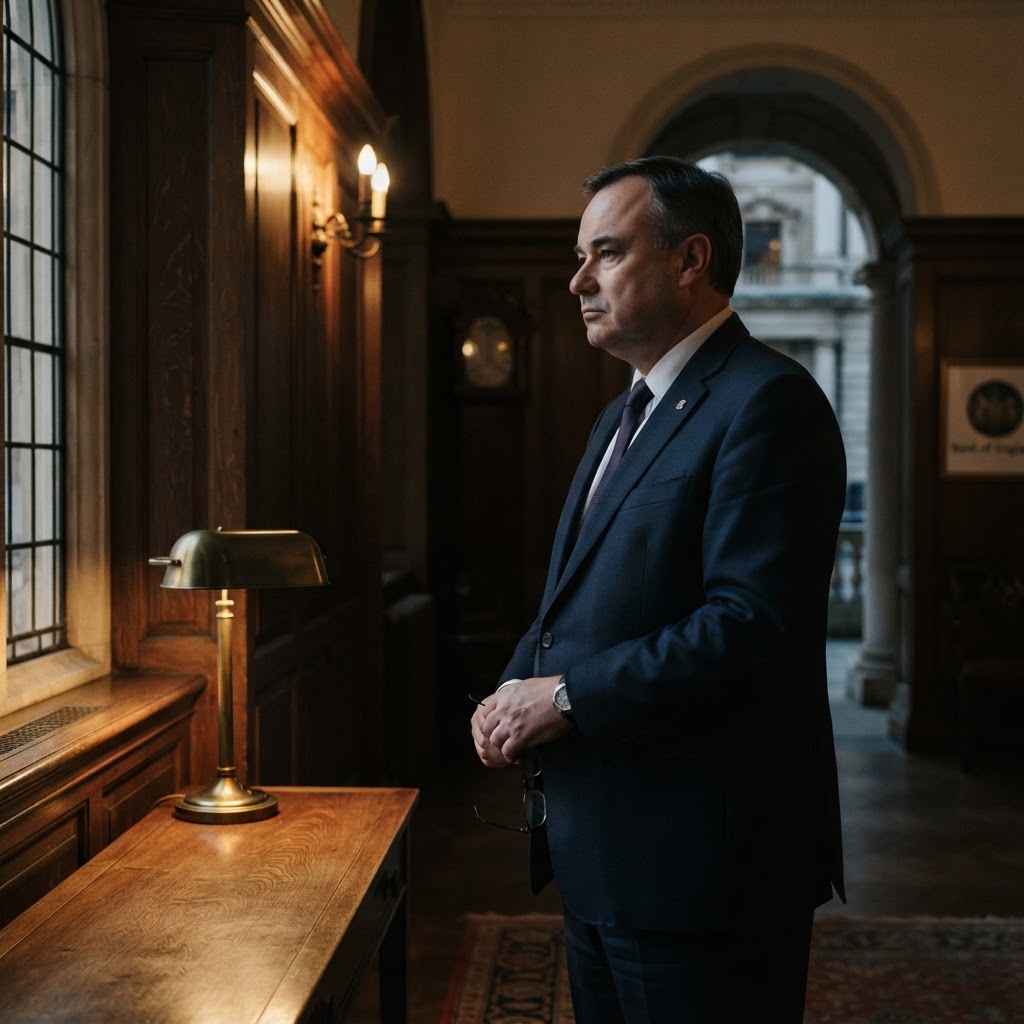
A Watershed Moment for Monetary Policy The Monetary Policy Committee (MPC) of the Bank of England delivered a significant intervention yesterday, ending a three-year period of stagnation in the base interest rate. In a move that has sent ripples through the City of London, the central bank confirmed a rate hike, a decision that marks a definitive pivot away from the ultra-loose monetary policy that defined the post-pandemic recovery. The move reflects a deepening anxiety within the Bank regarding the structural integrity of supply chains and the mounting pressure on the cost of living.
Geopolitical Headwinds and the Price of Oil At the heart of the Bank’s decision-making process lies the escalating conflict in Iran, which has served as a catalyst for renewed volatility in global commodity markets. By disrupting primary energy corridors and rattling market confidence, the regional instability has forced a recalculation of the inflationary trajectory for the United Kingdom. Governor Andrew Bailey, speaking to reporters after the announcement, acknowledged that while domestic demand remained resilient, the external cost-push factors associated with energy security were becoming too profound for the MPC to ignore.
Economists have long warned that the UK’s dependence on imported energy left it vulnerable to precisely this form of geopolitical contagion. With crude oil prices trending upward, the risk of a secondary wave of inflation—where energy costs permeate the broader price index—has moved from a hypothetical risk to an imminent reality. The Bank now forecasts that the Consumer Prices Index (CPI) will climb steadily, potentially nearing the 5% mark by mid-2027.
The Burden on Households and Businesses For the average British household, the implications of yesterday’s decision are twofold. Mortgage holders on variable-rate products will feel an immediate impact on their monthly outgoings, while those on fixed-rate deals will face a harsher reality upon renewal. The housing market, which had enjoyed a period of relative stability, is expected to temper its growth as affordability calculations are revised upward by lenders. Businesses, already grappling with higher wage bills and increased borrowing costs, face a period of fiscal discipline. Investment appetite is likely to be muted as corporate treasurers adjust to a higher cost of capital.
The Road Ahead: A Cycle of Increases Financial analysts are largely in agreement that this move is unlikely to be an isolated event. Unless there is a swift and unexpected de-escalation in the Persian Gulf or a fundamental shift in the global energy outlook, the Bank is expected to maintain its hawkish stance. Markets have already begun pricing in the probability of further adjustments as the MPC seeks to anchor inflation expectations firmly within its remit. The era of 'cheap money' is definitively over, replaced by a cautious, reactive strategy designed to preserve the pound's purchasing power.
Ultimately, the challenge for the Treasury and the Bank of England will be balancing the need for price stability with the imperative to avoid stifling economic growth. As the UK heads into the winter months, the political and economic stakes could hardly be higher.