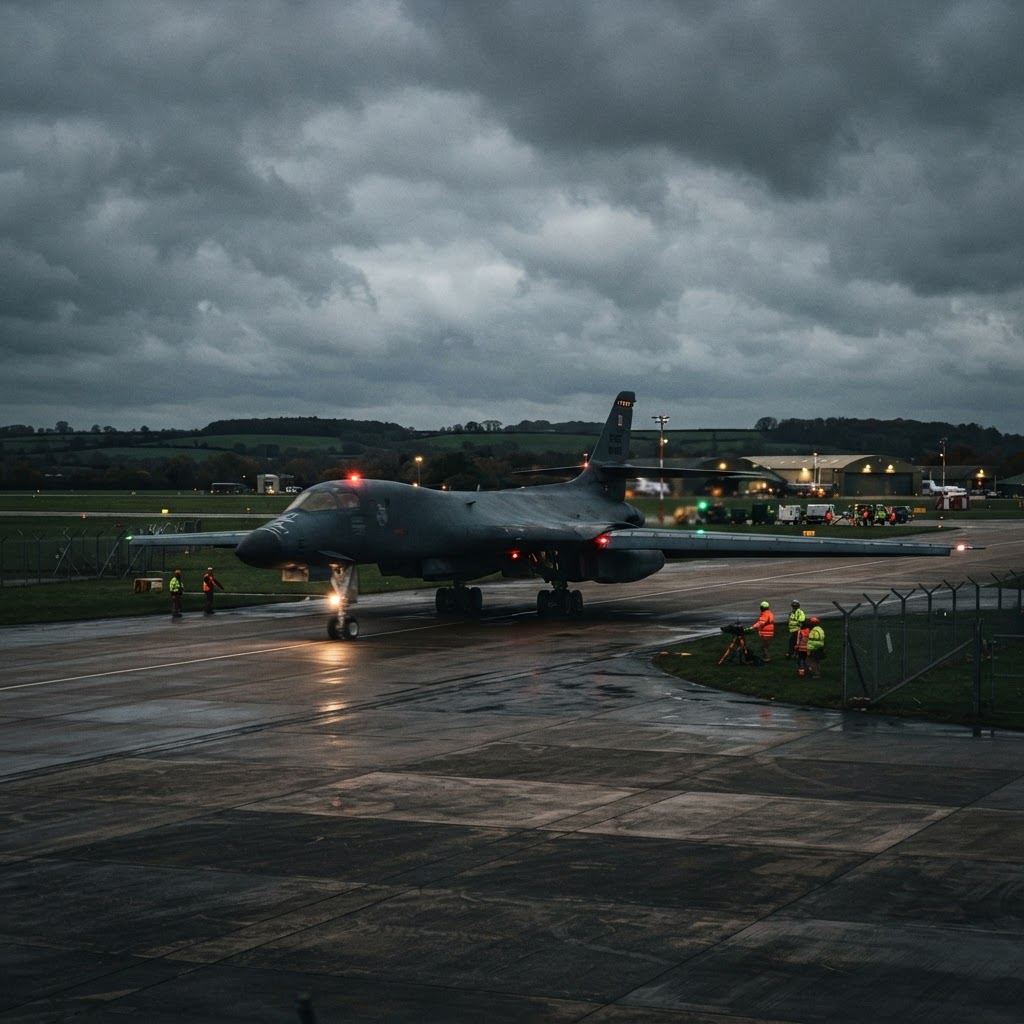
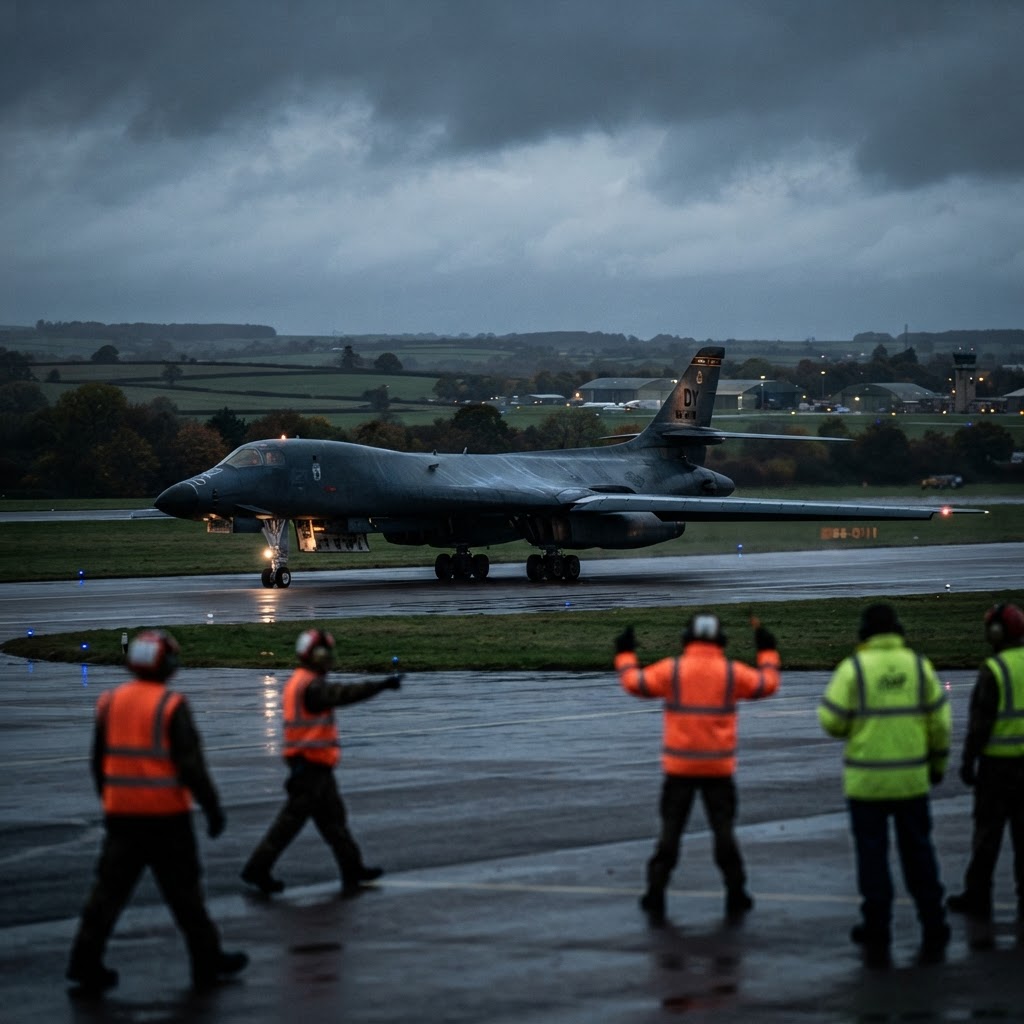
The urgent departure of twelve supersonic aircraft from RAF Fairford follows intelligence reports of a credible threat linked to Iranian-backed actors. This sudden tactical pivot underscores the precarious security landscape facing Western military assets in the United Kingdom.
A Sudden Departure from the Cotswolds
The familiar, thunderous roar of the Rockwell B-1B Lancers, a sound that has become a constant in the skies above the Cotswolds in recent months, fell silent over the weekend of 4-5 October 2026. In a move that has sent shockwaves through the defence community, the United States Air Force completed the urgent relocation of its entire fleet of twelve long-range strategic bombers from RAF Fairford. The departure, conducted with military precision and minimal public disclosure, follows the receipt of intelligence regarding a sophisticated, Iran-backed plot aimed at compromising the security of both the aircraft and the personnel stationed at the Gloucestershire base.
The Intelligence Landscape
Senior security sources confirmed to The National Post that the decision to vacate the site was not taken lightly. The threat assessment, which identified a credible risk of hostile action, forced a rapid reassessment of the strategic viability of maintaining such a high-profile asset at an exposed European location. While Ministry of Defence officials remain tight-lipped regarding the specifics of the threat, the correlation between the recent escalation of regional instability in the Middle East and the heightened posture of U.S. forces in the UK is inescapable. Western intelligence agencies have been tracking a significant uptick in attempts by Tehran-aligned proxies to expand the operational theatre of their influence, targeting not only regional adversaries but key strategic hubs supporting the North Atlantic Treaty Organisation.
RAF Fairford’s Strategic Significance
RAF Fairford has long served as a vital linchpin in U.S. Air Force operations within Europe. As one of the few global airfields equipped with the necessary infrastructure to support the heavy, variable-sweep wing Lancers, its importance to the projection of American air power cannot be overstated. The base provides a critical staging ground for training exercises and rapid-response capabilities throughout the European and African theatres. The loss of such a facility, even temporarily, represents a blow to the agility of the U.S. presence in the region, forcing planners to rethink the geography of their deterrence strategy.
Expert Perspectives on Strategic Posture
Dr. Alistair Finch, a senior fellow at the Royal United Services Institute, suggests that this withdrawal is indicative of a broader shift in how Western powers must conceive of base security in the modern age. We are entering a period where the traditional sanctuary of domestic military bases is being challenged by hybrid warfare tactics, he noted. The reliance on remote-controlled or proxy-delivered capabilities means that a base in the heart of the English countryside is no longer shielded by its geographical location alone. The movement of these bombers is a prudent, albeit sobering, reaction to the reality that regional conflicts in the Middle East possess an increasingly global reach.
Future Implications for UK Defence
The sudden vacuum left at Fairford raises uncomfortable questions regarding the vulnerability of UK-based installations to foreign-led malign activities. As the government continues to grapple with the complexities of integrated security, the presence of these bombers served as a tangible manifestation of the Anglo-American 'special relationship' in defence. While the U.S. has not officially commented on where the bombers have been relocated, analysts suggest they will likely be moved to more secure or dispersed locations within the continental United States or to deeper NATO territory. For now, the silence over Gloucestershire serves as a stark reminder that in an interconnected world, the boundaries of regional instability are becoming increasingly porous, necessitating a constant state of vigilance at home and abroad.