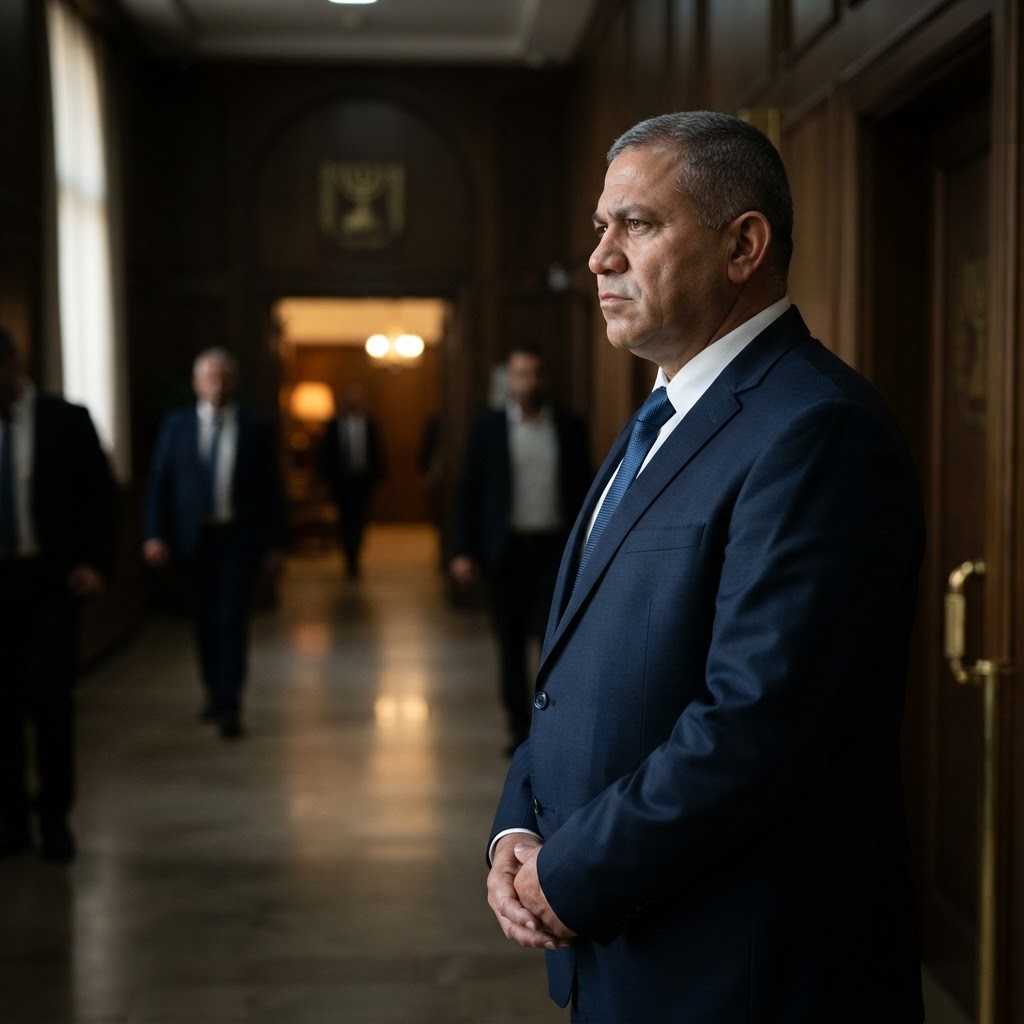
In a week defined by deepening political fragmentation in Washington and a deteriorating security outlook across the Middle East, the United States House of Representatives has moved to shield Pete Hegseth from an impeachment effort. The failure of this parliamentary manoeuvre highlights the hardening tribalism within American politics, where institutional procedures are increasingly viewed through the lens of zero-sum partisan warfare.
The Domestic Imbroglio For Mr Hegseth, the vote was never merely a procedural hurdle but a defining moment in a tenure already marked by intense public scrutiny. Addressing the assembly following the failed motion, he characterised the entire enterprise as a calculated act of sabotage, suggesting that his detractors were more concerned with undermining executive authority than addressing legitimate questions of governance. This sentiment has resonated with his base, yet it has further alienated a caucus already strained by months of legislative deadlock.
From the perspective of Whitehall analysts, the episode reflects the broader erosion of the bipartisan consensus that once underpinned American foreign policy. Political commentators here in London suggest that the volatility currently gripping Capitol Hill is having a direct impact on the UK’s ability to coordinate long-term strategic objectives with its most vital ally. If the executive branch is perpetually focused on survival, the capacity for consistent international leadership inevitably suffers.
The Silence from Tehran While the focus of the press corps remained transfixed on the theatre of the House floor, a more profound, if predictable, development occurred in the diplomatic sphere. Whispers of a nascent rapprochement between Washington and Tehran—rumours that have permeated diplomatic circles from Vienna to the Gulf—were extinguished yesterday. The Iranian government issued a formal statement categorically denying that any substantive talks are taking place with the United States.
This denial serves as a sobering reminder of the structural barriers to a regional detente. Iranian officials have maintained that domestic political instability in the US makes any formal commitment to negotiation a risky endeavour. In Tehran’s calculus, committing to a deal with an administration currently fighting for its political survival in the House is viewed as a strategic liability. The result is a diplomatic impasse that leaves the broader region in a state of suspended animation, with few avenues remaining for de-escalation.
“We are witnessing a decoupling of domestic governance from international reality, where the space for subtle, long-term diplomacy effectively shrinks to nothing.”
A Global Context of Friction The convergence of these two events—the internal American stalemate and the Iranian refusal to engage—paints a complex picture for the international community. The UK government, while maintaining a cautious public posture, is understood to be increasingly concerned about the lack of robust communication channels between the primary actors in the Gulf. As geopolitical friction intensifies, the absence of a reliable dialogue mechanism increases the risk of miscalculation.
Dr Alistair Vance, a senior fellow at a prominent London foreign policy think tank, noted that the current climate is uniquely perilous. 'We are witnessing a decoupling of domestic governance from international reality,' Vance argued. 'When the primary focus of a superpower becomes the protection of its own officials from impeachment, the space for subtle, long-term diplomacy effectively shrinks to nothing.' This internal obsession, coupled with Iran’s hardening stance, suggests that the coming months will be characterised by a period of profound uncertainty.
As the winter sessions of the House continue, the pressure on the current administration is unlikely to dissipate. The challenge will be to project strength and stability on the world stage while simultaneously managing a deeply fractured political landscape at home. For Britain, the task remains one of balancing its traditional special relationship with the United States while attempting to manage the peripheral consequences of this American domestic discord. The path ahead remains, at best, opaque.