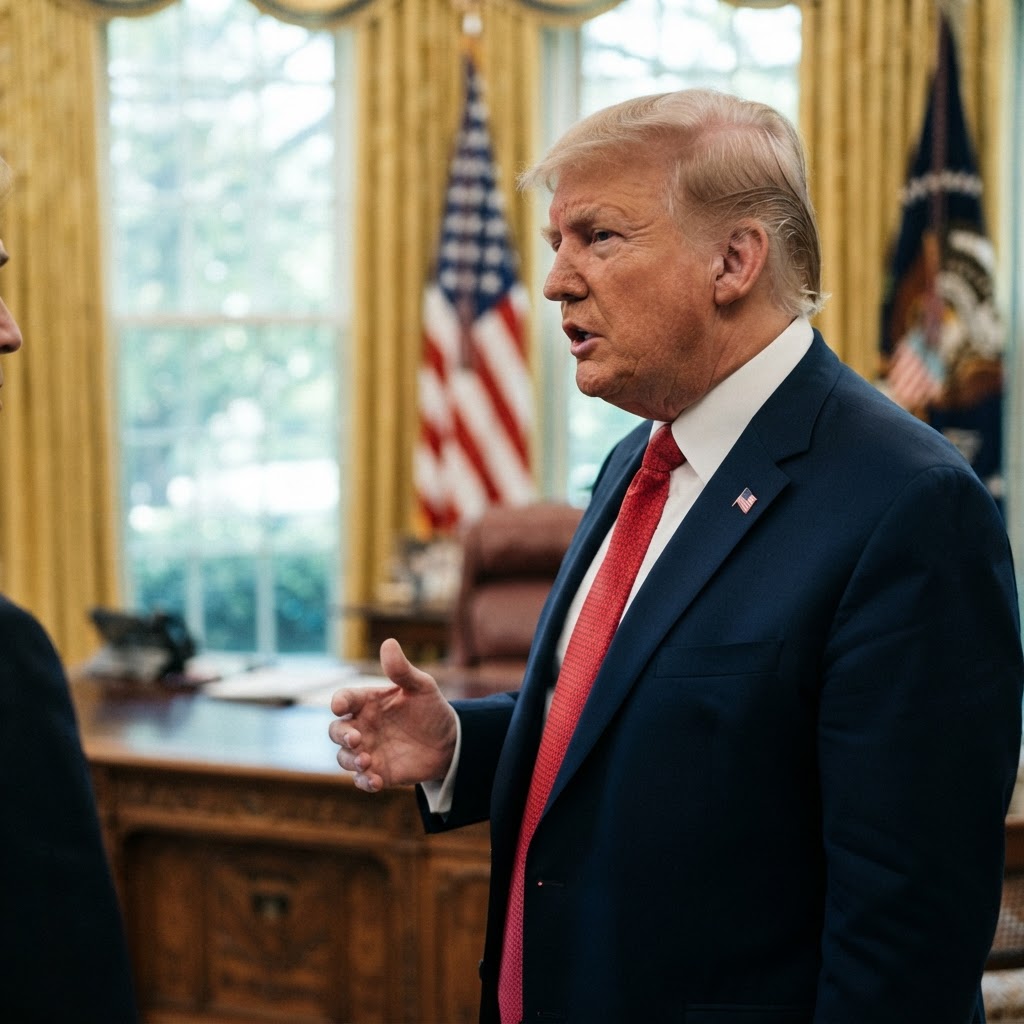
Trump Shifts Stance on Ukraine as Beijing Talks Signal New Diplomatic Front
In a marked departure from previous rhetoric, the US President has pressed Vladimir Putin to de-escalate regional hostilities. The intervention follows urgent consultations with NATO leadership in Florida.
SL
Sophie Laurent
Foreign Correspondent
Published 27 November 2026·about 1 hour ago 3 min read
Text
TopicsUS PoliticsUkraine WarRussiaNATODiplomacyForeign Affairs
About the Author
SL
Sophie Laurent
Foreign Correspondent
Sophie Laurent reports for National Post UK with a focus on rigorous analysis and authoritative journalism — a trusted voice across British public life.
Reader Discussion · 6
Subscribers can join the conversation.
SUBSCRIBE TO COMMENT →E
Eleanor Rigby27 Nov
Diplomacy is always preferable to more weaponry. I would rather see thousands of hours of talks than another day of shelling.
M
Marcus Sterling27 Nov
This feels like a classic power play. By pivoting towards Beijing, he is trying to squeeze the situation from both ends, but I worry about what we are promising in return.
F
Fiona Campbell27 Nov
Whatever your view on the politics, the human cost of this war has been devastating to witness. I just hope that any diplomatic movement actually results in lives being saved on the ground.
D
David Thorne27 Nov
Beijing acting as a mediator is a fascinating development. If they can actually leverage their influence to stop the fighting, it might be the only realistic path forward.
S
Sarah Jenkins27 Nov
I find it very hard to take these sudden shifts in stance seriously. One day it is one thing, the next it is another; we need a consistent long-term strategy, not just headlines.
A
Arthur Penhaligon27 Nov
It is about time some real pressure was applied to bring this conflict to an end. Whether he means it or not, getting Moscow to the table is the only way we will see energy prices stabilise.