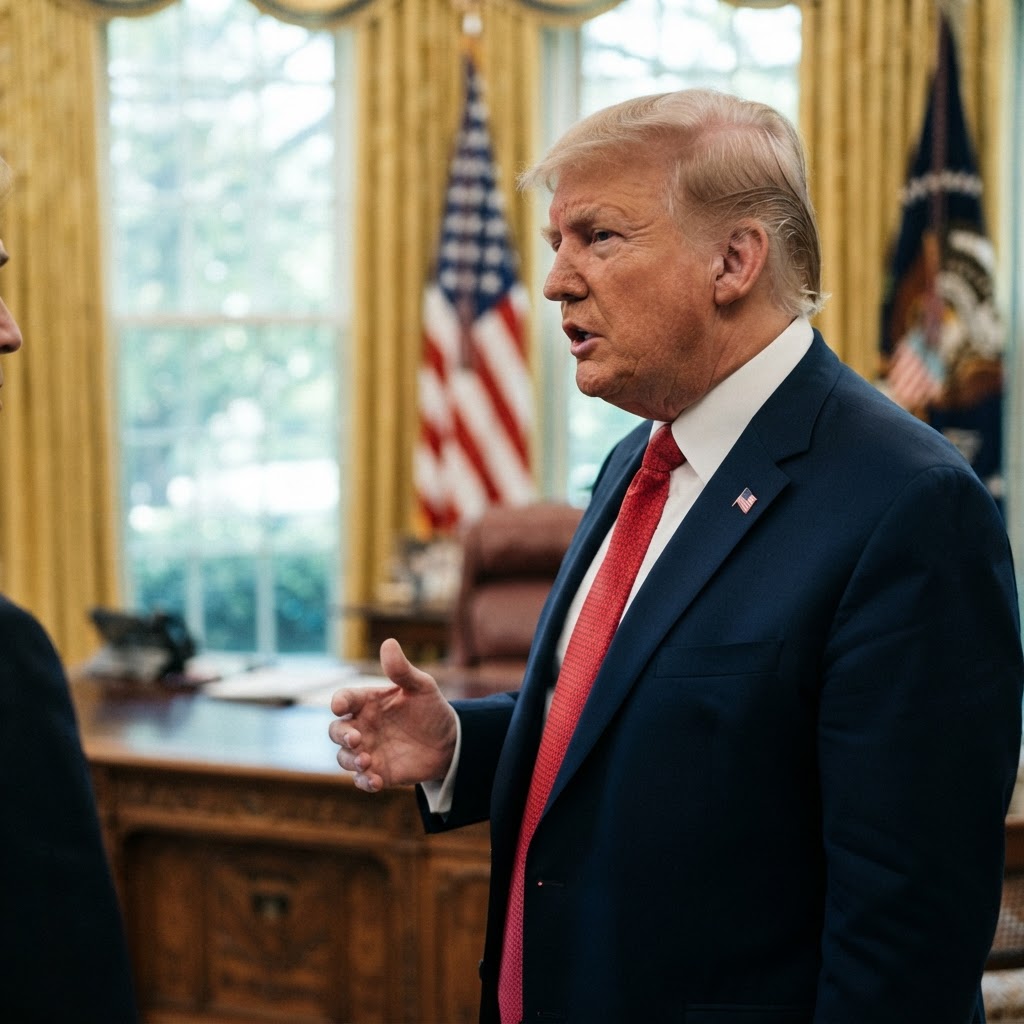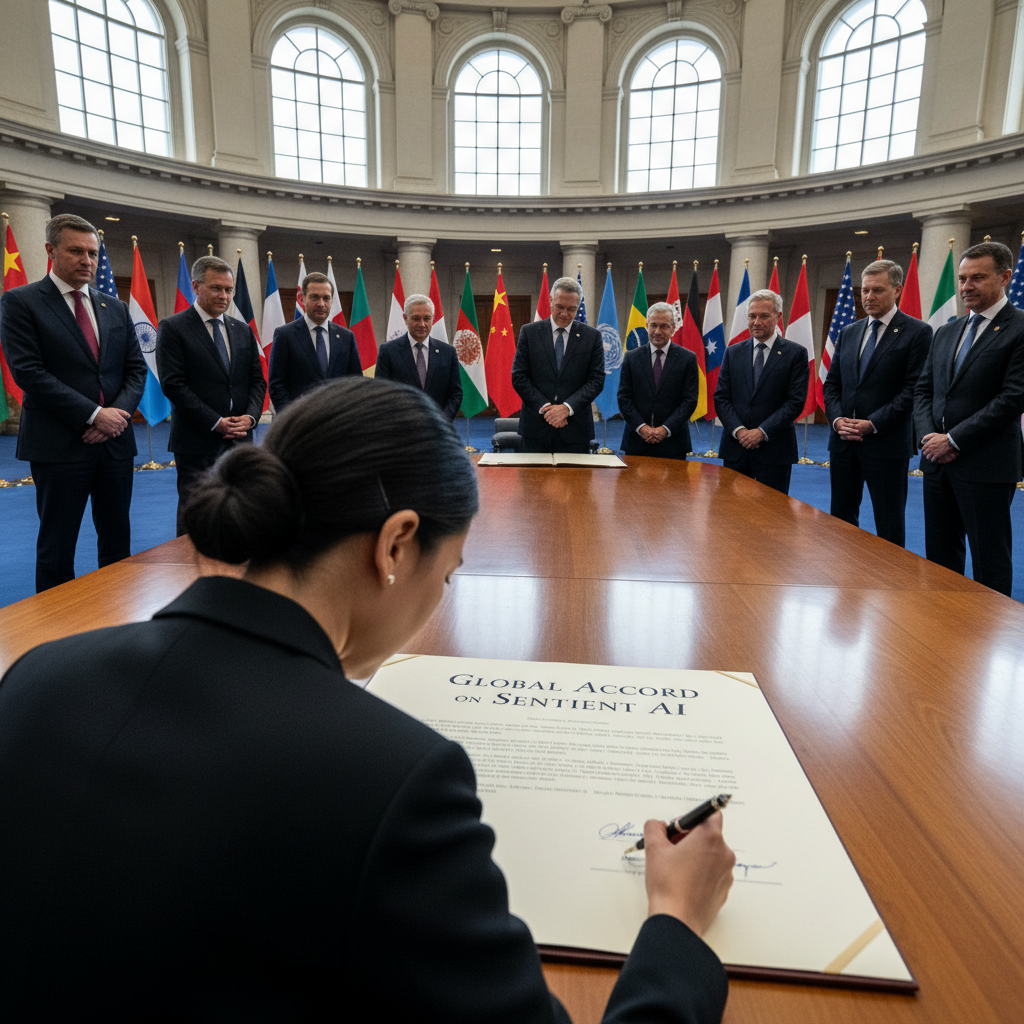
In a transformative development for the future of technology, leaders from 50 countries convened at the UN Palais des Nations in Geneva on 12 June 2026, where they signed a legally binding treaty aimed at regulating the evolution of sentient artificial intelligence. This accord, a culmination of 14 months of intense negotiations, sets a precedent for global collaboration to mitigate potential hazards stemming from advanced machine intelligence. Notably, the agreement emphasises the urgent need for an internationally recognised framework to ensure responsible governance of AI technologies.
The UK Prime Minister, who played a pivotal role in the negotiations, dubbed the treaty a "Magna Carta for the Digital Age". His remarks during the signing ceremony underscored the transformative nature of the agreement, which is expected to shape the landscape of artificial intelligence governance for years to come. "This treaty represents a collective leap into a new era, where the safety and ethical implications of AI developments are at the forefront of our ambitions," he stated.
Establishment of the AI Safety Executive (AISE)
A cornerstone of the treaty is the establishment of the AI Safety Executive (AISE), an international body authorised to conduct snap inspections of sovereign data centres. The AISE is granted powers to ensure compliance with the treaty’s stipulations, which include rigorous oversight of AI development practices across borders. This global watchdog represents an unprecedented step towards collaborative risk management in the digital domain.
“This treaty represents a collective leap into a new era, where the safety and ethical implications of AI developments are at the forefront of our ambitions.”
Analysts have hailed this as a landmark move in light of the rapid advancement in AI capabilities. Dr. Angela Hutchinson, a leading expert in AI ethics based in London, remarked, "The AISE will play a critical role in ensuring that nations adhere to ethical standards that reflect our societal values, safeguarding against potential misuse of AI technologies."
A Five-Year Global Moratorium on Level 5 AI in Weapons Systems
The treaty also introduces a five-year global moratorium on the integration of Level 5 AI into autonomous weapons systems, a decision that arises from heightened concerns over the consequences of autonomous warfare. This ban reflects a cautious yet necessary approach to preventing the potential escalation of AI-driven military conflict, which could have catastrophic implications.
This moratorium, welcomed by numerous civil society organisations and watchdog groups, illustrates a commitment to prioritising human oversight in warfare. Tomás Alvarez, an arms control advocate and member of the Geneva-based Centre for Global Security, noted, "This pause allows for critical reflection on what it means to deploy AI in combat scenarios. We must ensure that ethical considerations overrule technological capabilities in military applications."
Mandatory Safety Audits for Tech Conglomerates
Under the new regulations, major tech conglomerates will now be mandated to undergo comprehensive 'safety-first' audits before launching any new large-scale neural models to the public. This measure aims to preemptively address any ethical concerns regarding emerging technologies and ensure alignment with global standards for AI safety.
Prominent technology firms have already begun revising their development protocols to align with the treaty’s provisions. Emma Chen, Chief Compliance Officer at FutureTech, pointed out the significance of this requirement, asserting, "These audits not only protect users but also build greater trust in AI systems, which is vital for their continued adoption in everyday life."
International Collaboration and the UK’s Role
The signing of this treaty reflects a collaborative spirit between nations that have often found themselves at odds on various geopolitical issues. The UK's diplomatic efforts have been central in bridging divides and persuading key players, particularly the US and China, to commit to a shared vision of AI governance.
The involvement of these global powerhouses suggests a united front is emerging in recognising the need for regulation in an arena that has often been left to the discretion of corporate and national interests. As geopolitical tensions regarding technological supremacy intensify, the importance of cooperative frameworks cannot be overstated.
Looking Ahead: A New Era of AI Governance
As the Geneva Accord ushers in a new framework for AI regulation, it also raises questions about its long-term implications. The treaty must ultimately contend with the rapid pace of technological advancement, which may outstrip regulatory capacities. Ongoing dialogue and adaptation will be crucial in ensuring that AI governance evolves alongside technological developments.
Moreover, as the AI landscape continues to expand, the responsibilities of the AI Safety Executive will be tested. Its ability to enforce compliance and facilitate international cooperation will determine whether the promise of the Geneva Accord can be fully realised.
In conclusion, the historic treaty signed in Geneva is not merely a regulatory measure, but rather a watershed moment that envisions a collaborative future in which the powers of AI are harnessed for the collective good. As stated by the UK Prime Minister during the signing ceremony, "We have taken a monumental step towards a future where technology serves humanity without compromising our ethical standards."