A Strategic Shift in the Gulf The delicate security equilibrium of the Persian Gulf suffered a profound rupture this week as Tehran claimed the successful destruction of a critical United States early-warning radar facility situated in Bahrain. This aggressive manoeuvre represents not merely a technical loss for the American military, but a symbolic assault on the defensive architecture that has underpinned regional stability for decades. Military analysts in London are already scrambling to assess the tactical implications, with many fearing that this escalation signals an end to the period of low-level, deniable attrition that has defined the relationship between Washington and Tehran in recent years.
For the British intelligence community, the incident in Bahrain acts as a grim confirmation that the regional status quo is no longer tenable. For months, the persistent campaign of Houthi drone and missile strikes against Saudi energy infrastructure had served as a grim foreshadowing, yet the direct targeting of an American asset suggests a level of confidence within the Islamic Revolutionary Guard Corps that has not been witnessed since the height of the 2020 tensions.
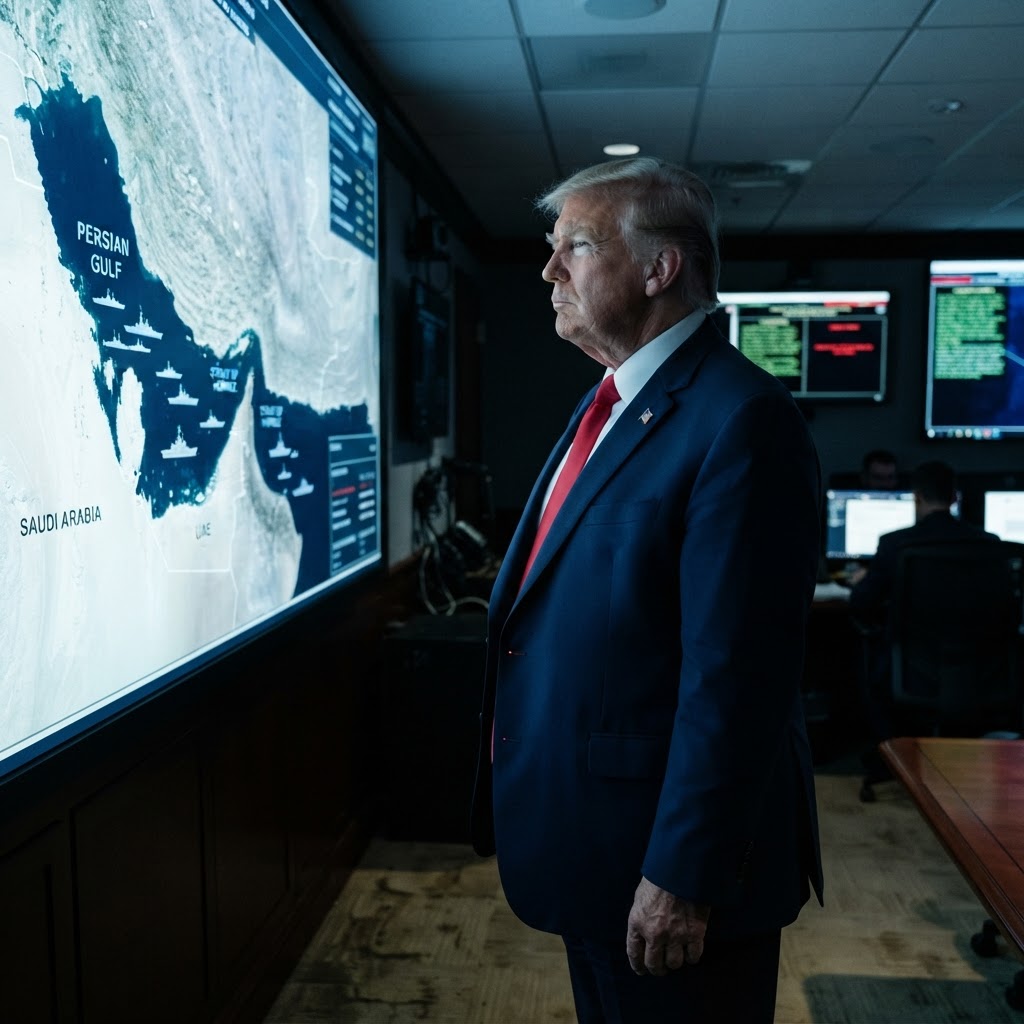
The Trump Doctrine Reimagined The geopolitical fallout has been compounded by a sharp departure from the traditional diplomatic playbooks emanating from the White House. President Donald Trump, addressing reporters in the Oval Office, dismissed the necessity for any comprehensive diplomatic framework with the Iranian leadership. His rhetoric was punctuated by a stark assertion of American dominance, noting that the United States maintains a decisive stranglehold on Iranian assets and retains absolute control over the vital arteries of the Strait of Hormuz. Such comments reflect a conviction that the era of transactional negotiations has expired, to be replaced by a policy of unilateral containment.
This hardening of tone coincides with a significant internal reshuffling within the administration. Vice President JD Vance, who had been tasked with leading the arduous, and ultimately fruitless, efforts to secure a new accord with the Iranian regime, has been abruptly removed from his portfolio. Insiders suggest that the President has directed Mr Vance to pivot his attention exclusively toward domestic policy initiatives, a move interpreted by observers as a signal that the White House has lost all appetite for the intricacies of regional bridge-building.