
National Post UK
Crude Calculus: Global Powers Intervene as Refinery Strikes Disrupt Energy Markets

As a coalition of nations releases 100 million barrels of reserves to curb spiralling fuel costs, the intensification of

The National Post

HomeWorld
World

Crude Calculus: Global Powers Intervene as Refinery Strikes Disrupt Energy Markets

As a coalition of nations releases 100 million barrels of reserves to curb spiralling fuel costs, the intensification of drone strikes on Russian infrastructure creates a precarious balancing act for Western leaders. Tensions escalate between Kyiv’s strategic objectives and the Trump administration’s warnings over global diesel supply.

SL

Sophie Laurent

Foreign Correspondent

Published 3 October 2026·about 12 hours ago 3 min read
Text
Share

A Strategic Injection In a move designed to douse the flames of a surging global energy market, a coalition of nations has announced the coordinated release of 100 million barrels of oil from their strategic reserves. The intervention, which aims to provide immediate relief to businesses and motorists facing relentless price increases at the pump, reflects the growing anxiety among policymakers regarding the fragility of the global energy supply chain. While these strategic stockpiles were originally intended for acute emergencies, the persistent upward trajectory of fuel prices has forced governments to shift from defensive conservation to active market management.

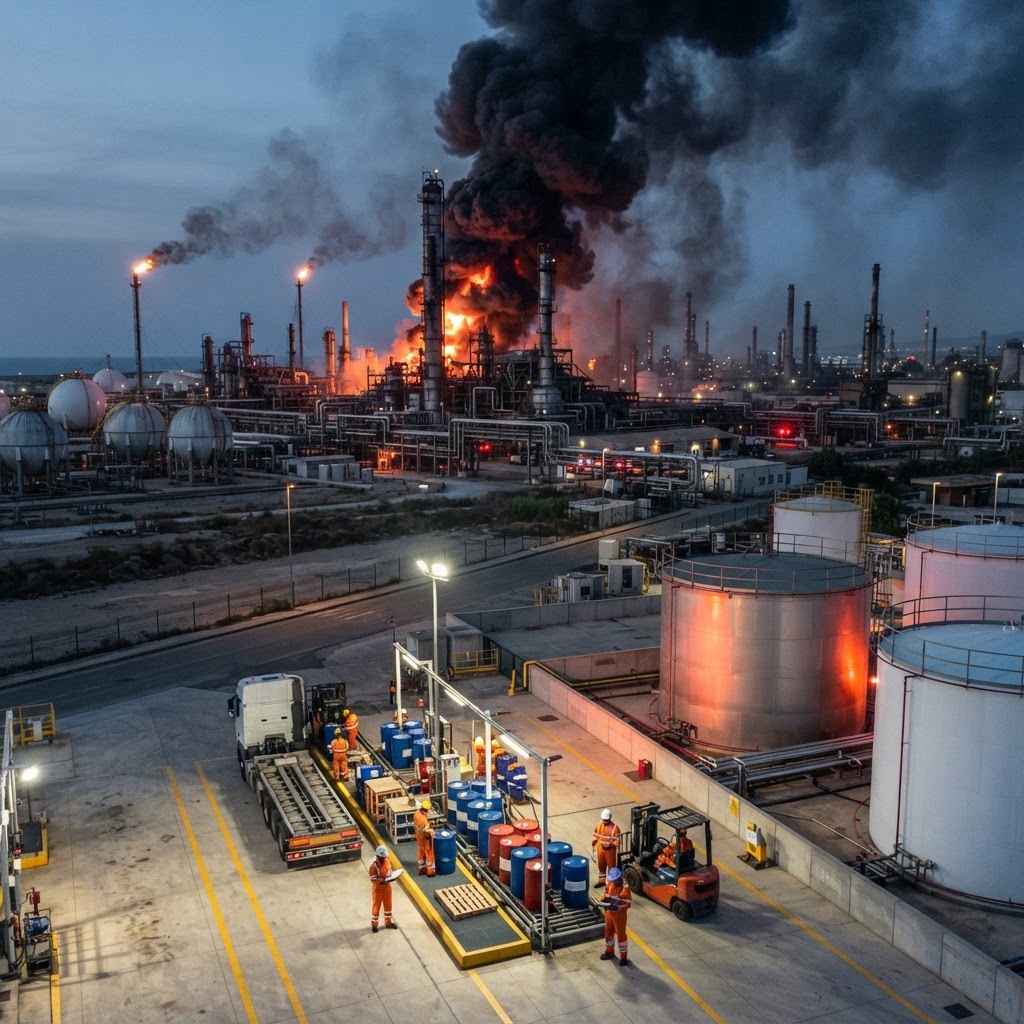
The Shadow of Conflict The urgency of this release is intrinsically linked to the ongoing hostilities in Eastern Europe, where the conflict has evolved into a war of industrial attrition. Recent reports confirm that Ukrainian forces have successfully targeted critical Russian oil refineries and infrastructure, with significant strikes recorded in the Samara and Oryol regions. These operations are clearly intended to cripple the economic engine of the Russian war machine, yet the ripple effects are being felt acutely in London, New York, and beyond. By focusing on the downstream sector—the processing facilities that turn crude into finished products like diesel and aviation fuel—Kyiv has inadvertently introduced a new layer of volatility into an already strained global market.

A Fractured Alliance The strategy has placed Ukraine at odds with the Trump administration, which has issued stern public rebukes against the strikes. The White House has argued that the deliberate targeting of refinery capacity risks triggering a global diesel shortage, potentially undoing the efforts of the strategic reserve release. For analysts in the City of London, the divergence highlights a fundamental disconnect between geopolitical strategy and economic reality. While Kyiv views the destruction of Russian infrastructure as an existential necessity, Washington remains laser-focused on the domestic political implications of sustained high energy costs. The conflict of interest underscores the difficulty of maintaining a unified approach to a global crisis when individual national priorities begin to diverge.

Market Volatility and Long-Term Stability The energy sector remains in a state of hyper-sensitivity. Global inventories are currently at levels that leave little margin for error, meaning that any disruption—whether from a targeted strike or a pipeline maintenance delay—has a disproportionately large impact on price volatility. Experts suggest that whilst the 100-million-barrel release may provide a short-term buffer, it does not address the underlying lack of refining capacity that has plagued the industry for the past several years. The reliance on strategic reserves is, at best, a palliative measure, not a cure for the structural imbalances inherent in the modern energy landscape. As winter approaches in the Northern Hemisphere, the pressure on global fuel markets will only intensify, leaving leaders with few options but to wait for the volatility to settle or to risk further intervention in a market already pushed to its breaking point.

TopicsEnergy MarketsRussia-Ukraine ConflictGlobal EconomyOil ReservesGeopoliticsTrump Administration
Share

About the Author

SL

Sophie Laurent

Foreign Correspondent

Sophie Laurent reports for National Post UK with a focus on rigorous analysis and authoritative journalism — a trusted voice across British public life.

Reader Discussion · 6

Subscribers can join the conversation.

SUBSCRIBE TO COMMENT →
F
Fiona Campbell3 Oct

I am worried about what happens when these reserves are depleted. Relying on stockpiles feels like a gamble when there is no clear end in sight for the industrial action at the refineries.

M
Marcus Sterling3 Oct

This is a sensible move to prevent a full-blown economic crisis. Markets rely on perception, and this collective action should provide the necessary buffer to keep prices from spiralling further.

E
Elaine Bennett3 Oct

As someone who struggles to keep the heating on during the winter months, I really hope this intervention translates to lower bills for households soon. It is becoming impossible to manage on a pension.

D
David Thorne3 Oct

It is interesting that the coalition timed this move just as the strikes started to bite deeper. One has to wonder how much of this is about market stability and how much is political posturing.

S
Sarah Jenkins3 Oct

Releasing strategic reserves is just a temporary plaster on a gaping wound. We need to focus on long-term energy independence rather than constantly tapping into emergency supplies.

A
Arthur Penhaligon3 Oct

About time the government stepped in. The prices at the petrol pump have been absolutely crippling for small businesses like mine over the past few weeks.


More from World

Most Read in World

Morning Briefing

The day's top stories, before 7am

Join 40,000 readers who start their morning with National Post UK.