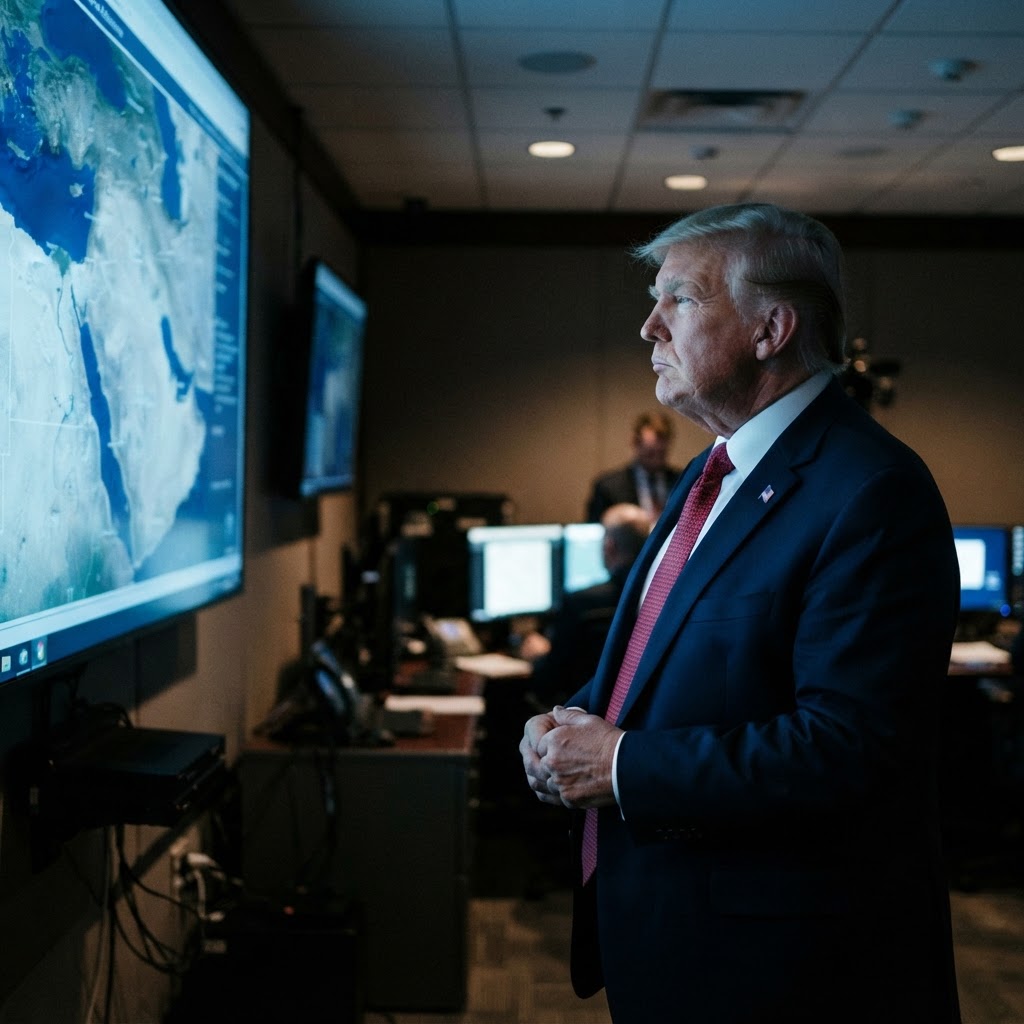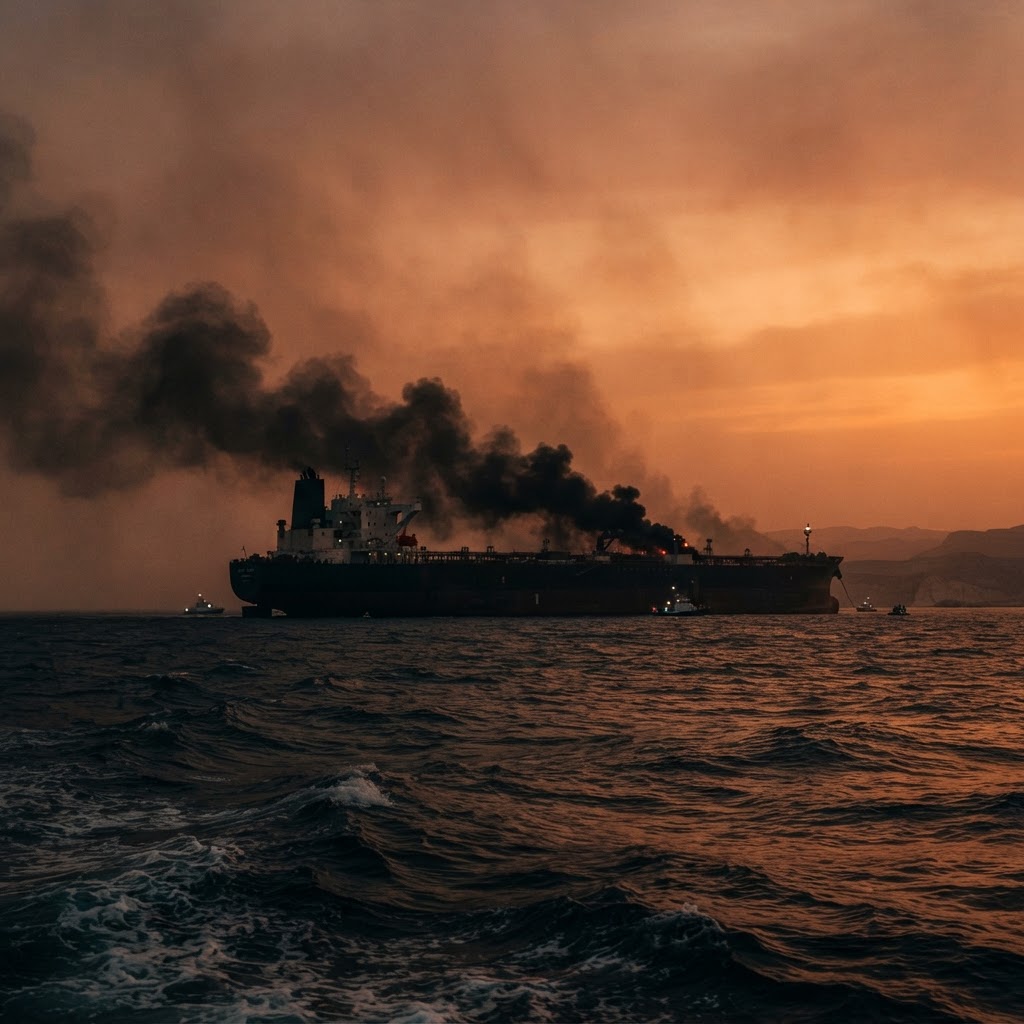
Chokepoint Crisis: Global Markets Tremble as Tankers Struck in Strait of Hormuz
An audacious assault on international shipping vessels has ignited fears of a wider regional conflagration. As military assets surge, the global community scrambles to secure the world's most vital energy artery.
RB
Richard Baxter
Foreign Correspondent
Published 1 November 2026·about 5 hours ago 3 min read
Text
TopicsMiddle EastStrait of HormuzOil PricesMaritime SecurityForeign PolicyGeopolitics
About the Author
RB
Richard Baxter
Foreign Correspondent
Richard Baxter reports for National Post UK with a focus on rigorous analysis and authoritative journalism — a trusted voice across British public life.
Reader Discussion · 6
Subscribers can join the conversation.
SUBSCRIBE TO COMMENT →E
Elizabeth Croft1 Nov
Living through the oil crises of the 70s, I find it quite alarming that we are still so vulnerable to events in the Strait. It is high time we accelerated our shift to domestic renewable energy sources to reduce this dependency.
J
Julian Bains1 Nov
Typical reaction from the markets. They always panic at the first sign of instability instead of looking at the long-term energy reserves already held in Europe.
M
Margaret Foster1 Nov
I agree with the previous poster, but the security of international shipping lanes is absolutely paramount. If we cannot protect our trade, we are essentially at the mercy of regional powers.
D
David Thorne1 Nov
The geopolitical situation is far more complex than just simple aggression. We need to be careful not to jump to conclusions before the full maritime investigation is completed.
S
Sarah Jenkins1 Nov
My husband works in logistics and he is already warning that fuel prices at the pump will climb by the weekend. I just hope the government has a contingency plan to prevent panic buying.
A
Arthur Penhaligon1 Nov
It feels like we have been here a dozen times before. The global reliance on this specific route is a massive strategic failure that we have ignored for decades.