The Shadow of Total War For observers in Whitehall and across the major European capitals, the rapid acceleration of Israel’s military footprint in southern Lebanon represents the most significant breach in regional containment since the current cycle of hostility began. Throughout the early hours of Friday, residents in the Bekaa Valley reported a systematic increase in kinetic activity, as Israel confirmed a strategic pivot toward expanded ground and aerial maneuvers. This development, aimed at neutralizing fortified positions, signals a departure from surgical strikes toward a broader, more integrated tactical offensive.
The Anglo-American Dilemma In Westminster, the mood is one of profound apprehension. Foreign Office insiders suggest that the British government is working in lockstep with the Biden administration to prevent the current volatility from metastasizing into a formal regional conflagration. Yet, the levers of influence available to the West appear increasingly brittle. The United Kingdom, traditionally a bridge between transatlantic security imperatives and Middle Eastern diplomatic channels, finds itself hamstrung by the near-total disintegration of trust between Washington and the Islamic Republic of Iran.
As London’s foreign policy establishment has noted, the current diplomatic ice age between the United States and Tehran has effectively shuttered the backchannels required for de-escalation. Where once there existed a begrudging framework for communication, there is now only the cold silence of mutual suspicion. With Washington-Tehran relations plumbing historic depths, the regional actors who hold sway over proxy forces in Lebanon find little incentive to restrain their ambitions, viewing the lack of dialogue as a green light for tactical opportunism.
The Regional Calculus Analysts at the Royal United Services Institute argue that the expansion of the Lebanese theatre is not merely a tactical pivot, but a profound geopolitical failure. The strategy of containment, which relied heavily on the premise that regional powers would avoid a full-scale clash for fear of existential consequences, is arguably no longer the primary governing principle of the conflict. Israel’s decision to commit further assets into the border regions indicates a belief that the status quo had become a strategic liability, necessitating a decisive—if dangerous—intervention.
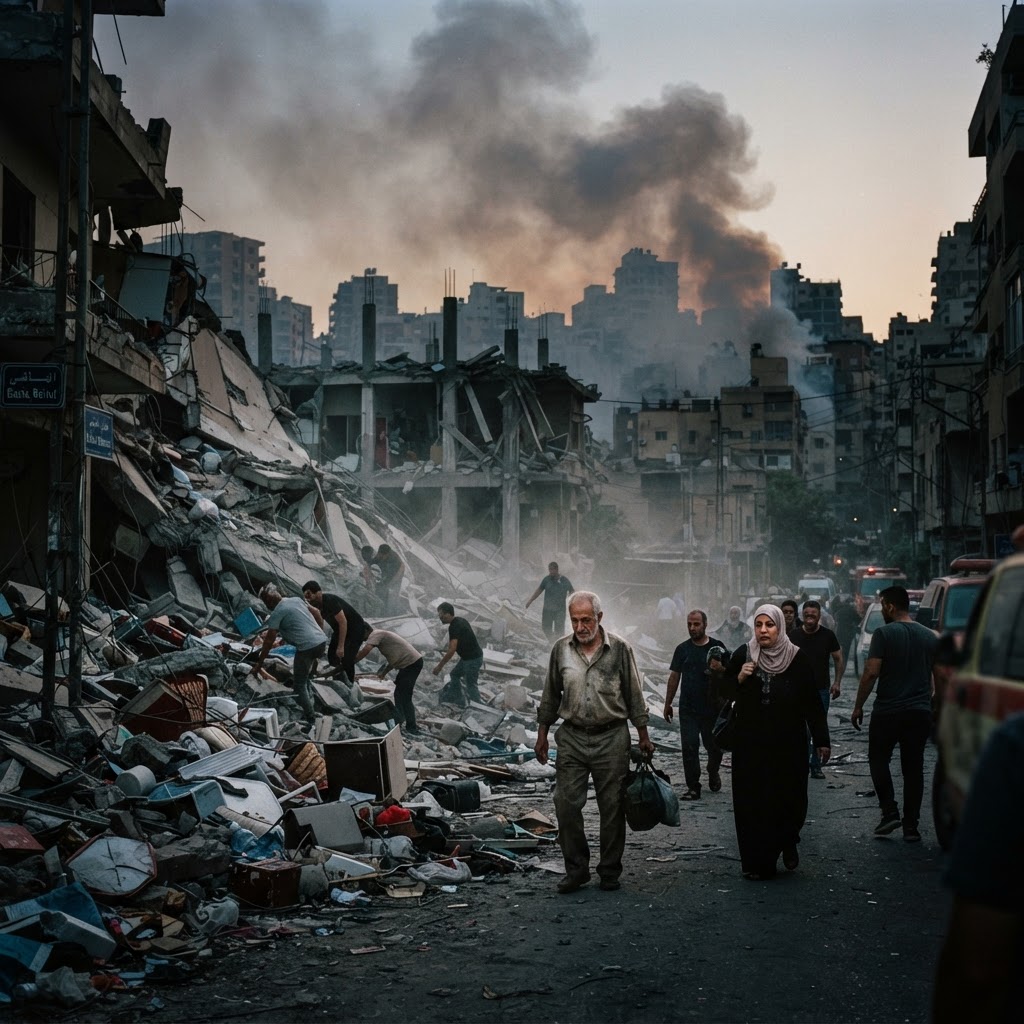
For the Lebanese state, already staggering under the weight of an unprecedented economic crisis and political inertia, the intensification of hostilities offers a grim prognosis. Should the offensive progress beyond the southern frontier, the risk of mass displacement and the utter collapse of state infrastructure becomes a stark, immediate reality. The international community, led by the United Nations, has called for a cessation of fire, yet these pleas are increasingly drowned out by the cadence of artillery and the encroaching shadow of further mobilisation.
A Fractured Diplomatic Landscape The core of the issue remains the lack of a viable diplomatic architecture to replace the one that has so spectacularly collapsed. With the United States engaged in a delicate domestic electoral cycle and Iran navigating its own internal succession pressures, the appetite for high-stakes compromise is non-existent. Without an interlocutor capable of commanding respect from both Jerusalem and Tehran, the region faces the terrifying prospect of a conflict that matures according to the rules of military necessity rather than political restraint.
As the sun rises over the Mediterranean, the geopolitical map of the Middle East is being redrawn in real-time. For the inhabitants of the Levant, the hope for a diplomatic reprieve is waning, replaced by the hardening reality that the current escalation is merely the prologue to a much larger, and far more unpredictable, encounter.
“With Washington-Tehran relations plumbing historic depths, the regional actors who hold sway over proxy forces in Lebanon find little incentive to restrain their ambitions.”