
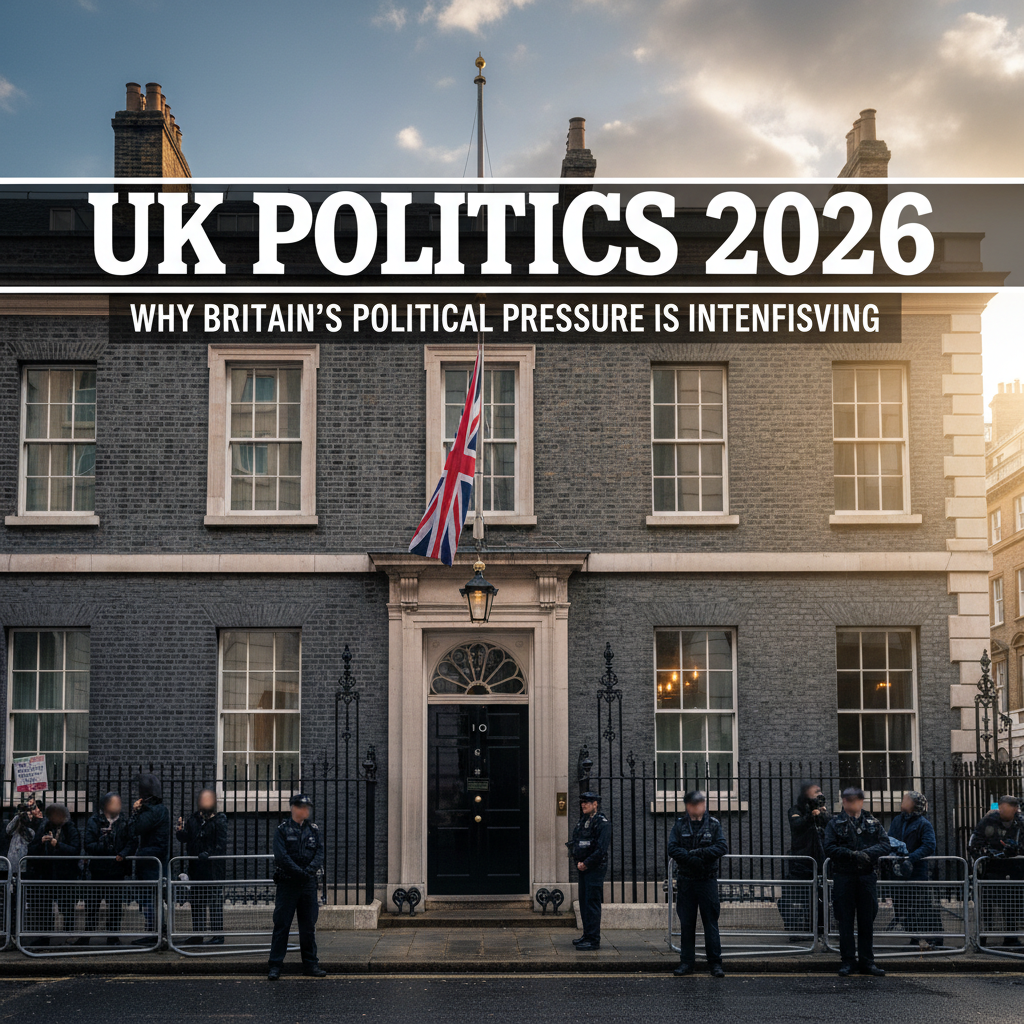
There are moments in national life when politics feels less like governance and more like weather. Britain in 2026 appears to be entering such a season.
The signs are not always dramatic. There is no single constitutional rupture, no nationwide strike wave on the scale of the 1970s, no one event that explains the mood. Instead, the country is experiencing something slower and perhaps more consequential: a steady accumulation of frustration.
Households continue to feel the aftershocks of years of inflation, even where headline figures have softened. Mortgage holders who fixed at low rates during the previous decade are discovering a harsher financial landscape. Renters face a market where affordability and security often feel mutually exclusive. Public services remain under visible strain, from NHS waiting times to local authority budgets.
In such conditions, electorates rarely ask ideological questions first. They ask practical ones. Is life improving. Are streets safer. Can I afford to raise a family. Does anyone in power understand daily reality.
That is where the pressure on Westminster now sits.
Keir Starmer and his government confront a paradox familiar to many incoming administrations. Voters often remove one government because they are exhausted, but they do not automatically trust the next one to solve entrenched problems. Winning office and winning confidence are separate tasks.
For the Labour leadership, discipline and seriousness helped build credibility. Yet seriousness alone can become politically sterile if not paired with visible results. A government may be fiscally prudent, institutionally cautious and rhetorically competent, but if the lived experience of voters remains static, impatience returns quickly.
Opposition forces understand this well. Nigel Farage and insurgent populist currents continue to benefit whenever mainstream parties appear managerial rather than transformational. They thrive not merely on anger but on the perception that established politics speaks in abstractions while families live in specifics.
Britain’s deeper challenge is structural. Productivity growth has been weak for years. Regional inequality remains stubborn. Housing supply has lagged demand. Infrastructure projects move slowly. Energy costs remain politically potent. Immigration debates continue to merge economics, culture and border competence into one combustible subject.
No prime minister can solve these in a single parliament. But modern politics punishes explanations. It rewards evidence.
That means symbolic competence matters more than many policymakers admit. Trains that run reliably. GP appointments obtained without ordeal. Roads repaired. Planning decisions processed. Crime visibly reduced. Small improvements, repeated nationally, can alter public mood faster than sweeping speeches.
There is also a generational dimension. Younger voters increasingly feel excluded from the economic bargain that shaped their parents’ adulthood: affordable housing, stable employment, upward mobility. Older voters, meanwhile, fear erosion of savings, services and community stability. The result is not one grievance but overlapping grievances.
Britain is hardly unique. Across Europe and North America, democracies are grappling with distrust of institutions, fragmented media ecosystems and electorates that can shift rapidly. But Britain adds its own post Brexit identity questions to the mix. What economic model now defines the country. What role does it seek abroad. What social contract exists at home.
Westminster often mistakes noise for danger and silence for calm. Yet the real political temperature is often found elsewhere: in family budgets, local high streets, commuter platforms and conversations around kitchen tables.
The coming years may not be defined by ideological revolution. They may instead be shaped by a simpler test. Which leaders can persuade voters that the system still works, and works for them.
Because when enough citizens conclude otherwise, politics does not merely become heated. It becomes unstable.