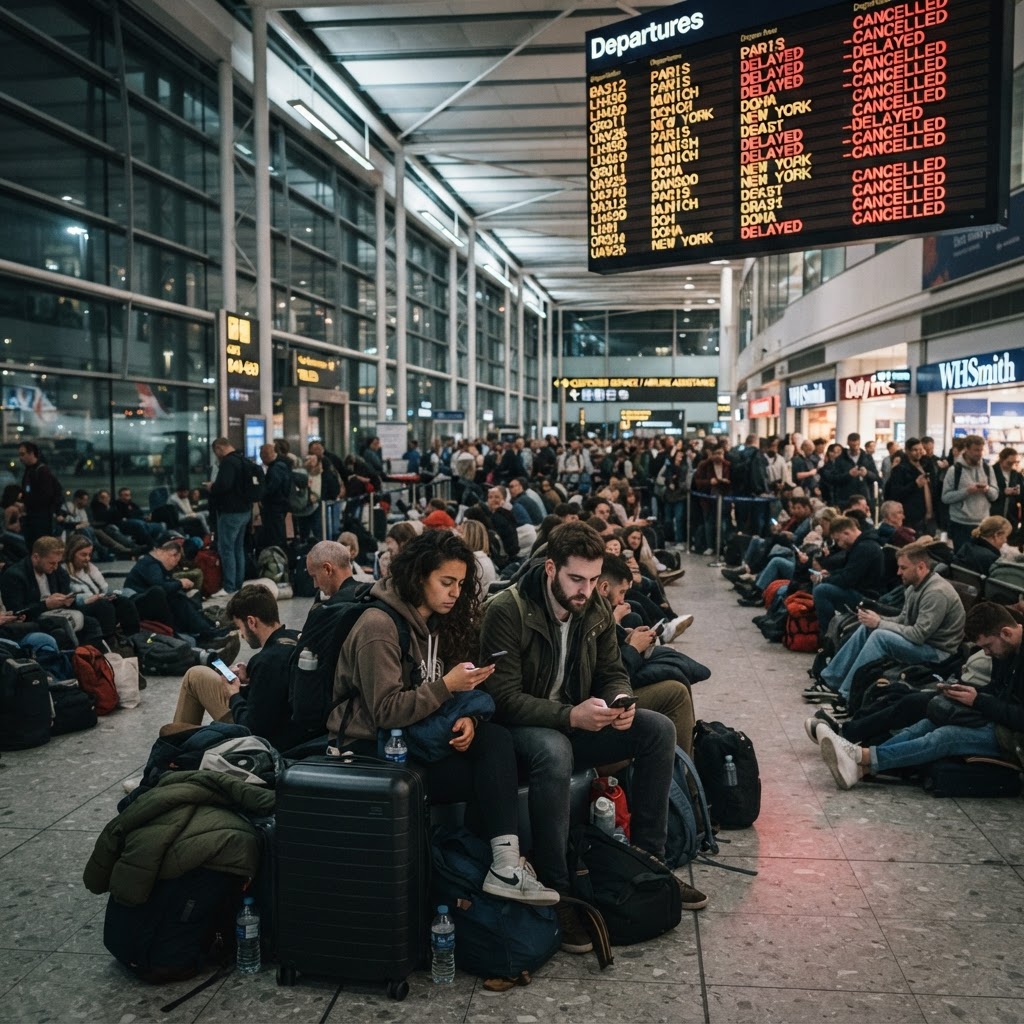
Martin Rolfe has conceded that systemic technical failures caused mass disruption across British skies this autumn. As the fallout continues, industry leaders are demanding greater accountability and structural reform.
A Watershed Moment for British Aviation
The credibility of the United Kingdom’s national air traffic control provider has been placed under intense scrutiny this week, as Martin Rolfe, the chief executive of Nats, offered a formal apology to aviation leaders for a series of catastrophic system failures that paralysed British airspace in September. The outages, which resulted in the cancellation of more than 2,000 flights, left tens of thousands of passengers stranded and prompted a fierce backlash from the airline industry. Addressing the annual Airlines UK conference, Mr Rolfe sought to draw a line under the crisis, confirming that permanent software patches have now been installed to insulate the network against similar vulnerabilities.
The Anatomy of a Technical Crisis
The disruption, which occurred over two separate instances in September, exposed significant fragilities within the UK’s aging flight management infrastructure. While the immediate focus has been on the technical errors themselves, the aviation sector has been quick to characterise the incident as a failure of oversight. Neal McMahon, the chief operating officer of Ryanair, did not mince his words, describing the chaos as a 'shitshow' and a worrying indication that the lessons from previous technical failures have yet to be fully absorbed by the provider. The sentiment is shared by many within the carrier community, who argue that the cost of these delays—measured in both lost revenue and reputational damage—is becoming an unsustainable burden for the sector.
An Industry-Wide Responsibility
In his address, Mr Rolfe attempted to strike a balance between accepting responsibility and shifting the narrative towards collective action. While conceding that the source of the errors lay within the Nats technical estate, he cautioned that the complexity of modern air travel means that the industry cannot rely solely on the resilience of a single entity. The Nats chief argued that airlines and airports must engage in a more collaborative strategy for managing recovery during periods of extreme duress. According to Mr Rolfe, the expectation that a single technical glitch should trigger a total collapse of flight operations reveals a systemic lack of contingency planning across the wider aviation network.
Looking Toward the CAA Review
As the sector grapples with these revelations, all eyes remain fixed on the forthcoming inquiry by the Civil Aviation Authority (CAA). The regulator is currently conducting a deep-dive investigation into the events of 8 September, a process that promises to be exhaustive. However, the timeline for the final report—scheduled for publication in March 2027—has drawn criticism from some quarters for its perceived lack of urgency. Critics argue that a delay of several months risks diminishing the momentum for necessary legislative and operational changes. Nevertheless, the CAA has maintained that the depth of the analysis required to prevent a recurrence of such a high-consequence failure demands a methodical and rigorous approach.
The Long Road to Modernisation
The events of this autumn serve as a stark reminder of the challenges facing Britain’s infrastructure as it attempts to manage one of the busiest and most complex airspaces on the planet. With passenger demand climbing toward pre-pandemic levels and the sector striving to meet ambitious sustainability targets, the pressure to upgrade Nats’ legacy systems has never been greater. Experts suggest that whilst software fixes may offer a temporary reprieve, a fundamental modernisation of the UK’s air traffic management technology is the only viable long-term solution. Until such modernisation is realised, the industry remains in a precarious position, hoping that the recent software updates will be sufficient to withstand the demands of the upcoming festive travel period and beyond.