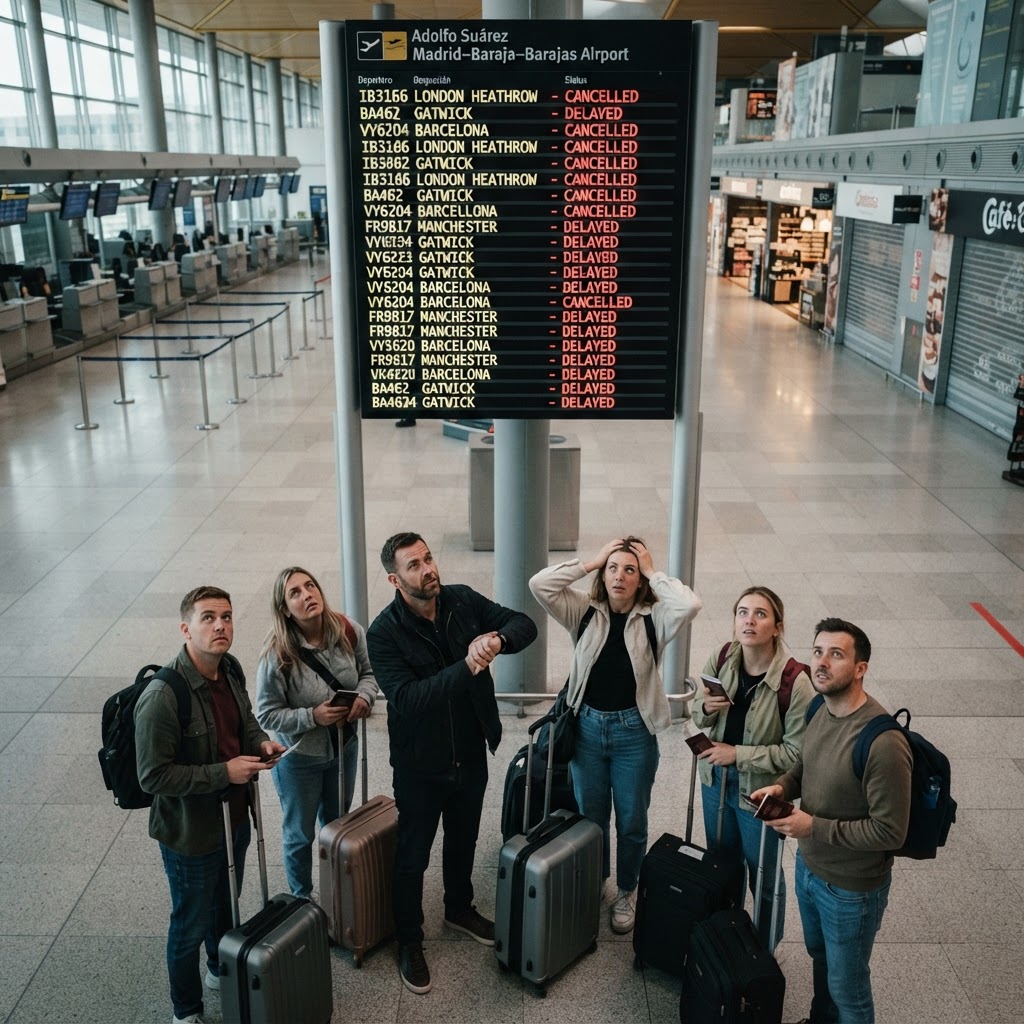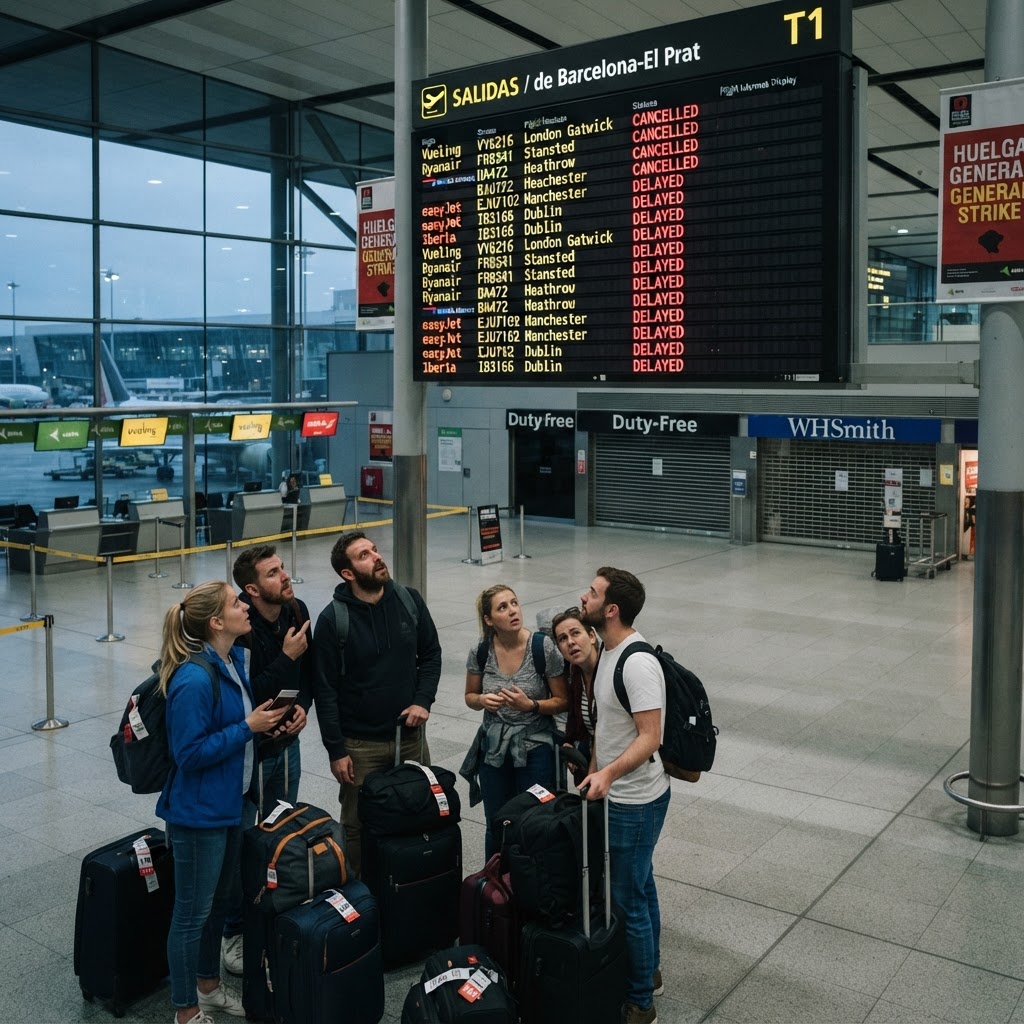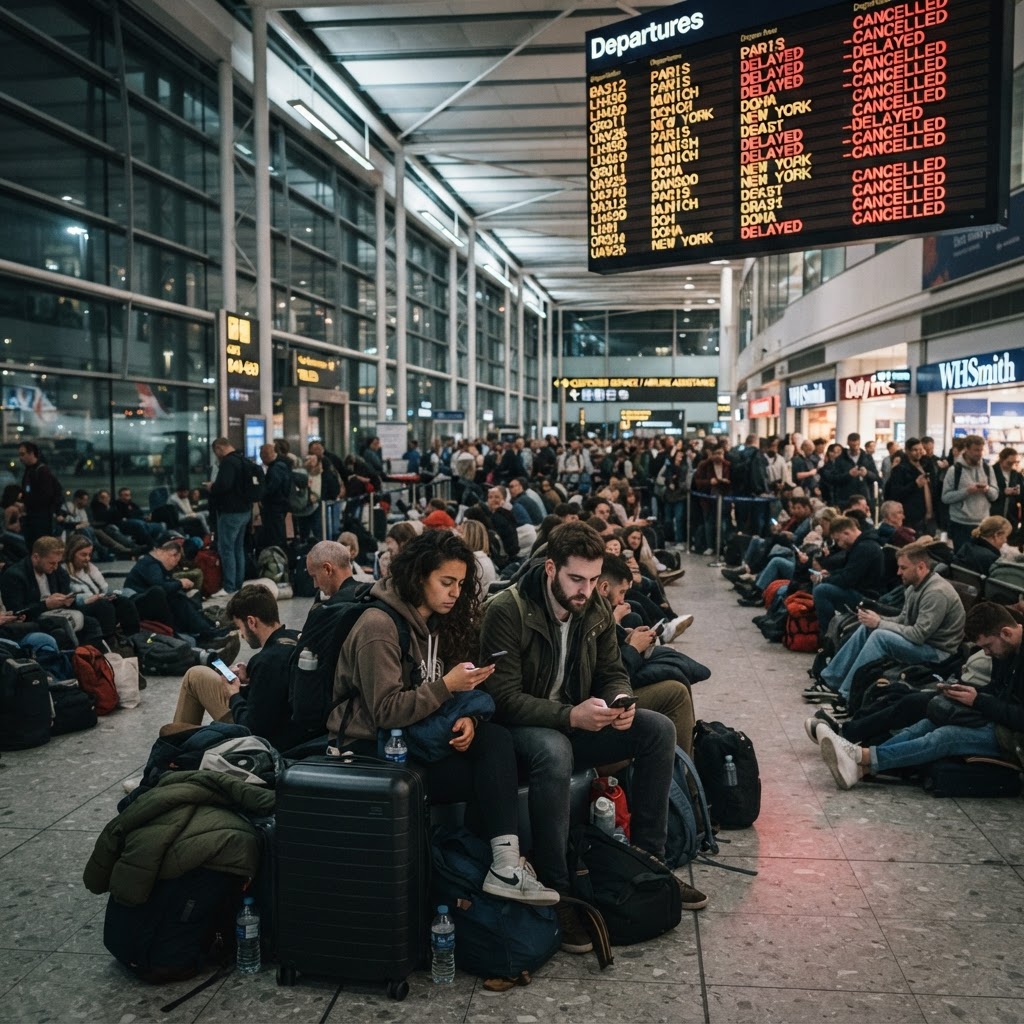
The Anatomy of a Global Gridlock For the thousands of British passengers attempting to navigate the skies this weekend, the promise of seamless international travel has been replaced by the grim reality of terminal floors and mounting uncertainty. Following the catastrophic failure of the United States Federal Aviation Administration (FAA) systems on Friday, November 13, 2026, the global aviation network has suffered a systemic shudder from which it is yet to recover. The nationwide ground stop, which immobilised the entire American airspace for five hours, has triggered a cascading effect that continues to bite at London Heathrow, Gatwick, and Manchester.
The scale of the disruption is, by any standard, immense. Aviation analytics indicate that in excess of 11,000 flights were either grounded, diverted, or severely delayed as a direct consequence of the US software failure. For UK travellers, many of whom rely on the high-frequency transatlantic corridors, the fallout has been particularly acute. With aircraft, flight crews, and essential ground equipment now displaced across multiple time zones, the logistics of returning to a standard operating schedule remain a daunting challenge for airline executives.
A Week of Repeated Misfortune This latest blow comes at an exceptionally poor time for the British aviation sector, which was already reeling from a separate operational crisis. Earlier this week, London Gatwick Airport experienced major rail and service disruptions following a security breach involving a trespasser. This convergence of events—a domestic security failure followed rapidly by a transoceanic technological collapse—has created a 'perfect storm' of travel volatility that has pushed terminal resources to their breaking point.
Industry analysts suggest that the cumulative effect of these incidents has exposed the 'just-in-time' nature of modern airline operations. Where once there existed a buffer of resilience, many carriers now operate on the thinnest of margins. When a single pivot point fails, the entire apparatus enters a state of extended paralysis, leaving passengers as the ultimate casualties of a system that lacks sufficient redundancy.
The Recovery Effort: A Slow Ascent As of Saturday morning, the mood at major British hubs remains one of guarded frustration. While the US airspace has technically reopened, the 'trickle-down' effect means that a flight departing from New York to London is not merely a single movement, but a cog in a complex machine that includes connecting flights, crew rest requirements, and the necessity of clearing massive backlogs of aircraft at hub airports. Airline spokespersons have advised passengers to verify their status before travelling, yet even those with confirmed bookings are discovering that the 'ripple effect' of the FAA incident—specifically the lack of available slots and the displacement of long-haul aircraft—is causing unpredictable cancellations.
Dr. Alistair Thorne, an aviation logistics expert, notes that the recovery process is not merely a matter of flicking a switch. 'The primary issue is aircraft positioning. When you hold thousands of planes on the ground for five hours, you break the rhythm of the fleet. A 787 that should be sitting at Heathrow at 7:00 AM might still be on the tarmac in Chicago or Washington. Until those assets are returned to their proper origin points, the disruption will persist,' he explained.
“The primary issue is aircraft positioning. When you hold thousands of planes on the ground for five hours, you break the rhythm of the fleet.”
Systemic Vulnerabilities and Future Outlook The incident has prompted immediate calls for a formal inquiry into the resilience of international aviation infrastructure. The reliance on legacy systems, often integrated with cutting-edge modern tracking technology, creates a complex ecosystem that remains susceptible to failures of this magnitude. For the frequent flyer, the events of the past 48 hours serve as a sobering reminder that the globalised travel network is only as strong as its most fragile digital component.
As the weekend progresses, both Gatwick and Heathrow are operating under extreme pressure. Passengers are encouraged to check with their respective airlines, though the consensus among ground staff is that a return to 'business as usual' will not occur until well into the coming week. In the interim, the British traveller must exercise patience, as the industry works to untangle a web of delays that has left no corner of the transatlantic route untouched.