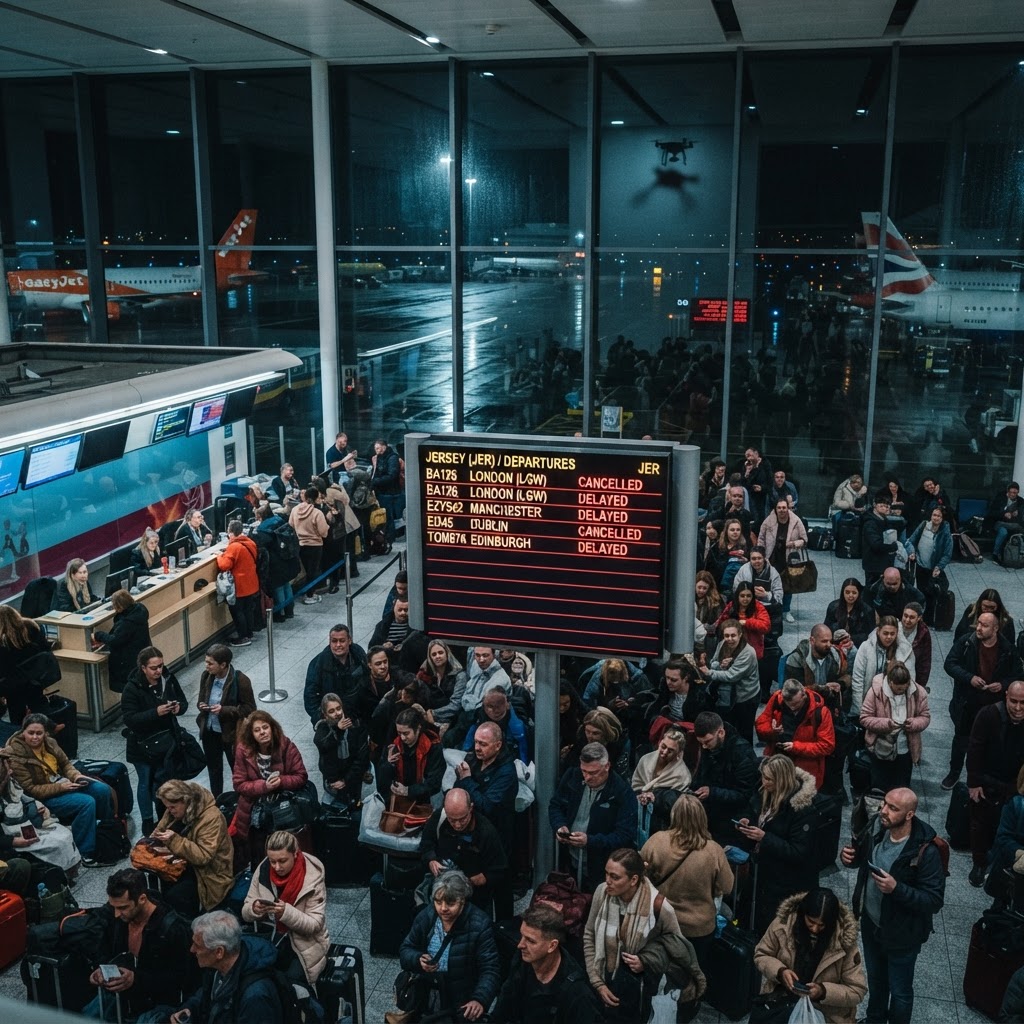
A Repeat Performance of Aerial Interference The travel plans of hundreds of passengers were thrown into disarray on Sunday evening as Jersey Airport was forced to suspend all operations for the second time in forty-eight hours. The closure, which commenced as darkness fell over the Channel Islands, was prompted by the reported presence of unauthorized drones encroaching upon restricted airspace. For those attempting to transit between the island and major UK hubs including London Heathrow, Gatwick, and Southampton, the latest disruption has become a symbol of the growing vulnerability of regional aviation infrastructure.
The Growing Complexity of Drone Management Aviation security experts have long warned that the proliferation of consumer-grade drone technology is significantly outpacing the regulatory frameworks designed to contain them. Unlike larger, military-grade platforms, these smaller craft often evade traditional primary surveillance radar, creating a headache for airport operators who must prioritise passenger safety above all other metrics. When an unauthorized signal is detected, the standard protocol dictates a total cessation of movement, a decision that carries substantial financial and logistical consequences.
Dr. Alistair Finch, a senior consultant in aviation security, noted that the incidents in Jersey reflect a broader European trend. The ease of access to high-altitude drones means that malicious actors, or indeed negligent hobbyists, can effectively hold regional transport links hostage with minimal resources. The challenge for Jersey Airport, much like its larger counterparts in the UK, lies in the deployment of countermeasures that do not inadvertently endanger aircraft or the surrounding civilian population.
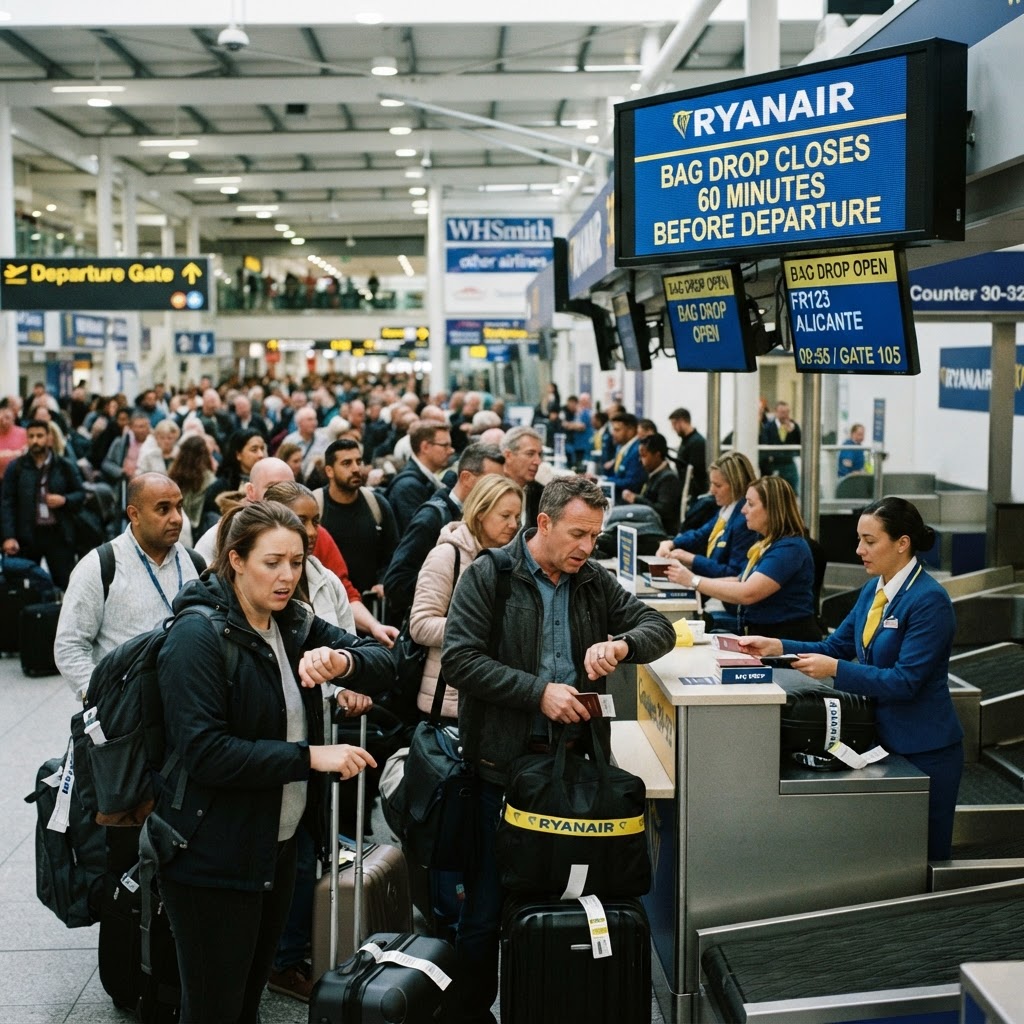
Disruption at the Terminal At the terminal, the mood remained one of weary frustration. Passengers who had already endured the chaos of the previous night’s closure found themselves navigating a second wave of cancellations and delays. The ripple effect was felt acutely at Gatwick and Southampton, where flights destined for the island were either diverted mid-air or held on the tarmac until the scale of the restriction became clear. Airport staff worked throughout the night to provide accommodation for the stranded, yet for many, the lack of a clear timeline for the resumption of services proved the most distressing aspect of the incident.
Institutional Response and Future Outlook Authorities have confirmed that the incident is being treated as a significant security breach. Local police have been working in tandem with aviation regulators to identify the operators behind the devices, though the task remains notoriously difficult due to the mobile nature of the technology. The States of Jersey Police are now appealing to the public for information, emphasizing that flying a drone within five miles of an airport is not only a criminal offence but a reckless endangerment of life.
As the aviation industry looks toward a future increasingly populated by autonomous aerial systems, the events of this weekend in Jersey serve as a stark reminder that the digital sky requires a robust physical defence. Whether this disruption was the result of a calculated campaign or simple atmospheric interference from ill-informed enthusiasts, the outcome is the same: a critical piece of national infrastructure brought to a standstill by an object smaller than a bird.
For the residents and business travellers who rely on the Jersey connection, the next forty-eight hours will be critical. Airport officials have stated that they are keeping the situation under constant review, though they have been unable to provide guarantees that similar breaches will not occur again in the coming days. In the meantime, the silent runways of Jersey Airport stand as a testament to the persistent, evolving threats facing modern transport networks in the digital age.
“The ease of access to high-altitude drones means that individuals can effectively hold regional transport links hostage with minimal resources.”