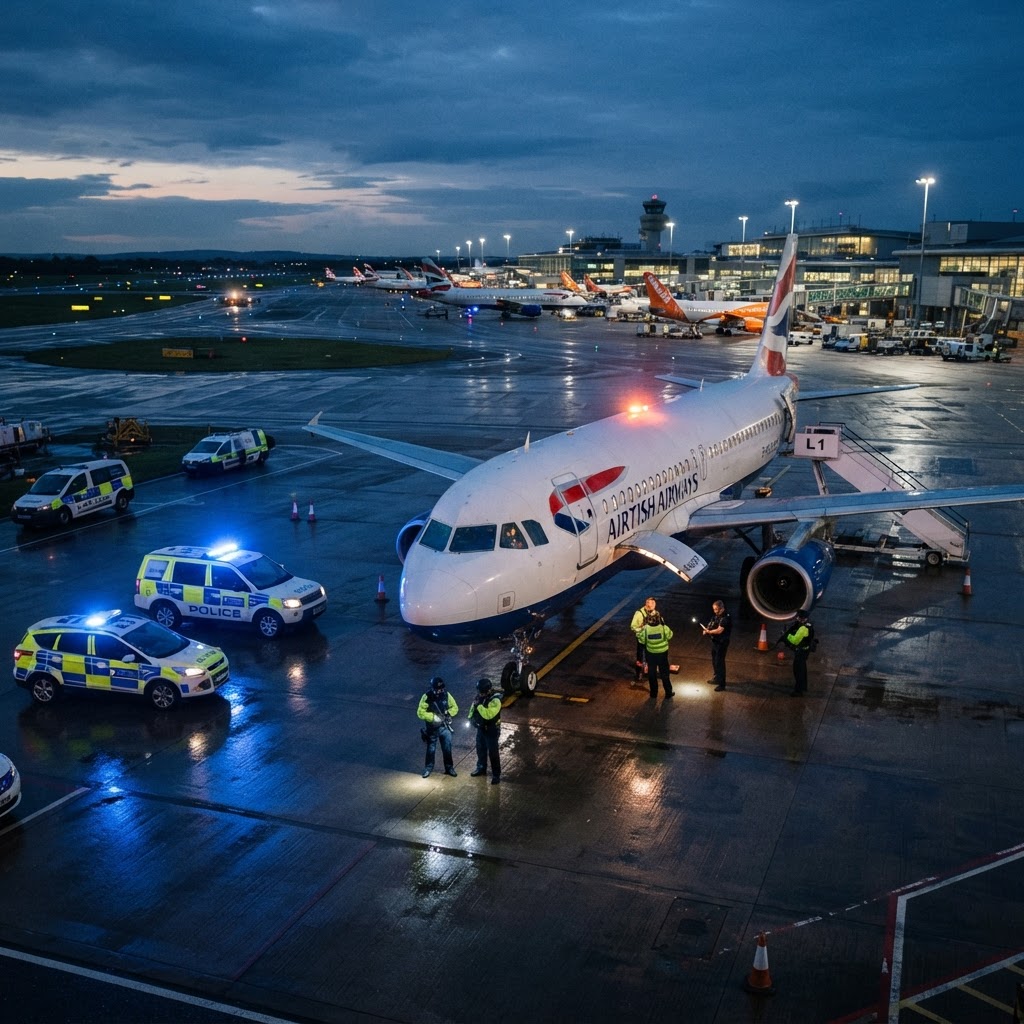
Major carriers are grappling with a surge in malicious disruption as intelligence officials investigate a suspected orchestrated campaign aimed at undermining European travel connectivity. The escalation poses significant logistical challenges for airports from Heathrow to Rome as authorities maintain a state of heightened vigilance.
A climate of deliberate disruption
Aviation authorities across the continent are currently grappling with an unprecedented surge in malicious activity, as a coordinated campaign of hoax bomb threats has targeted commercial aviation routes in nine European nations. The targeted flights, which span jurisdictions from the United Kingdom to Romania, have forced security teams to implement emergency protocols, causing significant delays and widespread passenger anxiety. The surge in these incidents, which began as a minor nuisance, has rapidly evolved into a sustained challenge for security services and airline operators alike.
The anatomy of an escalation
The pattern of the threat campaign suggests a high degree of intent. Security analysts observed a deliberate trajectory in the volume of alerts: seven incidents were recorded on Wednesday, a figure that surged past twenty on Thursday, eventually reaching dozens by Friday. This rapid acceleration has prompted grave concern among international security bodies, including the aviation risk consultancy Osprey, which has cautioned that further disruptions are not merely possible but likely. The threats have targeted a diverse array of hubs, affecting flights departing from the United Kingdom, France, Denmark, Spain, Italy, the Netherlands, Cyprus, the Czech Republic, and Romania.
The corporate perspective
For airline executives, the difficulty lies in the necessity of treating every digital or telephonic warning as a credible risk to human life. Luis Gallego, the CEO of International Airlines Group (IAG), the parent company of British Airways, offered a sobering assessment of the current environment. Speaking on the necessity of operational discipline, Gallego emphasised that regardless of the frequency of hoaxes, airlines are bound by rigorous safety protocols that mandate every threat be treated with the utmost seriousness. This duty of care inevitably results in the diversion of aircraft, exhaustive security screening, and the inevitable disruption of passengers' schedules.
A broader geopolitical strategy
The timing of the incidents is viewed by intelligence analysts as far from coincidental. Several sources have suggested that the campaign is designed to create maximum friction in the European transport network ahead of two major European Union summits scheduled for later this month. By targeting high-traffic flight paths, those behind the campaign are seemingly attempting to sow distrust in the integrity of European transport infrastructure. While no single actor has claimed responsibility, the sophisticated, distributed nature of the threats points toward a concerted effort to strain resources at some of the world’s busiest airports. The British transport sector, already navigating a post-pandemic landscape marked by labour shortages and logistical constraints, finds itself particularly vulnerable to such psychological warfare.
Looking forward
As the investigation into the origins of these threats continues, the aviation industry remains on high alert. Passengers travelling through London’s major airports are being advised to expect a more visible security presence and the potential for spontaneous screening measures. The resilience of the European aviation framework is currently being tested by a campaign that leverages fear as its primary weapon. For now, the imperative for the aviation industry is clear: maintaining a balance between efficient travel and the non-negotiable requirement of absolute safety. It remains to be seen whether international cooperation between intelligence services can identify the perpetrators behind this destabilisation, yet the message from the industry is firm: the safety of the aircraft and its passengers will remain the primary priority, regardless of the tactical objectives of those who seek to cause disruption.