National Post UK
Aviation Paralysis: The Lingering Aftermath of the Great NATS System Failure

Weeks after the catastrophic air traffic control collapse, British travellers remain trapped in a cycle of cancellations

The National Post

HomeTravel
Travel

Aviation Paralysis: The Lingering Aftermath of the Great NATS System Failure

Weeks after the catastrophic air traffic control collapse, British travellers remain trapped in a cycle of cancellations and confusion. As airports struggle to normalise, experts warn that the integrity of our national aviation infrastructure faces a long, arduous road to recovery.

NF

Natalie Forsythe

Travel Editor

Published 21 September 2026·23 days ago 3 min read
Text
Share

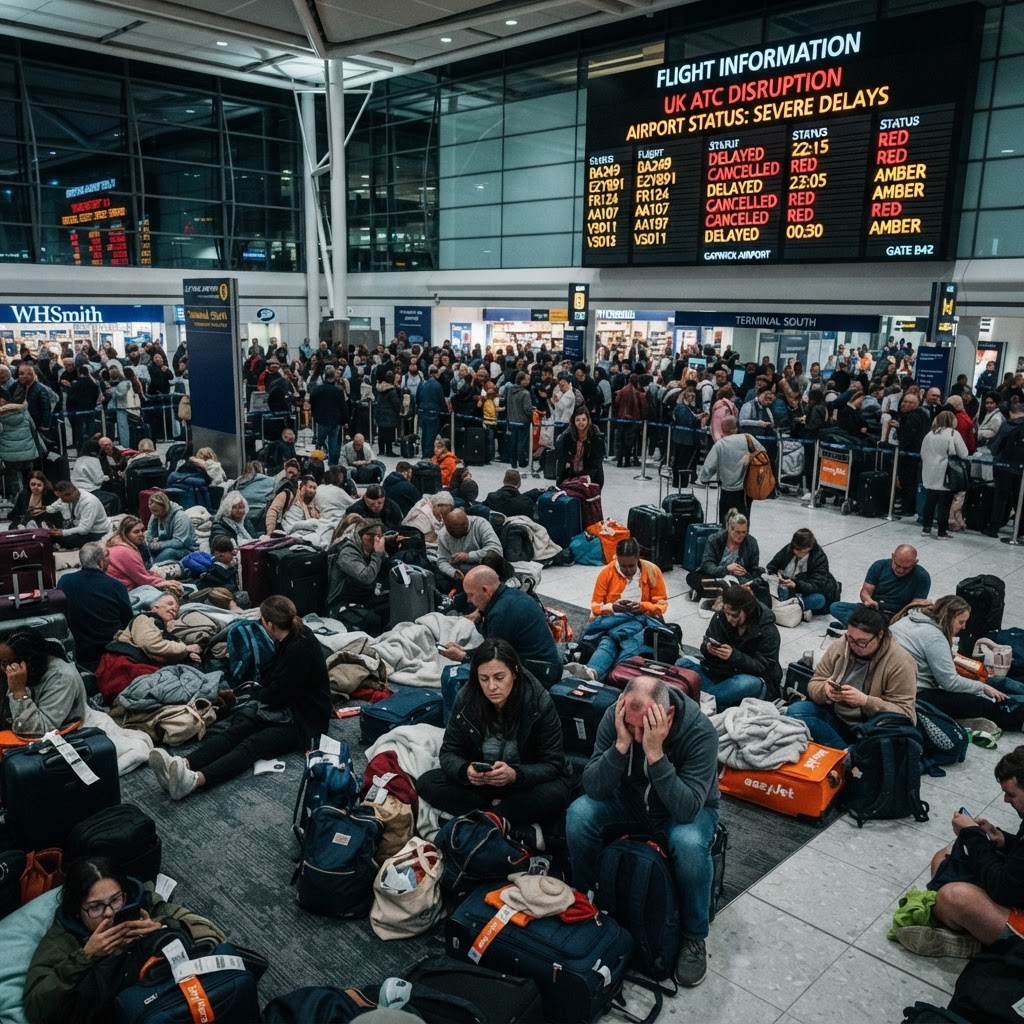
The Shadow of the September Outage For the thousands of passengers currently languishing in departures halls from Heathrow to Manchester, the events of 8 September have transcended a mere technical glitch; they have become a defining ordeal of the 2026 travel calendar. When NATS, the national air traffic control provider, suffered a systemic collapse, the immediate effect was a cessation of the UK's complex airborne choreography. Despite swift assurances from NATS that the software fault was rectified within hours, the architectural reality of modern aviation means that a singular failure acts as a digital pebble causing an oceanic ripple.

The Anatomy of the Crisis The numbers from the inaugural day of the outage—some 1,300 flights grounded—tell only a fraction of the story. While the tarmac is once again occupied, the scheduling displacement has proved to be an administrative nightmare. Because airline logistics operate on razor-thin margins of turnaround times and crew availability, a displacement in the early days of September has cascaded into a fortnight of uncertainty. At Gatwick and Heathrow, where runway capacity is already stretched to the limit, the backlog of displaced passengers and recalibrated flight plans has resulted in a permanent state of logistical friction.

A Legal Quagmire for Travellers Beyond the inconvenience of missed holidays and abandoned business trips, a secondary crisis is brewing in the legal sphere. Passengers, already weary from multi-hour delays, have been met with a cold reality: the classification of the NATS failure as an 'extraordinary circumstance' may preclude them from standard statutory compensation. Legal analysts suggest that the ensuing battles between flag carriers and the travelling public will define the aviation sector's regulatory landscape for years to come. The message from the industry is clear, if unsympathetic: internal systemic failure remains a grey area in current legislation, often leaving the individual to foot the bill for global connectivity breakdowns.

Reflections on Resilience Aviation experts are now calling for a comprehensive parliamentary review into the vulnerability of our air traffic control systems. The reliance on legacy software integrated with modern, high-volume demand creates a precarious environment. As the UK seeks to maintain its status as a global aviation hub, the question is not whether a system can be fixed, but whether the infrastructure can withstand the realities of 21st-century traffic volume. Until robust redundancy protocols are established, the British passenger will continue to exist in a state of precarity, beholden to the stability of a digital signal that, as we have seen, is far from infallible.

TopicsAviationNATSUK TravelHeathrowGatwickInfrastructureTransport News
Share

About the Author

NF

Natalie Forsythe

Travel Editor

Natalie Forsythe reports for National Post UK with a focus on rigorous analysis and authoritative journalism — a trusted voice across British public life.

Reader Discussion · 4

Subscribers can join the conversation.

SUBSCRIBE TO COMMENT →
E
Elena Varga21 Sept

Having worked in aviation logistics for years, I can tell you that the interconnected nature of modern flight paths makes any single failure point a nightmare. It is not just about the NATS system itself, but how the ripple effects are handled by the airports and ground staff.

R
Robert Sterling21 Sept

How many more of these 'technical glitches' do we have to endure before the regulator steps in with some real teeth? Passengers are the ones paying the price for these failures every single time, and yet we see very little in terms of genuine accountability.

S
Sarah Jenkins21 Sept

While it is easy to blame NATS, we must remember that these systems are incredibly complex and maintained by dedicated engineers. It is a shame that one failure has caused such chaos, but I suspect the underlying issue is a lack of investment in modernising our ageing infrastructure.

J
James Henderson21 Sept

I spent twelve hours sat on the tarmac at Gatwick during that disaster and honestly, the lack of communication from the airlines was the most infuriating part. We need a proper contingency plan that actually functions when the primary system goes dark.
More from Travel

Most Read in Travel

Morning Briefing

The day's top stories, before 7am

Join 40,000 readers who start their morning with National Post UK.