National Post UK
Power Grid Constraints Stall Flagship British AI Supercomputing Hub

Ambitious plans to establish the nation’s premier artificial intelligence facility in Essex have collided with the reali

The National Post

HomeTechnology
Technology

Power Grid Constraints Stall Flagship British AI Supercomputing Hub

Ambitious plans to establish the nation’s premier artificial intelligence facility in Essex have collided with the reality of an overstretched national energy infrastructure. The project, once heralded as the cornerstone of Britain’s tech sovereignty, now faces an uncertain timeline stretching into the next decade.

JM

Jack Morrison

Technology Editor

Published 28 September 2026·about 1 month ago 3 min read
Text
Share

The Gridiron Hurdle For a government pinning its economic recovery on the promise of artificial intelligence, the site in Loughton, Essex, was supposed to be the jewel in the crown. Announced with significant fanfare in 2025, the facility was intended to house the UK’s largest AI supercomputer, providing the raw computational power necessary to keep domestic industries competitive in a global market dominated by American and Chinese heavyweights. Yet, as of late September 2026, the promise of a digital renaissance has been tempered by the limitations of the analogue age. The project is currently embroiled in significant delays, with officials now privately conceding that the facility may not reach full operational capacity until the mid-2030s.

Infrastructure Realities The primary antagonist in this technological drama is not a lack of hardware or expertise, but the nation's power grid. Modern AI datacentres are voracious consumers of electricity, requiring consistent, high-voltage energy flows that current local infrastructure in Essex is simply unable to provide. Discussions between Whitehall and energy providers have reportedly hit a stalemate, as the sheer scale of the power requirement risks destabilising the regional grid without extensive, time-consuming upgrades to local sub-stations and transmission lines. This bottleneck serves as a stark reminder of the infrastructure deficit that threatens to throttle the UK's high-tech ambitions.

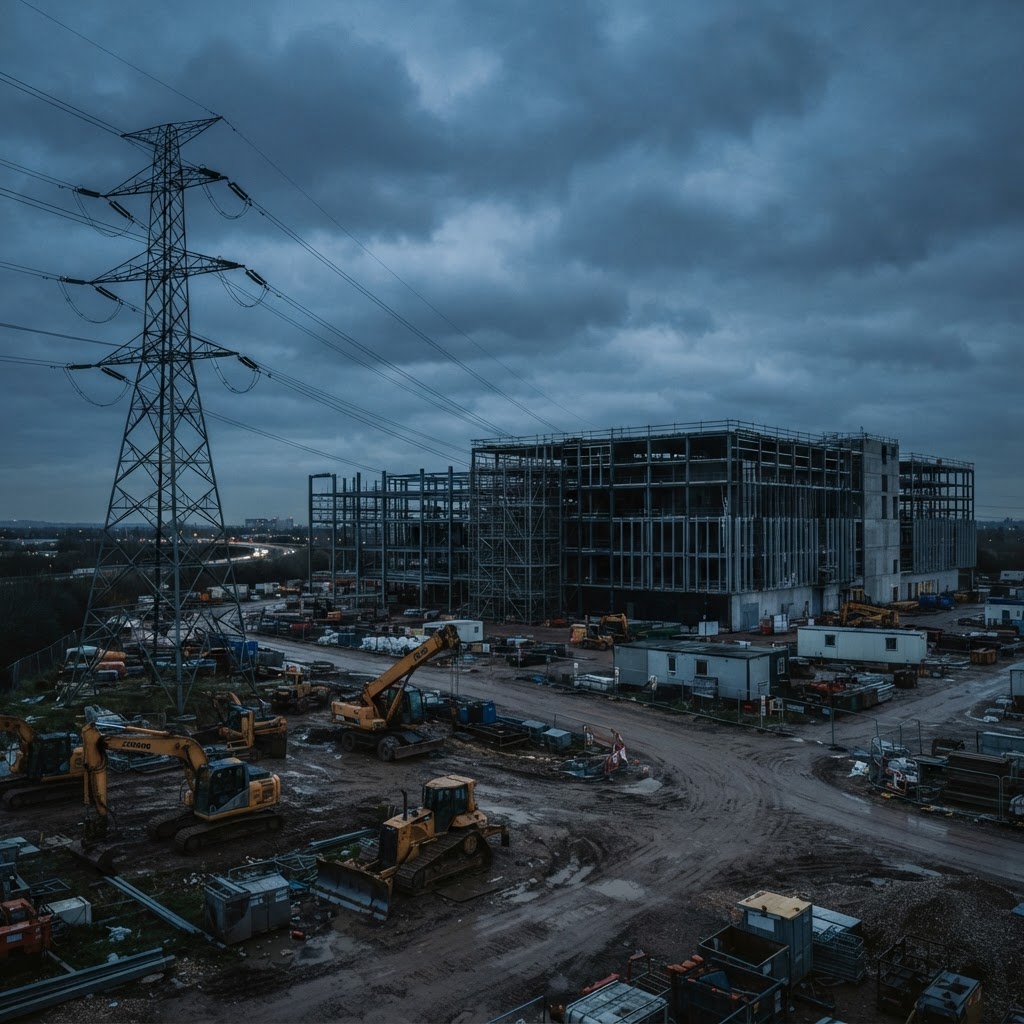
A Stalled Vision Public scrutiny had already begun to mount earlier this year when independent reports highlighted the site’s state as of March 2026. While the government had promised a cutting-edge facility, observers found little more than an operational scaffolding yard. This disparity between political rhetoric and physical progress has now been laid bare by the ongoing power crisis. Industry analysts suggest that this project is symptomatic of a broader failure to synchronise national digital strategy with the practical limitations of the UK’s energy network. Without a coherent policy to fast-track grid upgrades for critical infrastructure, experts fear that similar projects across the country will face identical fates.

Economic Implications The delay poses a significant challenge to the UK’s stated objective of becoming an 'AI superpower.' By ceding early momentum to international competitors, the nation risks missing the critical window of investment and talent acquisition. Venture capitalists and tech firms are increasingly wary of the UK’s capacity to support intensive computing requirements, leading some to reconsider their commitment to British-based cloud infrastructure. As the timeline drifts toward the 2030s, the economic opportunity cost continues to compound, potentially leaving the British tech sector at a structural disadvantage for the remainder of the decade.

TopicsAITechnologyUK EnergyInfrastructureData Centres
Share

About the Author

JM

Jack Morrison

Technology Editor

Jack Morrison reports for National Post UK with a focus on rigorous analysis and authoritative journalism — a trusted voice across British public life.

Reader Discussion · 5

Subscribers can join the conversation.

SUBSCRIBE TO COMMENT →
M
Marcus Vane28 Sept

The energy demand for these chips is truly astronomical compared to traditional server loads. We need to be having a much broader conversation about whether our current infrastructure can actually support the energy-intensive future the government is pushing for.

E
Eleanor Rigby28 Sept

Typical. We jump at the chance to promise world-leading AI hubs without checking if we have the actual plug sockets to power them. It is high time we stopped chasing headlines and started fixing our crumbling national grid.

D
David Thorne28 Sept

While I appreciate the need for energy efficiency, AI is the engine of the next industrial revolution. We must prioritise the power requirements of these data centres if we want to remain competitive with the US and China.

S
Sarah Jenkins28 Sept

As someone working in local planning, I can tell you that the power constraints in the south east are far worse than the government admits. Until we overhaul the grid capacity, these fancy tech announcements are just hot air.

A
Arthur Penhaligon28 Sept

It is honestly embarrassing that we cannot provide basic infrastructure for the industries we claim are central to our future. We have been talking about upgrading the national grid for over a decade yet here we are stalling on yet another flagship project.


More from Technology

Most Read in Technology

Morning Briefing

The day's top stories, before 7am

Join 40,000 readers who start their morning with National Post UK.