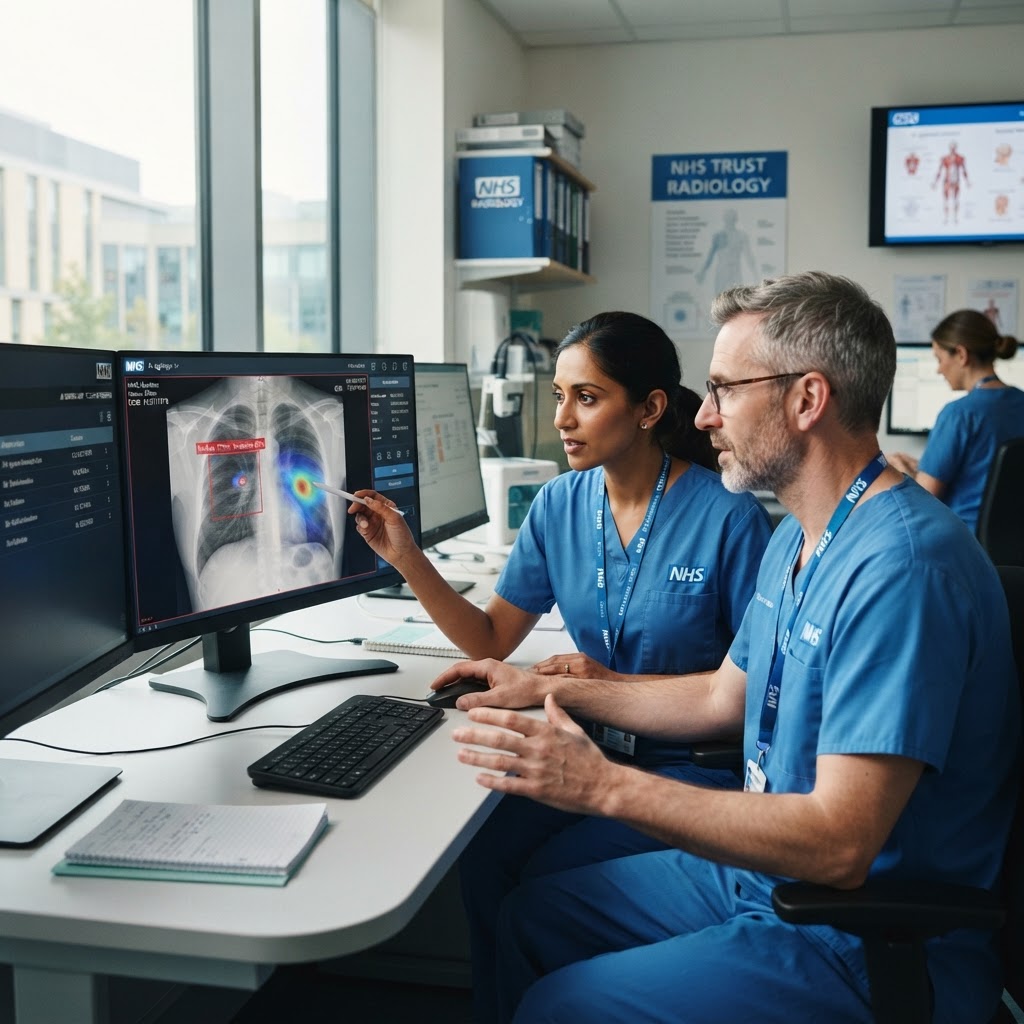
In a monumental step toward modernising healthcare in the United Kingdom, the National Health Service (NHS) has officially launched the National AI Diagnostic Network (NAIDN). This pioneering initiative, developed in collaboration with Google DeepMind, promises to provide real-time clinical analysis for an estimated 1.3 million patients daily, revolutionising the way critical conditions such as cancer and stroke are diagnosed.
The system is now live across all 229 NHS trusts, following an extensive three-year development phase. Early pilot results have been promising, showcasing a significant 40% reduction in wait times for diagnostic results, thus allowing for faster treatment and intervention for patients who are facing life-threatening illnesses.
The Financial Backing Behind the Vision
The NAIDN has been made possible through a substantial government investment of £2.5 billion aimed at enhancing the UK’s digital infrastructure. This funding reflects a growing recognition of the need for advanced technological solutions within NHS operations, particularly in the face of mounting pressures on services and increasing patient demand.
“The integration of such advanced diagnostic tools into our everyday practices is incredibly exciting.”
Health Secretary Stephen Barclay remarked on the initiative's potential, stating, "This landmark project embodies our commitment to ensuring every patient receives timely and precise diagnoses. By harnessing the power of artificial intelligence, we are reimagining how we deliver healthcare across the nation, ultimately saving lives."
A Focus on Data Security
Data privacy remains a cornerstone of the initiative. All patient data generated and processed through the NAIDN will be stored on UK-based sovereign cloud servers. This measure is designed to guarantee robust protections, ensuring that sensitive health information is kept secure and meets necessary legal standards. Patient confidentiality is of paramount importance, especially in an era where data breaches can have far-reaching implications for personal privacy and public trust in health services.
Moreover, the implementation of the AI system comes with assurances from the British Medical Association (BMA), which has endorsed the rollout on the condition that human oversight is retained in diagnostic processes. The BMA emphasized the importance of a “human-in-the-loop” verification system, advocating that algorithms should support, rather than replace, the judgements of healthcare professionals.
Expert Perspectives on the Integration
Experts in the field have responded positively to the initiative. Dr Hayley Andrews, a consultant physician based in Manchester, shared her enthusiasm: "The integration of such advanced diagnostic tools into our everyday practices is incredibly exciting. It could mean that doctors will not only be able to diagnose conditions more quickly, but also with greater accuracy, combining the analytical prowess of AI with the invaluable intuition and experience of healthcare professionals.”
However, while there is a feeling of optimism within the medical community, some critics caution against overreliance on technology. Dr Mark Johnson, a medical ethicist at Oxford University, raised concerns about potential biases in AI algorithms. He stated, "While AI can expedite diagnosis, we must remain vigilant about its limitations and the necessity of human oversight — we can’t afford to overlook the nuances of patient care that a computer simply cannot interpret."
Transforming Lives Across the UK
The implications of the NAIDN are profound, particularly concerning conditions that demand rapid intervention. For instance, quicker diagnosis of stroke can drastically impact recovery rates, with every minute counting. The National Institute for Health and Care Excellence (NICE) has indicated that any reduction in diagnostic delays can significantly enhance survival chances and quality of life for patients.
With the system now live, attention turns to future policy decisions that will determine the pathway for AI integration in other areas of healthcare. The NHS’s commitment to remain at the forefront of these advancements illustrates its ongoing development strategy, aiming for a synergy between technology and traditional medical practices.
A Path Forward
As the rollout diagrammatically sets in motion, healthcare professionals across the UK will be trained extensively to work alongside AI systems. This training is designed to ensure that the healthcare workforce is equipped to maximise the potential of these tools while also being adept in traditional diagnostic techniques.
As the dust settles on this landmark launch, the NAIDN stands as a testament to the NHS's commitment to innovation and patient care. The critical questions now facing stakeholders will revolve around not only how this initial phase unfolds but also how it will evolve over time to meet the future demands of a dynamic healthcare environment.
As Dr Andrews wisely noted, "This is just the beginning. We must continuously evaluate and adapt our approaches, learning from both successes and challenges as they arise. The health of our nation depends on it." In this rapidly evolving landscape of UK healthcare, the integration of AI presents an opportunity to shape a framework that genuinely prioritises patient welfare and enhances clinical outcomes.