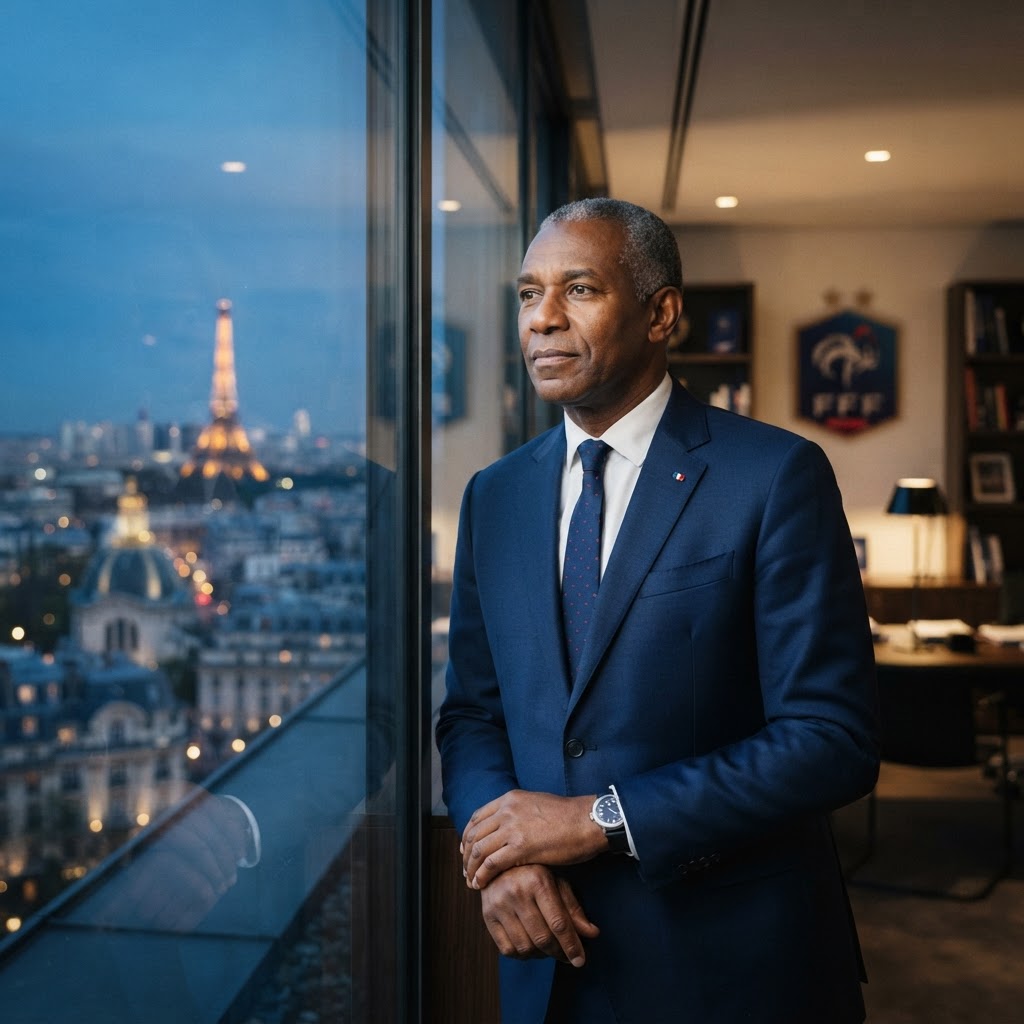
A New Challenger Emerges The corridors of power in Nyon have been long whispering of discontent, yet the formalisation of Philippe Diallo’s candidacy on 17 November marks the first genuine fissure in the armour of Gianni Infantino’s tenure. The French Football Federation (FFF) president, a figure previously regarded as a steady hand of administrative reform in Paris, has now been thrust onto the global stage as the official standard-bearer for UEFA. The submission of his papers, arriving with mere hours to spare before the electoral deadline, was a masterclass in controlled suspense, signalling a campaign that intends to be as tactical as it is ideological.
For years, the relationship between UEFA and FIFA has been defined by a cold war of competing interests, policy disagreements, and personal frictions. By putting forward a candidate of Diallo’s stature, UEFA is no longer content with merely criticising the current regime’s governance; it is seeking a total redirection of football’s global narrative. The stakes for the game in Europe are immense, as members of the continent’s governing body have grown increasingly weary of Infantino’s perceived centralisation of power and his controversial expansions of the Club World Cup.
The Francophone Strategy Central to Diallo’s path to victory is a sophisticated electoral arithmetic. Recognising that European support alone is insufficient to unseat an incumbent with deep roots in the global south, UEFA’s strategy is heavily predicated on capturing the Francophone African bloc. These federations, many of which have historically felt marginalised by the existing FIFA power structure, are being courted with promises of greater investment and more equitable voting representation. The linguistic and historical ties between the FFF and West African nations provide Diallo with a ready-made diplomatic network, an advantage that his predecessor candidates rarely possessed.
Dr. Elena Rossi, an expert in international sports politics, notes that the tactical deployment of a French candidate is far from accidental. 'Diallo represents a bridge between the traditional elite of European football and the emerging markets in Africa,' she explains. 'If he can convince these federations that his platform is about genuine decentralisation rather than European hegemony, he poses a credible threat that few expected even six months ago.'
Institutional Friction The British perspective on this development remains one of cautious interest. Within the FA, there is a distinct recognition that the current FIFA model has prioritised revenue-generating mega-events at the expense of grassroots stability. While the FA has maintained a diplomatic silence, insiders suggest that the prospect of a more transparent, consultative regime is quietly welcomed. The UK’s influence, often hampered by its complex relationship with Brussels and European politics, may find a more aligned partner in a Diallo-led FIFA, provided his policies on player welfare and calendar congestion remain sound.
Infantino, for his part, remains a formidable political operator. His grassroots coalition, built on personal visits and targeted development grants, has proven remarkably resilient to past challenges. Yet, the current atmosphere in Zurich is undeniably different. The persistent legal scrutiny and the growing chorus of protests from Europe’s major domestic leagues regarding the sheer volume of fixtures have provided the Diallo campaign with a potent platform for debate.
“Diallo represents a bridge between the traditional elite of European football and the emerging markets in Africa, and if he can convince these federations that his platform is about genuine decentralisation, he poses a credible threat.”
The Road Ahead As the campaign moves towards the ballot, the football world will be watching to see if the European challenge can transcend regional boundaries. Diallo’s platform is expected to emphasise a return to consultative governance, moving away from the top-down decision-making that has characterised the last decade. Whether this appeal will resonate beyond the traditional borders of European and Francophone influence remains the defining question of the next few months.
For now, the French Football Federation president finds himself at the centre of a historic power struggle. His candidacy is not just a challenge to an individual; it is an interrogation of the future of the sport. As the global game waits for the dust to settle, the only certainty is that the quiet harmony of the past decade in Zurich has been permanently disrupted.