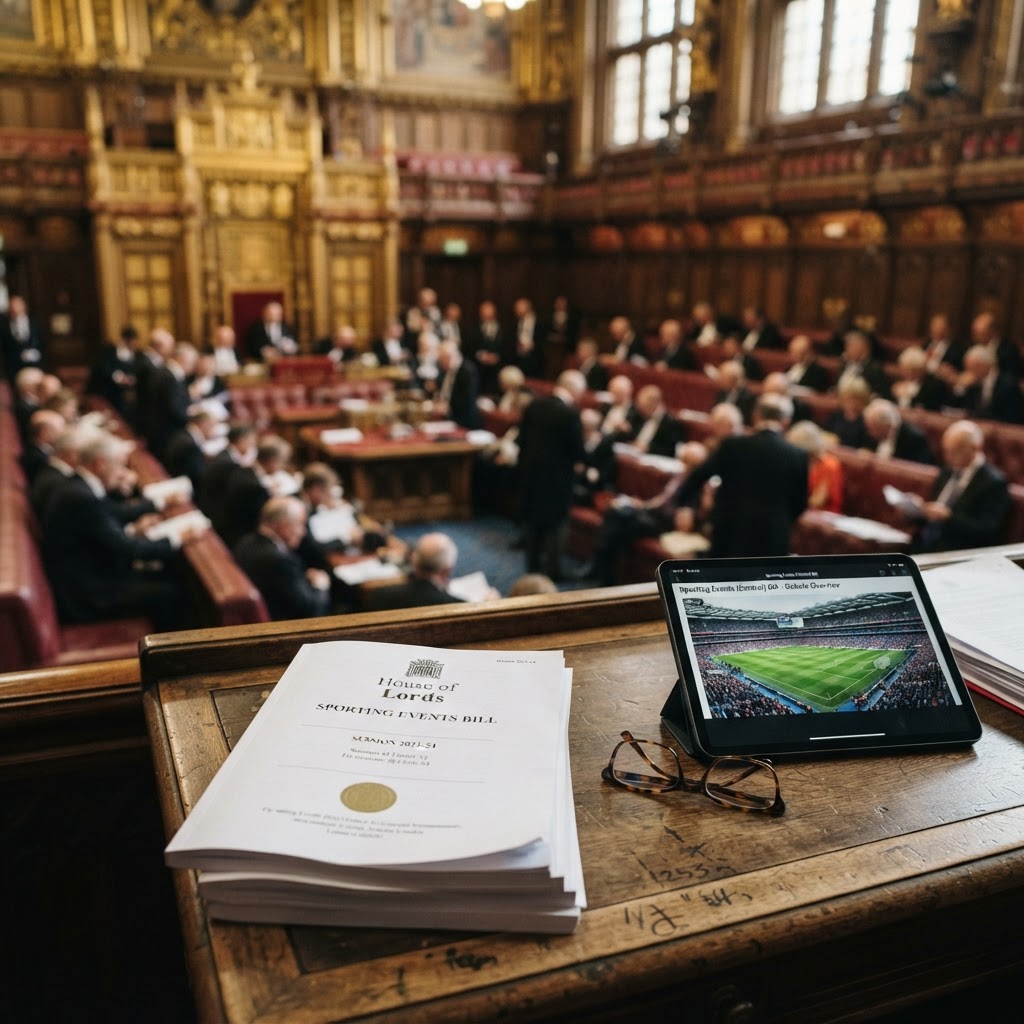
As the UK prepares for a busy decade of international hosting, the Sporting Events Bill enters a critical phase of parliamentary reconciliation. Peers are set to debate amendments concerning ticket integrity and fiscal oversight ahead of the Euro 2028 curtain-raiser.
A Legislative Marathon
The machinery of Westminster is once again turning its attention to the administrative underpinnings of our national pride. On 18 November 2026, the Sporting Events Bill will return to the House of Lords for a session of parliamentary 'ping-pong,' as peers scrutinise the suite of amendments introduced during its tenure in the House of Commons. This legislation represents a significant attempt to codify the relationship between the central government, the devolved administrations, and the various sporting bodies tasked with delivering world-class spectacles.
Securing the Future of British Sport
At its heart, the bill seeks to replace the ad-hoc approach that has characterised the funding of major events with a durable, statutory framework. With the Euro 2028 tournament looming on the horizon, officials are acutely aware that the window for operational preparation is closing. The bill is not merely a bureaucratic exercise; it is the cornerstone of the UK's strategy to maintain its status as a global hub for sport. By establishing clear protocols for funding, the government aims to mitigate the financial risks that often accompany such large-scale infrastructure and logistical projects.
Contested Clauses: Touts and Transparency
The discourse in the Commons has led to significant refinements regarding how these events will be shielded from commercial exploitation. Central to the ongoing debate are strict provisions regarding organiser fees and the aggressive regulation of ticket touting. Ministers have faced pressure to ensure that access to international matches remains equitable, leading to a push for digital-only ticketing solutions and severe penalties for those seeking to profit from the secondary market. Furthermore, the legislation addresses the complexities of advertising licences, balancing the need for commercial revenue with the aesthetic and logistical demands of host cities.
The 2035 Women's World Cup Bid
While Euro 2028 dominates the current headlines, the legislative foresight embedded in this bill extends well into the next decade. Specifically, it provides the necessary legal authority to bolster the UK's bid for the 2035 Women's World Cup. Supporters of the bill argue that by formalising these processes now, the government is demonstrating a level of administrative maturity that will impress international governing bodies. This long-term vision is essential if the UK is to compete successfully against other nations with equally ambitious hosting strategies.
Expert Perspectives
Political analysts suggest that while the bill enjoys cross-party support in principle, the finer details regarding the division of financial liability between the Treasury and host municipalities remain a sticking point. There is a palpable sense of caution within the Lords, where experienced parliamentarians are expected to challenge whether the proposed fee structures provide sufficient protection for the taxpayer. The outcome of the 18 November session will indicate whether the government can strike a balance between the demands of sporting federations and the necessity of fiscal prudence. As the country looks forward to an era of hosting high-profile events, the final form of this bill will undoubtedly serve as the blueprint for British soft power on the global stage.