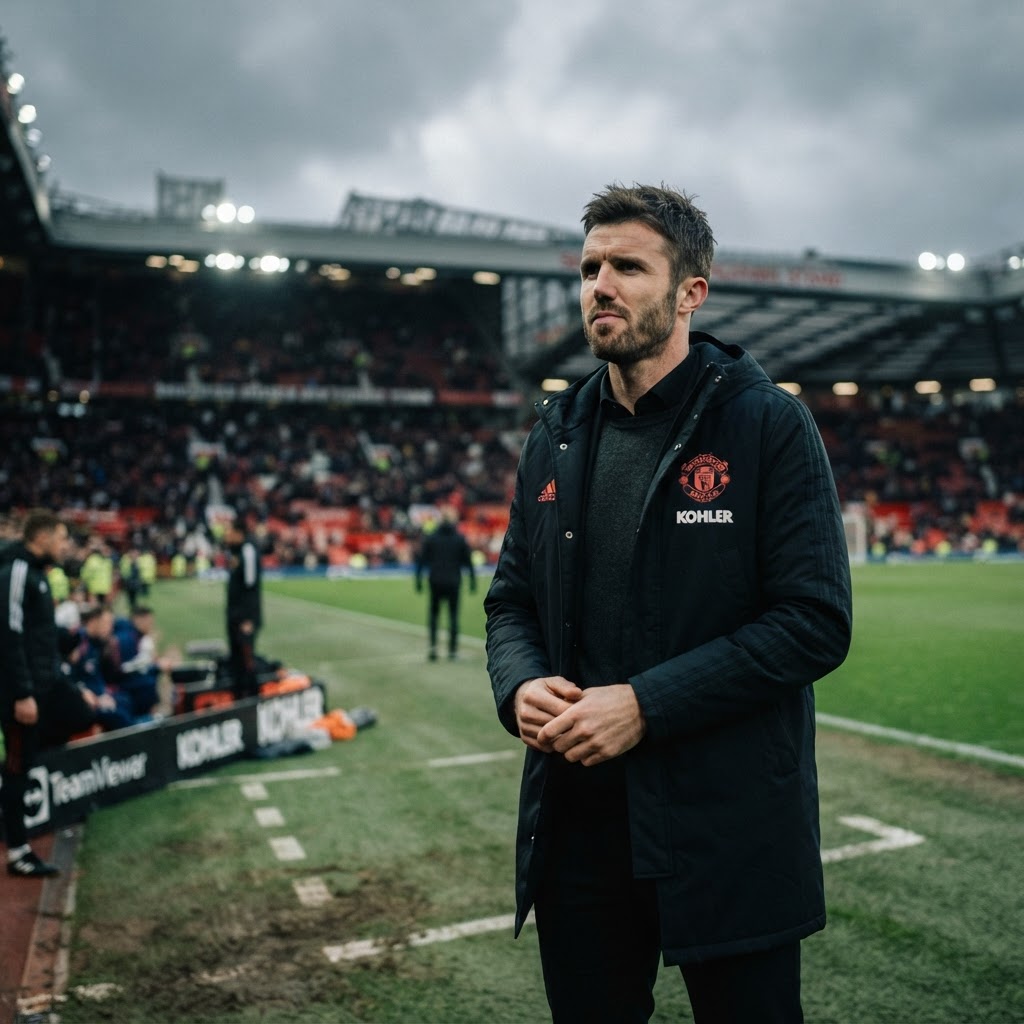
As the November international break offers a brief respite from a stuttering Premier League campaign, the Manchester United board has shifted its focus toward the long-term viability of Michael Carrick’s tenure. With results stagnating, the club is now evaluating external candidates to restore stability to the dugout.
The Anatomy of an Uncertain Interim
The international window is rarely a period of true rest at Old Trafford. For Manchester United, this latest hiatus serves as a high-stakes crucible for the club’s leadership team, who are currently engaged in a comprehensive review of the managerial situation. Michael Carrick, who assumed duties during a period of transition, finds his position increasingly precarious following a series of lacklustre displays, culminating in a disappointing result against Aston Villa that left both supporters and the hierarchy questioning the current trajectory.
The Shadow of Potential Successors
While Carrick remains the man in the technical area for now, the machinery of succession planning is turning behind the scenes. Senior figures, including Chief Executive Omar Berrada and Technical Director Jason Wilcox, are understood to be conducting a quiet audit of available elite-level managers. Chief among the names circulating in footballing corridors is Mauricio Pochettino. The Argentine, noted for his work at Tottenham Hotspur and his more recent spell in the Premier League, represents a profile that the current board deems capable of implementing a long-term, cohesive identity—a quality that has remained frustratingly elusive for United in the post-Ferguson era.
Stability Amidst the Storm
It is worth noting that while the managerial role is subject to intense scrutiny, the upper echelons of the club’s executive structure appear secure. Unlike previous cycles of volatility, where an impending dismissal would cast doubt on the entire administrative framework, Berrada and Wilcox remain firmly in situ. Their brief is clear: to rationalise the club's recruitment policy and ensure that whoever stands on the touchline at the Theatre of Dreams is supported by an infrastructure that prioritises sustained excellence over stop-gap solutions. This distinction is vital for a fanbase that has grown weary of short-termism.
The Tactical Impasse
The core of the issue facing United remains their inability to dictate play against mid-table opposition. Despite an infusion of talent in the summer window, the squad has struggled to find a consistent rhythm under Carrick. The tactical fluidity expected of a modern contender has, in practice, manifested as a disjointed approach, often leaving the defence exposed and the attack isolated. Expert observers suggest that the current malaise is a symptom of a deeper disconnect between the squad's composition and the tactical instruction provided. As the club looks ahead, the appointment of a tactician with a proven history of high-pressing, structured systems, such as Pochettino, appears increasingly logical to those within the industry.
Looking Toward the Festive Pivot
As the international break nears its conclusion, the board faces a decision that will define the remainder of the 2026/27 campaign. There is an acknowledgement that the current situation cannot persist if the club is to challenge for European qualification. Carrick has served the club with professionalism, yet the cold reality of the Premier League leaves little room for sentiment. The coming days will likely determine whether the club opts for continuity or chooses to initiate a new chapter before the demanding winter fixture list commences. For now, the silence from Carrington is not one of contentment, but of deep, meticulous deliberation.