
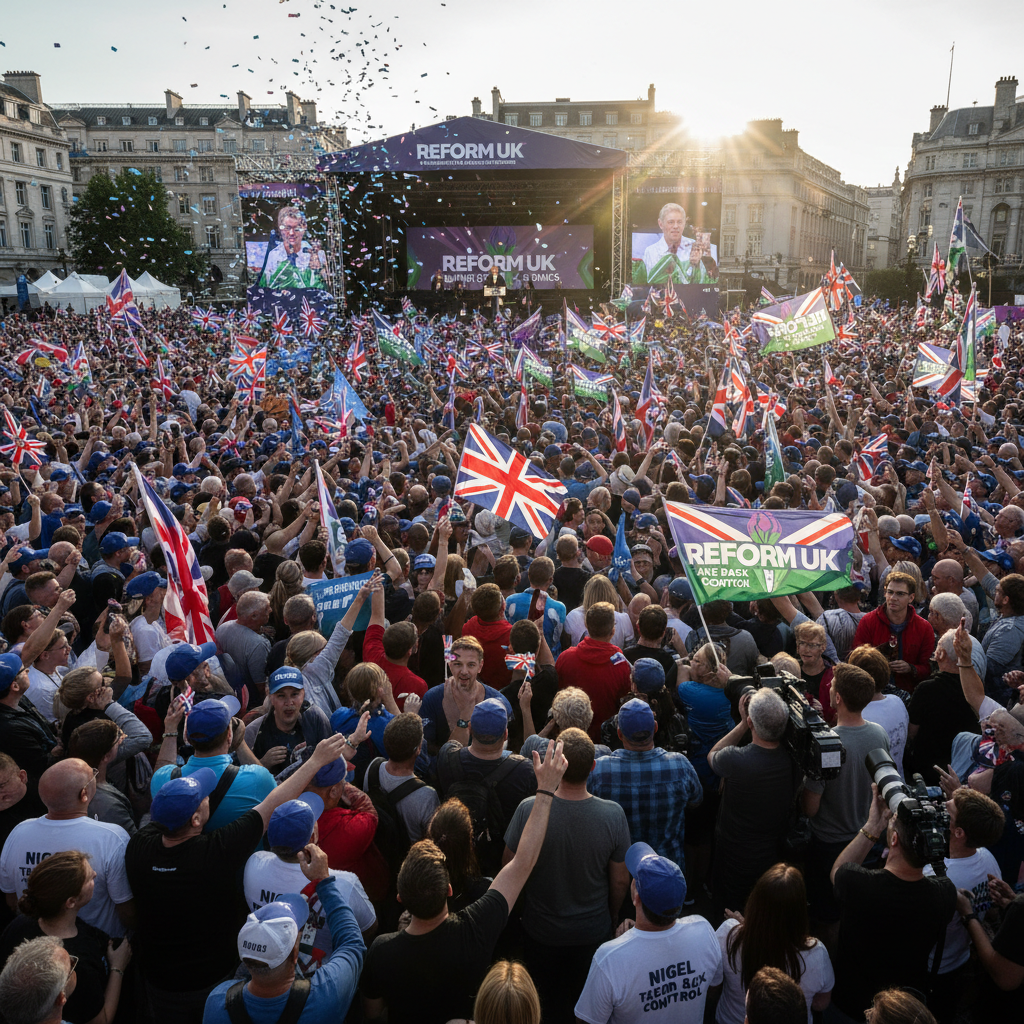
The May local elections produced a result that has fundamentally redrawn the map of British politics, with Reform UK making extraordinary gains in English councils while the Green Party advanced significantly in urban seats — a simultaneous assault from left and right that analysts describe as the most serious challenge to Labour's electoral coalition since the party came to power in 2024.
Reform, led by Nigel Farage, secured control of councils it had never previously contested seriously, with particularly strong performances in areas of the Midlands and North that Labour had traditionally regarded as safe territory. The results confirmed polling trends that had suggested for months that the party was building a genuinely national electoral base, rather than simply performing well in by-elections.
At the same time, the Green Party made significant advances in urban constituencies with younger and more progressive electorates, capitalising on dissatisfaction with Labour's climate policies and its perceived drift towards the centre on issues of economic redistribution and social justice.
“The result leaves Labour in an almost impossible position — moving to stem Reform requires exactly the opposite of what it needs to win back the Greens.”
The result leaves Labour in an almost impossible position. Moving to stem the Reform advance requires a harder line on immigration and a more assertive patriotic nationalism that alienates the urban progressive base. Moving to win back Green voters requires exactly the opposite. The two movements are pulling in fundamentally incompatible directions.
Senior Labour figures speaking privately describe the situation as existential. The by-election in Makerfield, scheduled for the coming weeks, is seen as a bellwether for whether the party can stabilise its position or whether the electoral decomposition will continue. Some MPs have already begun privately discussing the question of leadership, though publicly the parliamentary party remains formally behind the Prime Minister.
Angela Rayner, the Deputy Prime Minister, has publicly stated that Labour faces its last chance and has thrown her support behind Andy Burnham's potential return to Westminster — a comment that has itself generated significant internal turbulence. The political landscape, as Britain moves into summer, has rarely felt less settled.