A Watershed Moment for the Health Service For decades, the silent attrition of clinical time has been the bane of the National Health Service. While headlines frequently focus on the physical state of wards or the volatility of staff retention, the mundane reality of paper-based bureaucracy has remained a primary driver of the current crisis. Today, the government has announced a £10 billion commitment, marking the most substantial technology investment in the history of the NHS, with the express goal of restoring one million working days of staff capacity every single month.
This initiative represents a departure from incremental digitisation, shifting instead toward an integrated, AI-driven ecosystem. The strategy, which spans the next three years, aims to dissolve the silos of electronic patient records that have historically hindered effective care across disparate hospital trusts. By mandating a uniform integration of records, the service intends to provide clinicians with a cohesive, real-time picture of patient history, allowing Artificial Intelligence to operate with data integrity rather than relying on disparate, incompatible systems.
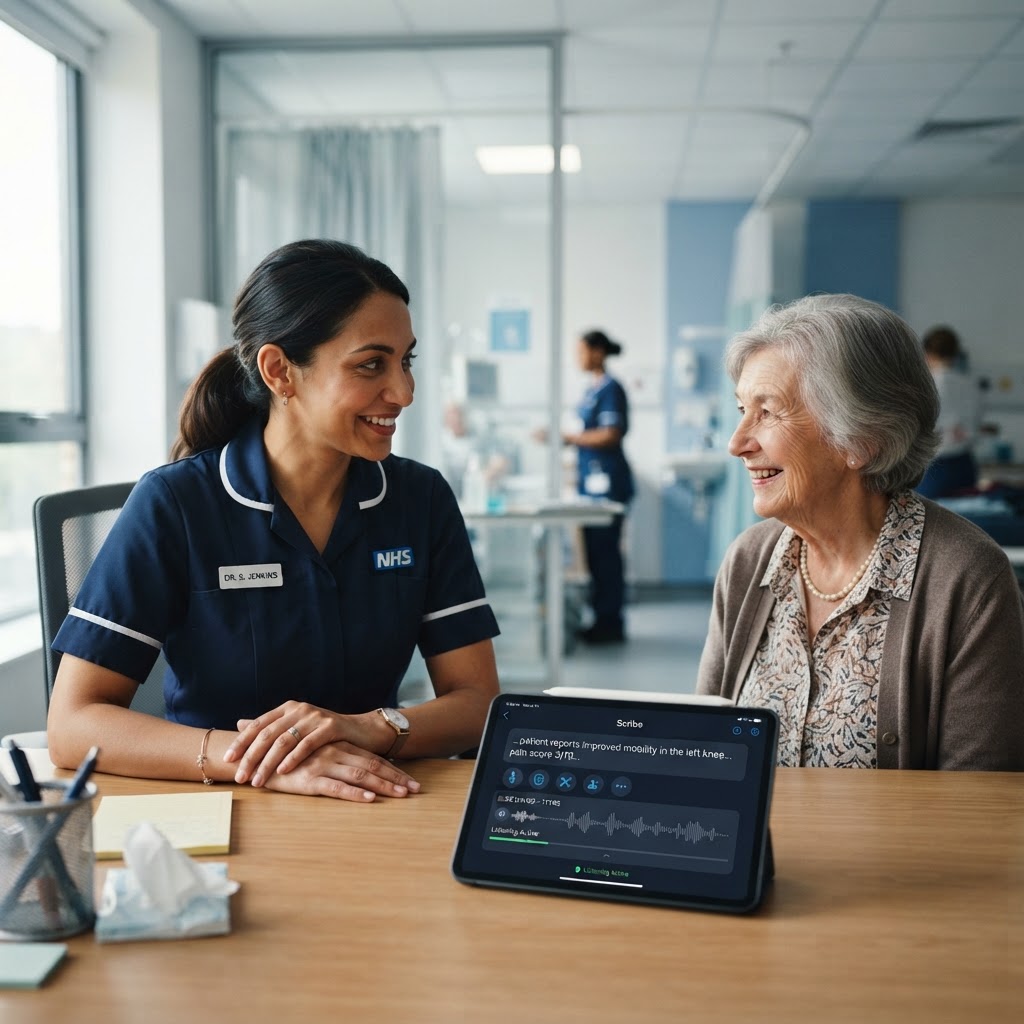
The End of the Clipboard Era Among the most transformative elements of this rollout is the deployment of 'ambient voice technology' (AVT). In bustling environments such as Accident and Emergency departments, the act of clinical documentation has long been a manual tether, forcing doctors and nurses to sacrifice precious bedside moments in favour of data entry. AVT changes the landscape by discreetly transcribing consultations and automatically structuring the resulting narrative into formal medical notes.
The evidence, gathered from rigorous pilot programmes, is compelling. At St George’s Hospital in Tooting, clinicians reported saving an average of 47 minutes per shift—nearly an hour previously swallowed by administrative friction. Meanwhile, data from Great Ormond Street Hospital suggests that the automation of these clerical burdens has liberated 25 per cent more time for direct patient interaction. It is a quiet revolution, replacing the rhythmic tapping of keyboards with the natural cadence of clinical conversation.
Triage in the Palm of Your Hand Beyond the hospital gates, the public experience is also set for a radical reconfiguration. The NHS App will soon host a sophisticated AI triage engine, designed to alleviate the pressure on primary care. By guiding patients through a dynamic diagnostic pathway, the tool will instantly match an individual's symptoms with the most appropriate level of care, ranging from local pharmacy advice to urgent intervention. The intent is to filter out the thousands of unnecessary GP consultations that currently congest the front door of the service, ensuring that face-to-face appointments are prioritised for those with acute clinical need.
A Question of Trust and Implementation Despite the optimism surrounding this £10 billion injection, the history of NHS IT projects is checkered with costly failures and significant delays. Critics will rightly point to the spectres of past programmes that promised digital salvation but delivered only fragmentation. However, current leadership argues that the shift towards decentralised, cloud-based AI represents a more resilient architecture than the centralised monoliths of previous decades. Furthermore, the integration of electronic patient records is not merely a technical goal; it is a fundamental prerequisite for the efficacy of the new AI suite. Data silos have historically acted as a ceiling for machine learning capabilities; their removal is expected to provide the necessary fuel for more accurate, service-wide diagnostic assistance.
As the NHS braces for an ageing population and the increasing complexity of chronic disease management, the digitisation of the workforce is no longer a matter of convenience—it is a necessity for survival. The challenge now lies not just in the procurement of silicon and software, but in the cultural transformation required to allow clinicians to trust the technology that has been placed in their hands. Should the implementation prove as effective at scale as it has in the trial wards, the NHS may finally find the leverage it needs to lift the weight of its administrative burden.
“The shift towards ambient voice technology represents a quiet revolution, replacing the rhythmic tapping of keyboards with the natural cadence of clinical conversation.”