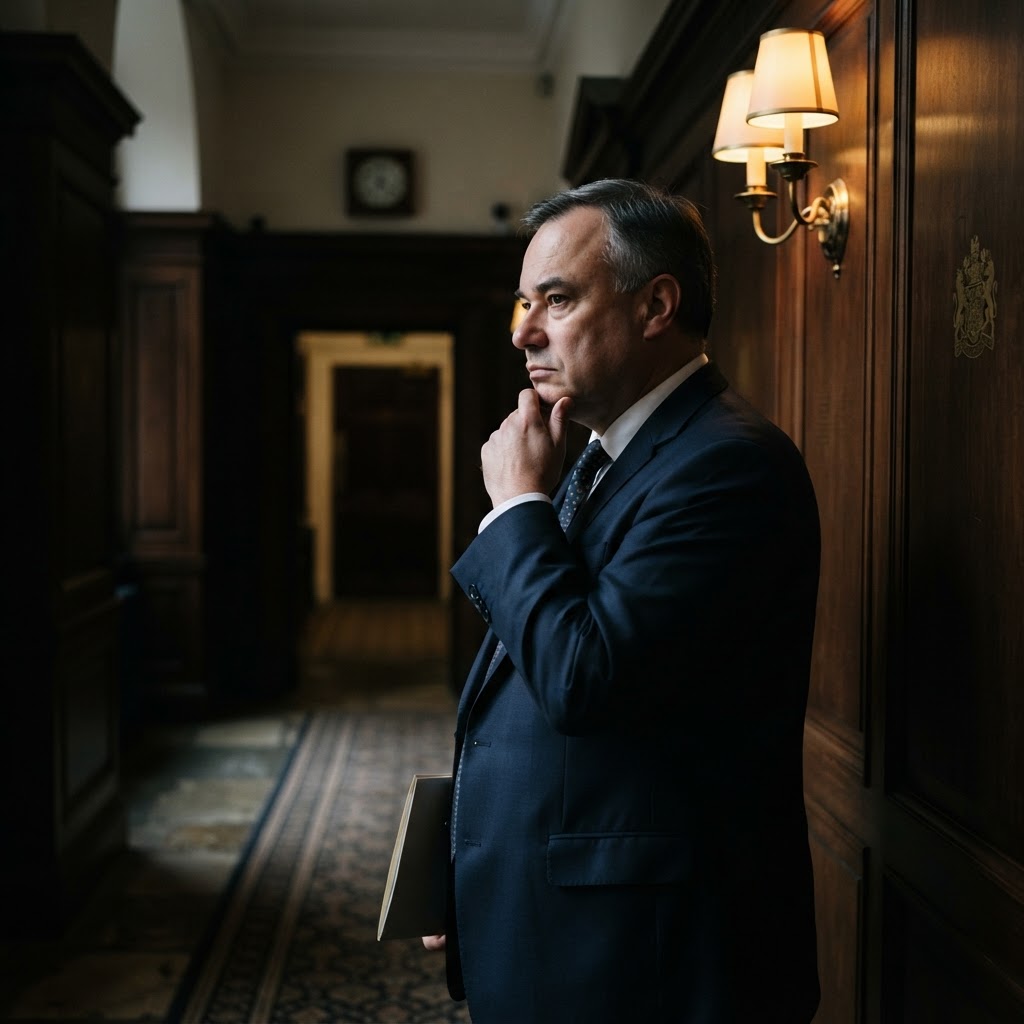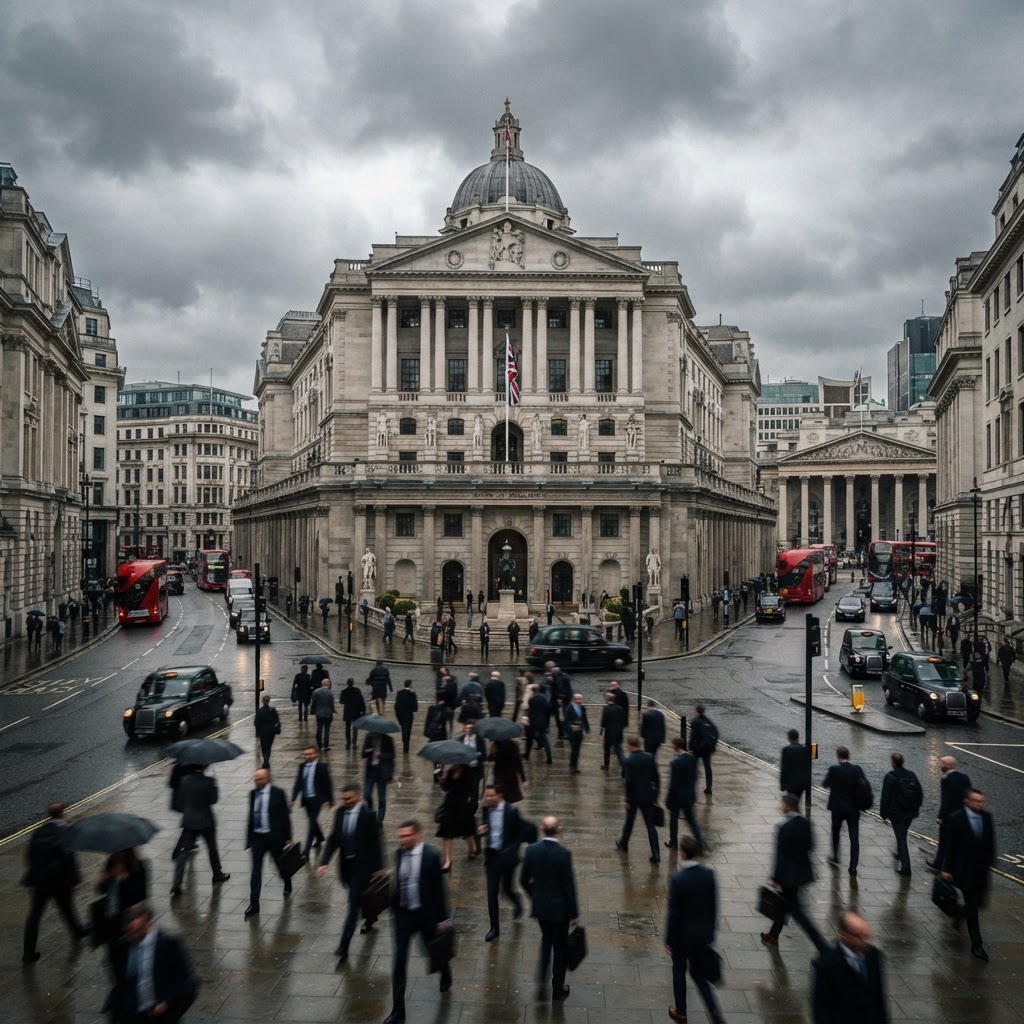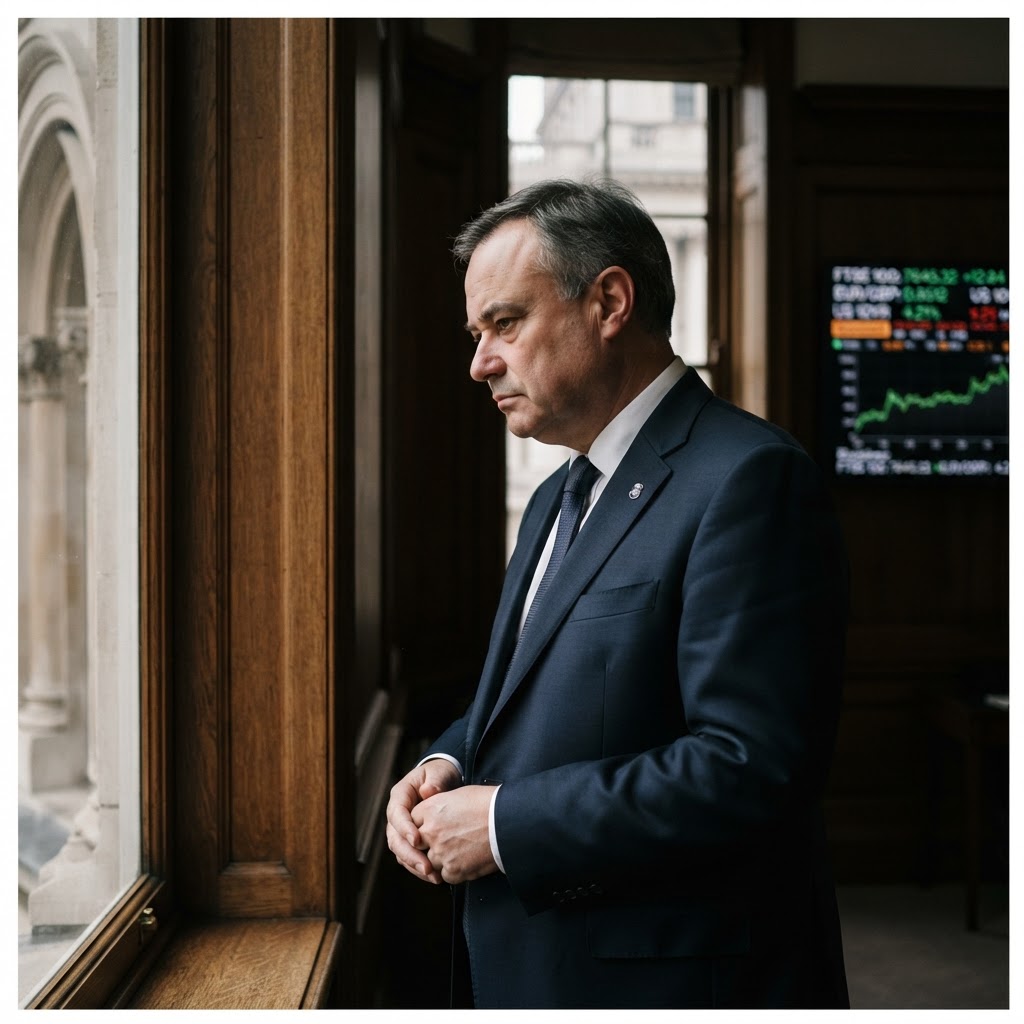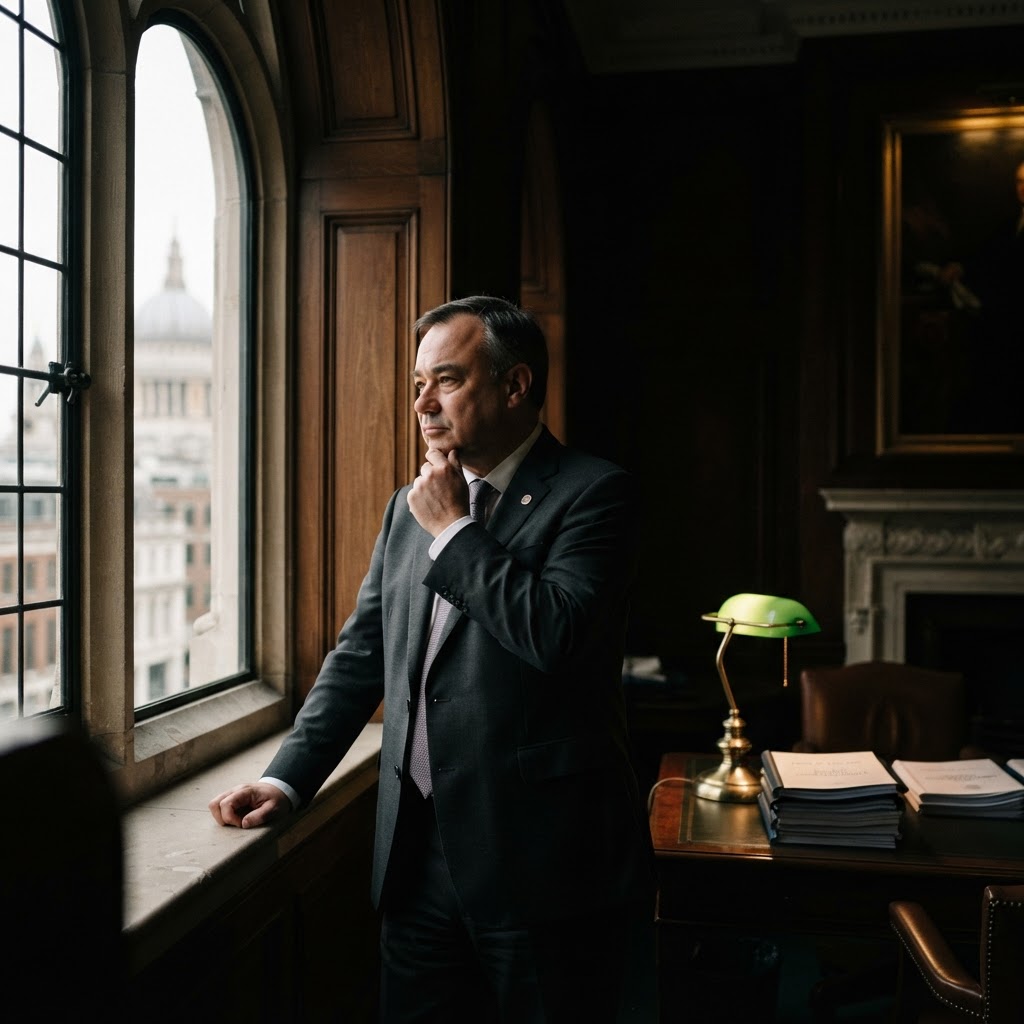
Threadneedle Street Holds Steady as Geopolitical Shadows Cloud Economic Outlook
The Monetary Policy Committee has opted to keep the base rate at 3.75 per cent despite mounting energy price volatility. Governor Andrew Bailey cautioned that rising international instability risks undoing recent progress on domestic inflation.
CW
Charlotte Webb
Finance Correspondent
Published 16 August 2026·3 months ago 3 min read
Text
TopicsBank of EnglandEconomyInterest RatesAndrew BaileyKeir StarmerFTSE 100Inflation
About the Author
CW
Charlotte Webb
Finance Correspondent
Charlotte Webb reports for National Post UK with a focus on rigorous analysis and authoritative journalism — a trusted voice across British public life.
Reader Discussion · 5
Subscribers can join the conversation.
SUBSCRIBE TO COMMENT →M
Marcus Sterling16 Aug
The geopolitical climate is indeed a shadow, but we cannot ignore our sluggish productivity figures. Monetary policy is a blunt instrument; we really need a clear industrial strategy from the government to get the economy moving again.
E
Eleanor Rigby16 Aug
I agree with the decision to keep rates as they are. If they cut too early, inflation will simply spike again, and we will be back to square one with rising food and energy costs.
D
David Thorne16 Aug
A 7-2 vote suggests there is more internal disagreement than the headline implies. I suspect the MPC is more worried about inflation lingering than they are letting on in their official statements.
S
Sarah Jenkins16 Aug
It is easy for the committee to sit in their offices and call this a measured pause, but for those of us on tracker mortgages, every month without a cut feels like another step towards financial ruin. We need some relief sooner rather than later.
A
Arthur Penhaligon16 Aug
Holding steady is the only sensible move right now. With so much volatility in global supply chains, any knee-jerk reaction would likely do more harm than good to our local businesses.