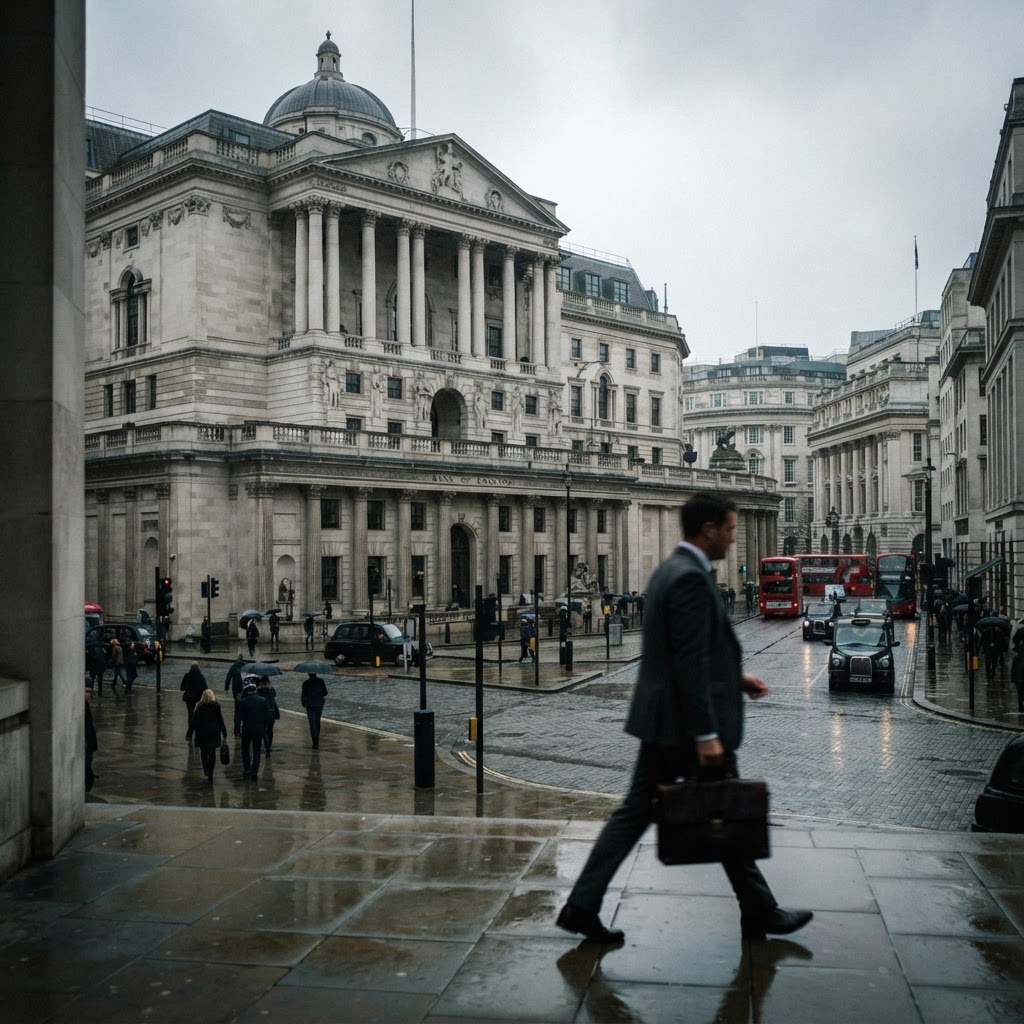
The Monetary Policy Committee has opted for caution, maintaining the base rate at 3.75 per cent. Concerns over Middle Eastern instability and a persistent inflationary overhang have forced the Bank of England into a delicate balancing act.
A Period of Measured Stability
The Monetary Policy Committee (MPC) of the Bank of England delivered a verdict of continuity today, voting to maintain the base interest rate at 3.75 per cent. In a decision that surprised few within the City of London, the central bank’s leadership opted for a wait-and-see approach, citing the precarious balance between cooling domestic demand and the external inflationary shocks threatening to destabilise the recovery. While the headline figure remained unchanged, the rhetoric emanating from Threadneedle Street underscored a heightened sense of vigilance.
The Shadow of Geopolitical Risk
At the heart of the MPC’s deliberation lies the persistent challenge of inflation, which continues to sit comfortably above the Bank’s formal 2 per cent target. However, the committee’s primary anxiety has shifted from domestic wage-price spirals to the volatile landscape of global energy markets. The escalating conflict involving Iran has introduced a significant risk premium to global oil and gas prices, raising the prospect of renewed supply-side inflation that monetary policy is notoriously ill-equipped to address. Analysts warn that should energy costs surge in the coming months, the Bank may be forced to abandon its current neutral stance, potentially hiking rates further into the winter.
Quantitative Tightening Intensifies
Beyond the headline rate, the Bank revealed a more aggressive pivot regarding its balance sheet. In a move that signals a hardening of resolve, officials announced a strategy to divest billions of pounds in government bonds back to the Treasury. This quantitative tightening represents a deliberate attempt to drain liquidity from the financial system and tighten broader monetary conditions without necessarily resorting to additional rate hikes. It is a complex manoeuver, designed to ensure the Bank retains its credibility in the fight against inflation while simultaneously navigating the delicate fiscal requirements of the government.
The Myth of the Growth Engine
The decision also reflects a somber reappraisal of the United Kingdom's long-term economic potential. Huw Pill, the Bank’s Chief Economist, has consistently warned that the structural ‘speed limit’ of the British economy is significantly lower than the historical norms observed in the pre-pandemic era. This acknowledgement of lower potential output suggests that even modest growth could trigger inflationary bottlenecks. For businesses and households, this indicates a period of sustained economic austerity, where the scope for rapid expansion is constrained by underlying supply-side inefficiencies.
Looking Ahead
The sentiment amongst economists remains firmly cautious. With the geopolitical horizon darkened by the ongoing conflict in the Middle East and domestic growth prospects remaining anaemic, the Bank of England finds itself in a period of extended policy recalibration. Investors should prepare for a landscape where interest rates remain higher for longer, as the MPC prioritises price stability over a more accommodative growth agenda. As the winter months approach, the focus will inevitably turn to whether the current policy path is sufficient to anchor inflation expectations, or if further intervention will be required to prevent a slide into entrenched stagflation.