National Post UK
Threadneedle Street Faces a Monetary Tightrope as External Shocks Threaten Price Stability

As the Monetary Policy Committee prepares for its September meeting, shifting geopolitical sands and persistent domestic

The National Post

HomeFinance
Finance

Threadneedle Street Faces a Monetary Tightrope as External Shocks Threaten Price Stability

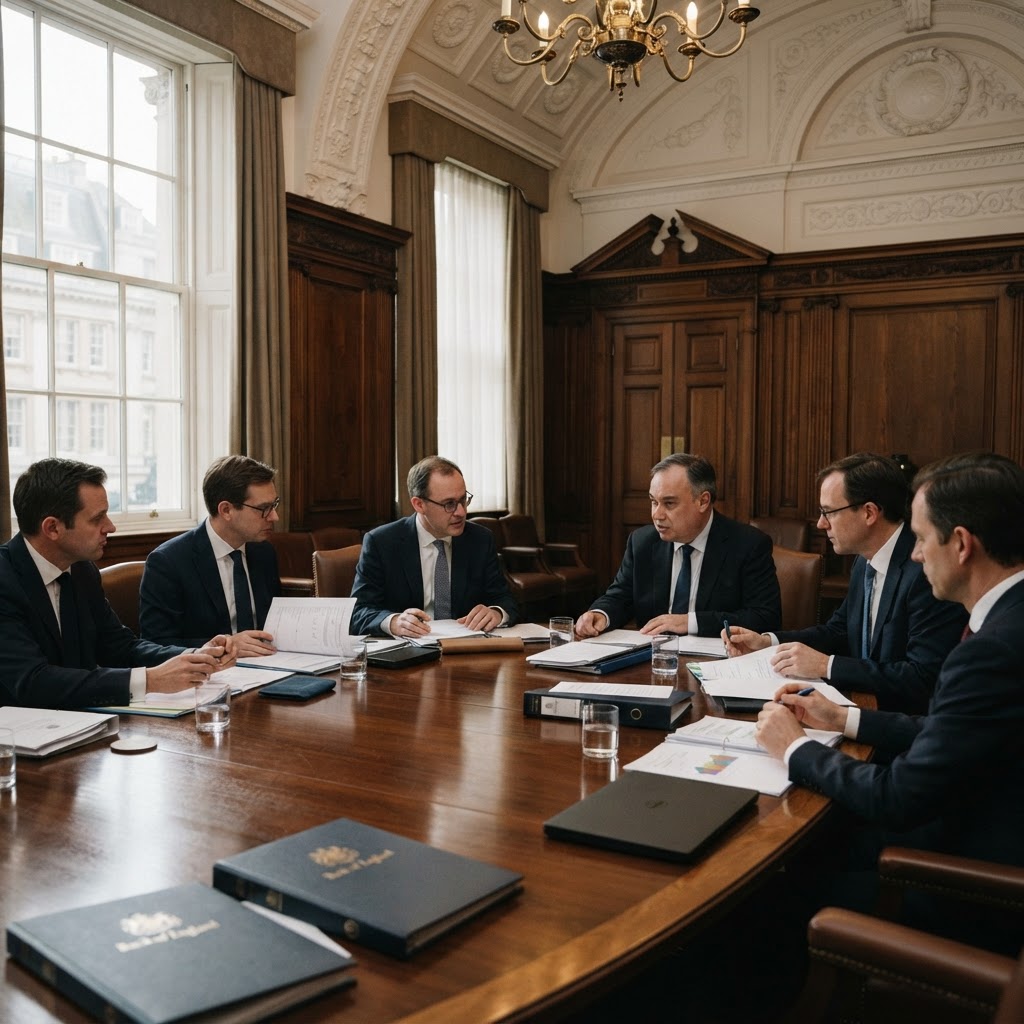
As the Monetary Policy Committee prepares for its September meeting, shifting geopolitical sands and persistent domestic inflation data are testing the resolve of the Bank of England. Marcus Stone examines the intensifying debate over whether the current pause in rate adjustments can be sustained into the winter months.

MS

Marcus Stone

Finance Correspondent

Published 12 September 2026·about 1 month ago 3 min read
Text
Share

The Persistence of Price Pressure As the Bank of England approaches its 17 September decision, the atmosphere within the hallowed halls of Threadneedle Street has shifted from cautious optimism to a state of heightened vigilance. With the Bank Rate currently parked at 3.75%, where it has remained since early 2023, the Monetary Policy Committee (MPC) finds itself caught between the necessity of supporting a fragile domestic recovery and the stark reality of inflation failing to return to the target of 2.0%.

The Dissenting Voices The latest voting records, which showed a 6-3 split in favour of maintaining the status quo, highlight a deepening divide among policymakers. The three dissenters, arguing for an immediate 25-basis-point increase to 4.0%, have voiced concerns that the current 'wait-and-see' approach risks allowing inflationary expectations to become embedded in the wage-setting process. For these members, the risk of overtightening is now outweighed by the danger of a secondary inflationary surge that could prove far more difficult to dislodge later.

Energy Volatility and the Middle East The external environment has become increasingly hostile to the Bank's central forecasts. The escalation of conflict in the Middle East has sent ripples through global energy markets, forcing the MPC to reconsider the downward trajectory of fuel prices. Even a modest tightening of energy supply chains can filter through to the UK consumer price index with surprising velocity, complicating the task for Governor Andrew Bailey and his colleagues. When combined with the inherent volatility of wholesale gas prices, the prospect of inflation drifting further from target has become a primary driver of the current hawkish sentiment.

A Balancing Act for the British Economy The domestic picture remains equally complex. While the labour market has shown signs of cooling from the frantic post-pandemic era, wage growth continues to hover at levels that the central bank deems inconsistent with its mandate. Households, already feeling the bite of mortgage resets and the lingering effects of previous cost-of-living challenges, are being closely watched for signs of reduced spending. Any premature increase in interest rates could stifle growth at a critical juncture, yet inaction threatens to undermine the credibility of the Bank’s long-term inflation target.

Market Sentiment and Future Expectations Financial markets have begun to price in a more aggressive path for interest rates, with investors increasingly looking for a signal from the September meeting that the window for easing is firmly closed. The consensus among City analysts is that the Bank will likely opt for a hawkish hold, maintaining the 3.75% rate while issuing a stern warning that the threshold for further hikes has been lowered. This 'hawkish hold' serves a dual purpose: it allows for more incoming data on economic output to be processed, while simultaneously signaling to the markets that the MPC is not prepared to tolerate a sustained deviation from its 2.0% target.

The Road to November Ultimately, the decision on 17 September will serve as a bellwether for the final quarter of the year. If energy prices continue to spike due to regional instability, the Bank may have little choice but to move the needle upwards. As it stands, the UK economy remains in a delicate state of transition, where the price of stability is becoming ever more expensive in an increasingly unpredictable global arena.

TopicsBank of EnglandInterest RatesUK EconomyMonetary PolicyInflationFinanceMiddle East Conflict
Share

About the Author

MS

Marcus Stone

Finance Correspondent

Marcus Stone reports for National Post UK with a focus on rigorous analysis and authoritative journalism — a trusted voice across British public life.

Reader Discussion · 6

Subscribers can join the conversation.

SUBSCRIBE TO COMMENT →
R
Robert H. Miller12 Sept

The global economy is currently a minefield. The Bank of England is right to maintain vigilance, as stability has to take priority over short-term political pressure.

J
Julian Vance12 Sept

The data suggests that core inflation is stickier than they care to admit. I believe another hike might actually be necessary to curb the long-term price pressure, even if it is unpopular.

M
Margaret Foster12 Sept

It is all well and good discussing monetary theory in Threadneedle Street, but real people are struggling with mortgage renewals. They need to provide a clearer path forward rather than just reacting to every shock.

D
David Thorne12 Sept

I suspect they will hold firm for now. The external shocks are far too unpredictable to start loosening the reins before the end of the year.

S
Sarah Jenkins12 Sept

The Bank is in a no-win situation here. If they cut too early, inflation spikes again; if they keep them high, they risk stifling the little growth we have left. A very difficult tightrope indeed.

A
Arthur Penhaligon12 Sept

It feels like we are constantly waiting for the other shoe to drop. Keeping the rate at 3.75% might seem prudent, but the cost of living remains a massive burden for those of us on fixed incomes.


More from Finance

Most Read in Finance

Morning Briefing

The day's top stories, before 7am

Join 40,000 readers who start their morning with National Post UK.