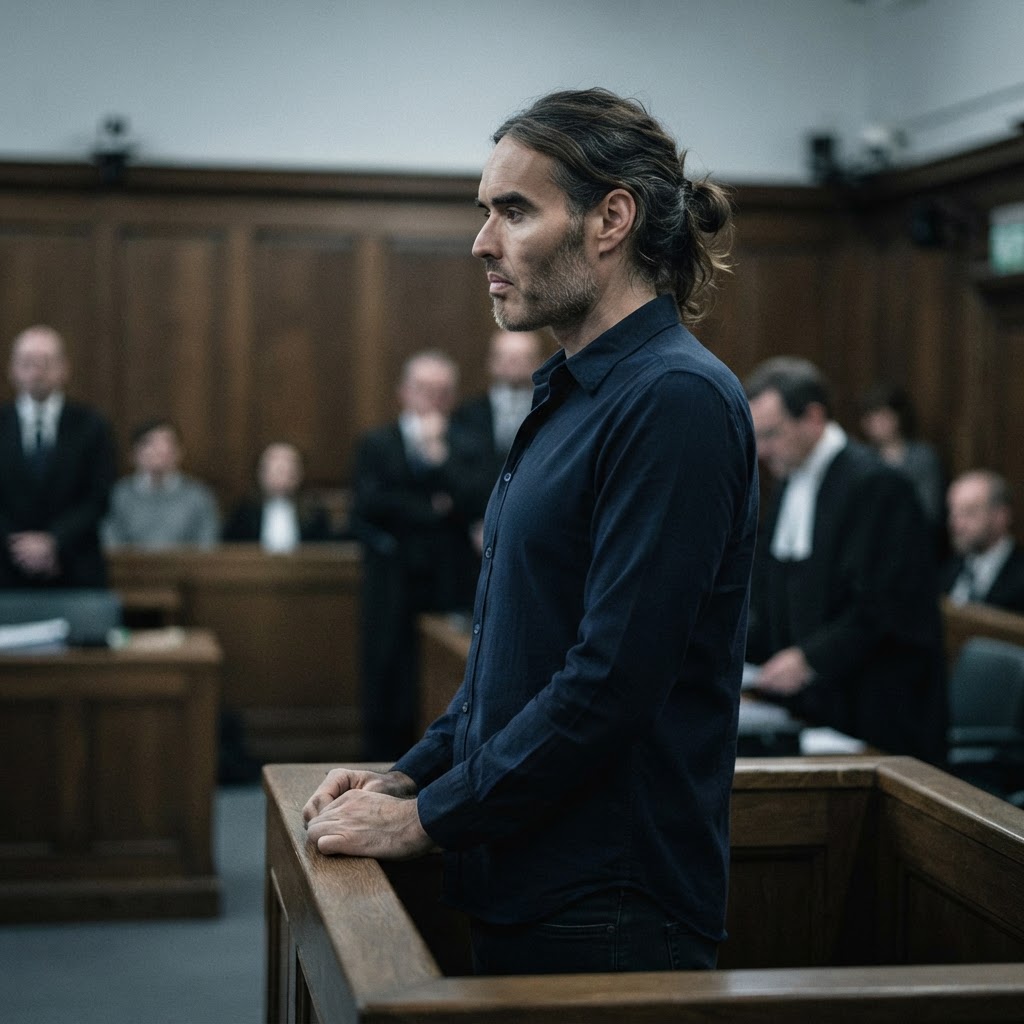
A Damning Verdict at Southwark The arc of Russell Brand’s career, once defined by transgressive humour and a meteoric rise through the corridors of British broadcasting, concluded yesterday in a starkly different setting. Standing in the dock at Southwark Crown Court, the former entertainer was sentenced to ten-and-a-half years in prison after a jury found him guilty of multiple charges, including rape and sexual assault. The sentencing brings a definitive close to a gruelling four-week trial that had captivated the nation and shone a harsh, unforgiving light on the dynamics of power within the entertainment industry.
The Weight of the Evidence Presiding Judge Mr Justice Hadden-Cave delivered the sentence, noting the gravity of the offences and the profound, long-term impact on the victims who courageously came forward. The prosecution’s case, built upon years of diligent investigation, successfully argued that Brand had leveraged his celebrity status to manipulate and violate those who found themselves in his orbit. Throughout the proceedings, the court heard harrowing testimonies that pierced the veneer of the 'bad boy' persona Brand had carefully cultivated for over two decades. The jury reached their unanimous decision after careful deliberation, rejecting the defence’s attempts to frame the encounters as consensual or misunderstood.
A Catalyst for Industry Reform The fallout from the conviction has extended far beyond the courtroom walls. As news of the sentence broke, a spokesperson for the Department for Culture, Media and Sport issued a stern warning to the wider media industry. The message was clear: the era of silence, where talent was protected at the expense of safety, must come to an end. This case is now being cited as a watershed moment for internal governance and the handling of abuse allegations in high-pressure creative environments.
Legal analysts suggest that this verdict will embolden survivors across the industry to seek justice, knowing that the courts are no longer prepared to offer deferential treatment to high-profile figures. Dame Sarah Jenkins, a leading advocate for workplace safety in the arts, noted that the trial has exposed a culture of impunity that has festered for far too long. The expectation now falls upon production houses, broadcasting corporations, and talent agencies to overhaul their safeguarding protocols or face rigorous regulatory intervention.