
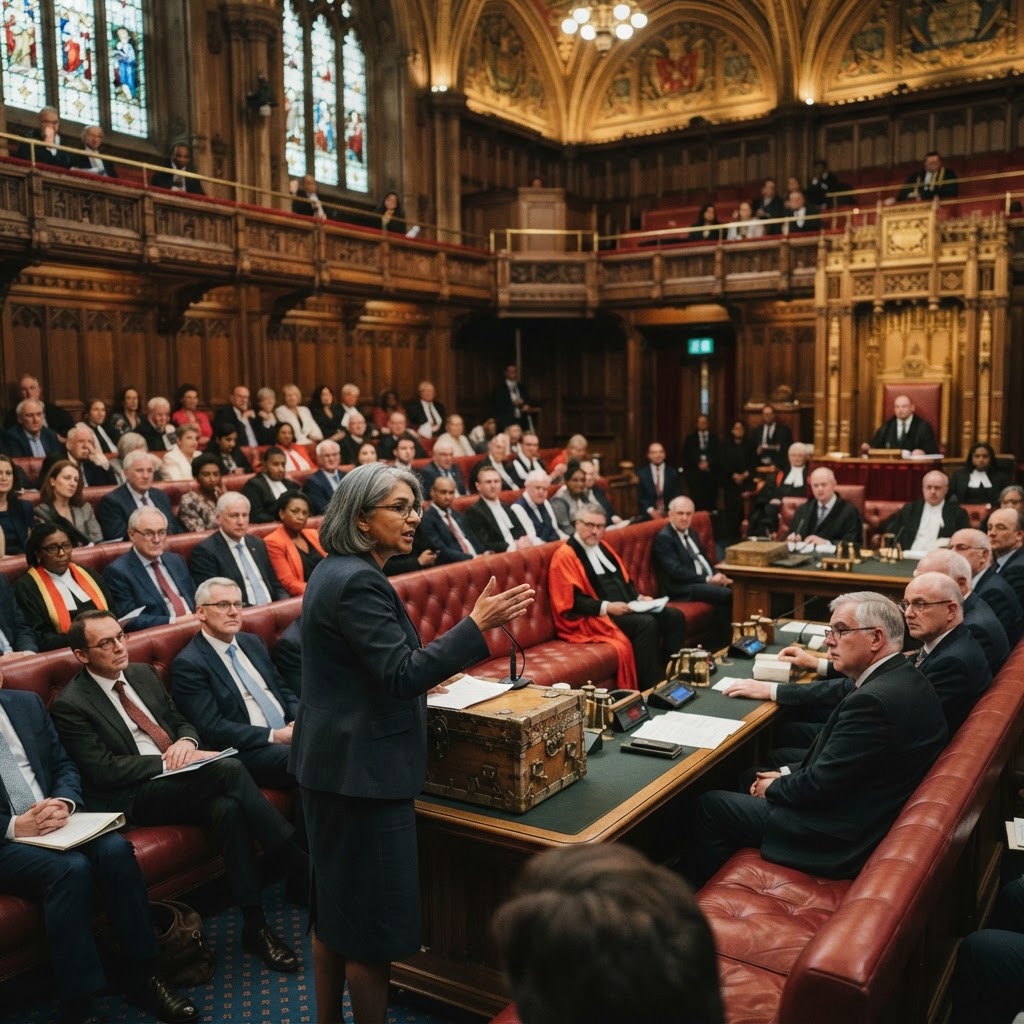
A Constitutional Clash Over Creative Future The ornate corridors of the Palace of Westminster played host to a sharp confrontation on 11 September 2026, as members of the House of Lords subjected the government’s recent fiscal approach to higher education to rigorous scrutiny. While the session spanned a broad range of national concerns—including the pressing stabilisation of the NHS and shifts in the defence budget—the debate crystallised around the contentious decision to reduce public subsidies for creative arts courses across the university sector.
For many observers, the intervention by the Upper House marks a significant escalation in the ongoing friction between Whitehall and the creative industries. With the government prioritising STEM subjects to meet projected labour market gaps, proponents of the arts argue that this narrow utilitarianism overlooks the substantial economic contribution of the creative sector, which generates billions for the UK economy annually and sustains the nation's global cultural footprint.
The Argument for Cultural Value Lord Ashcroft, opening the debate, articulated a sentiment shared by several cross-bench peers: that the reduction in funding is not merely a matter of ledger-balancing but an existential threat to the creative pipeline. The argument presented was that higher education in the arts fosters the precise cognitive agility, critical thinking, and collaborative skills that remain in high demand even in an increasingly automated global market. By stripping away financial support for these departments, critics argue the government is inadvertently hobbling the very talent pool that underpins the UK’s film, design, fashion, and digital media industries.
Dr Eleanor Vance, a senior fellow in education policy at the Institute for Cultural Studies, suggests the impact will be felt most acutely at regional institutions. Whilst elite conservatoires may survive through private endowment or high fees, the broader access to arts education is being strangled. This risks creating a monoculture of excellence, accessible only to the affluent, which would be a profound reversal of the egalitarian ambitions once held for the British university system.
Governmental Stance and Economic Realities The government remains largely unmoved by these protests, maintaining that the allocation of resources must reflect current national priorities. Ministers have repeatedly pointed to the necessity of directing funds towards sectors where the skills gap is most pronounced. During the session, the government spokesperson emphasised that whilst arts education remains valued, the taxpayer-funded subsidy must be rigorously scrutinised against the metric of immediate economic employability. It is a rationale that has been met with incredulity by industry leaders who argue that creativity is the engine of innovation, not a peripheral luxury.
This tension is reflective of a wider ideological divide in Westminster regarding the purpose of higher education. Is the university a factory for immediate economic output, or an institution designed to cultivate a nuanced, culturally informed citizenry? As the Lords continue their examination, it is clear that the creative sector is no longer content to remain a silent observer as its foundations are dismantled.
“To treat creative education as a disposable commodity is to fundamentally misunderstand the engine of our modern economy.”