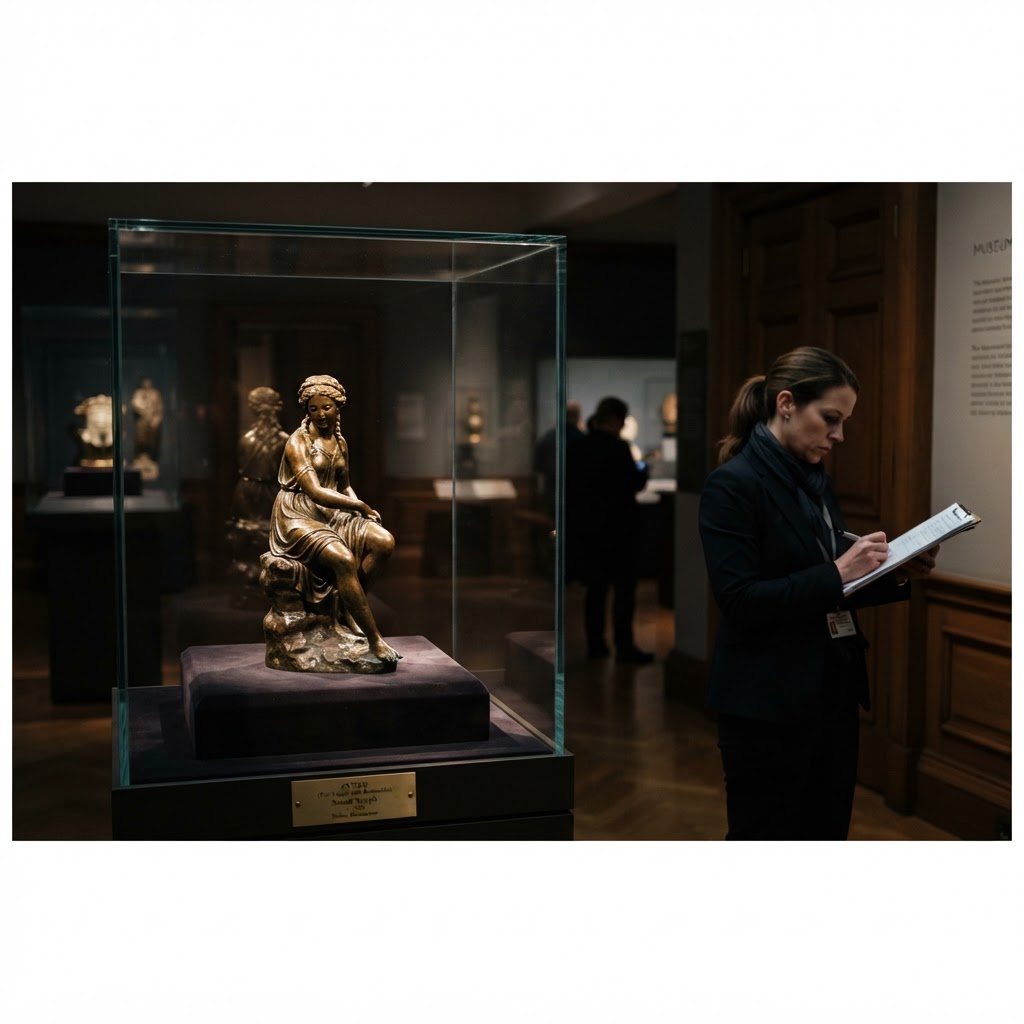
A Heritage Under Siege In a decisive move to safeguard the United Kingdom’s cultural landscape, the government has placed a temporary export bar on a Renaissance sculpture valued at £4.6 million. The decision, announced on Wednesday, reflects the escalating tension between the global appetite for blue-chip art assets and the preservation of national heritage. The sculpture, which has long resided in a private collection, was slated for transport to an overseas buyer, a move that would have effectively stripped the piece from the British historical narrative.
The temporary prohibition, initiated by the Department for Culture, Media and Sport, acts as a tactical delay. It provides a structured window for a British institution, such as the Victoria and Albert Museum or a regional gallery, to mount a fundraising campaign to match the market price. The clock is now ticking for curators and private benefactors to decide whether the piece remains on domestic soil or vanishes into an international private collection, likely never to be seen by the public again.
The Weight of Provenance At the heart of the matter lies the question of what constitutes national identity in the context of movable art. Renaissance works of this calibre are increasingly rare on the open market, and their movement across borders is often viewed by historians as a form of cultural depletion. Experts suggest that the export bar is a vital tool, though it is one that relies heavily on the willingness of wealthy philanthropists to step into the fray when public coffers remain strained.
Dr. Eleanor Hatcher, a consultant in European sculpture at the Courtauld Institute, noted that the piece represents a critical transition in Italian aesthetic development. 'To lose such an object to a foreign estate would be a profound disappointment for scholars and the public alike,' she said. 'These export bars are the final line of defence against the atomisation of our national collections. When a work of this pedigree leaves the country, the context is lost forever; the sculpture is no longer part of our conversation, but merely a trophy in a foreign room.'
The Financial Hurdle Raising £4.6 million is no small feat in the current economic climate, particularly as public funding for acquisitions has plateaued. The government’s export bar mechanism, while effective at stalling, does not guarantee a successful outcome. In previous instances, the inability to raise the required funds within the allotted timeframe has led to the granting of an export licence, signalling the permanent departure of the artwork. The process is a high-stakes endurance test for the arts sector.
Critics of the current system often argue that the price tag—fixed by independent valuation—can sometimes be prohibitive for smaller provincial institutions that would benefit most from hosting such a treasure. Yet, the government insists that the system remains the most equitable way to balance the rights of private owners with the broader public interest. The challenge now falls to the committees that oversee national heritage to determine which institution has the best claim, and the most viable fundraising strategy, to keep this masterpiece in the United Kingdom.
“These export bars are the final line of defence against the atomisation of our national collections.”